
Residential & Commercial Epoxy Specialists
Epoxy Commercial Floors in Wollongong: Seamless Resin Flooring for Food Businesses, Retail and Workspaces
If your commercial premises needs a seamless, cleanable floor over concrete, epoxy is worth a close look. We offer epoxy commercial floors in Wollongong for food businesses, retail spaces and workspaces.
- Illawarra-Wide Coverage
- Fast, Free Quotes
Get a Free Quote
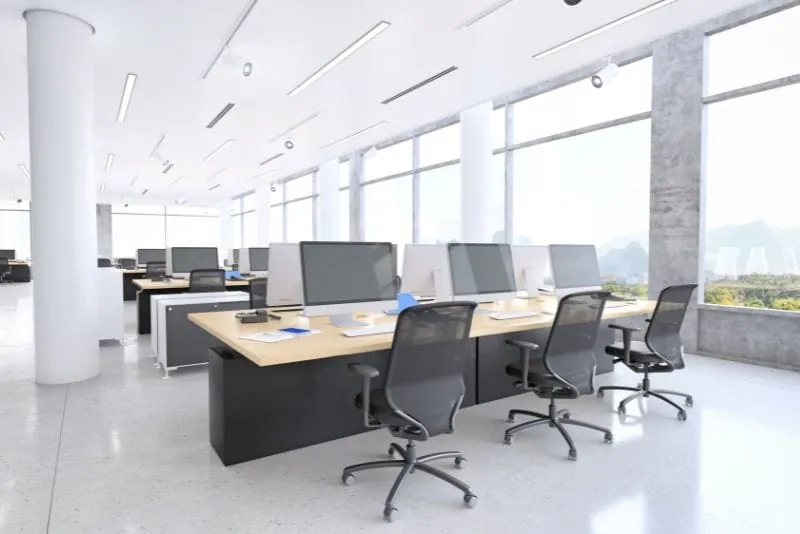
Many owners start looking into epoxy when they’re fitting out or upgrading a food premises. Others have a floor that has worn down or become hard to keep clean. Some are worried about slips in busy or wet areas.
This page will help you match the right epoxy system to your space. It also covers what happens during surface preparation, when recoating an existing floor may be possible, and how to plan for downtime.
If you'd like to talk through your site and the current condition of your floor, get in touch with our team.
Epoxy Floors for Wollongong Food Businesses and Commercial Kitchens
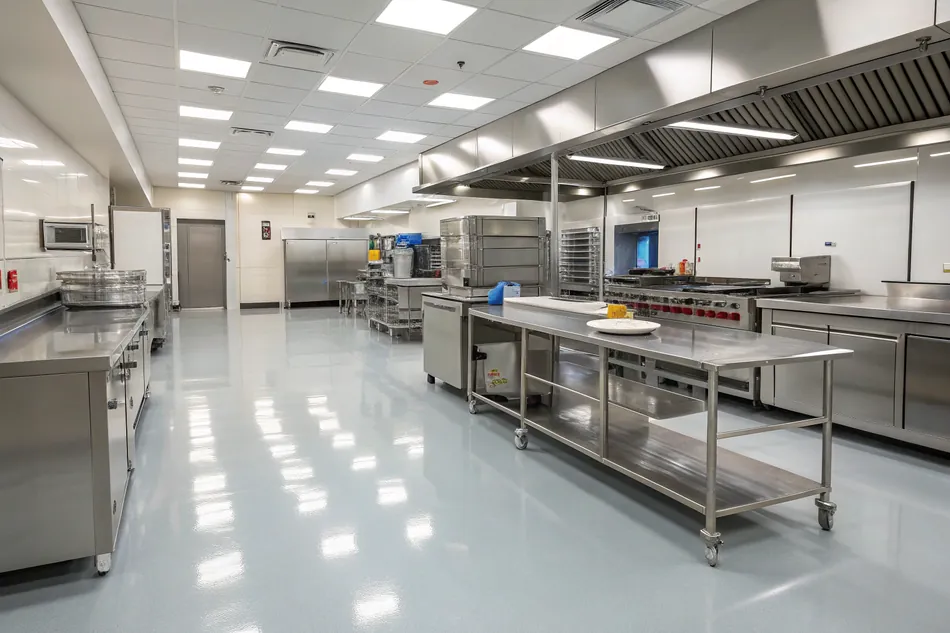
If you run a café, restaurant, commercial kitchen or food manufacturing business, your floor has to meet food premises requirements. Food businesses in NSW have obligations under the Food Act 2003, and Wollongong City Council refers to the Food Standards Code (FSANZ Standard 3.2.3) when setting out what floors need to do.
Council's Design and Fit-Out Guide for Food Businesses lists epoxy resin among its recommended floor finishes for meeting the Food Standards Code.
The guide says floors should:
- be easy to clean
- not absorb grease, food particles or water
- drain without water pooling
- not give pests a place to hide
The guide also covers coving, which is a curved join between the floor and wall. Coving is required where food is prepared, handled or stored and where floors are flushed with water. The guide shows trowelled epoxy coving as a correct example.
Floors are also graded so water runs to a floor waste. The guide sets this fall at a minimum of 1:100.
Council's guide dates from 2017, so it's a good idea to check the current requirements with Wollongong City Council before you plan your fit-out.
Matching the Epoxy System to Your Commercial Space and Duty Level
Is epoxy flooring good for commercial use? It can be, when the system suits the space. Manufacturer data describes epoxy systems as seamless and impermeable at product level. Wollongong City Council's food premises guide lists epoxy resin among its recommended floor finishes. But results depend on matching the system to the duty level and on proper surface preparation. Epoxy also has limits. Some products can discolour in sunlight, and application is sensitive to site conditions.
Epoxy flooring is not one product. It's a family of systems, and each one suits a different level of traffic and use.
Common commercial settings include:
- food premises
- retail stores and showrooms
- workshops
- warehouses and storage areas
System options range from a thin coating, to a self-levelling (flow-applied) system, to a trowelled screed. The right choice depends on how the floor will be used and how much traffic it takes.
You can also add extras to suit the area. Options include slip-resistant aggregate, coving, and decorative finishes such as flake or quartz.
The key point is simple. Epoxy suitability comes down to choosing the right system for your duty level.
Surface Preparation and Moisture Checks Help an Epoxy Floor Bond and Last
When an epoxy floor peels or lifts, the cause often goes back to what happened before the coating went down. Surface preparation is one of the most critical factors for bond strength.
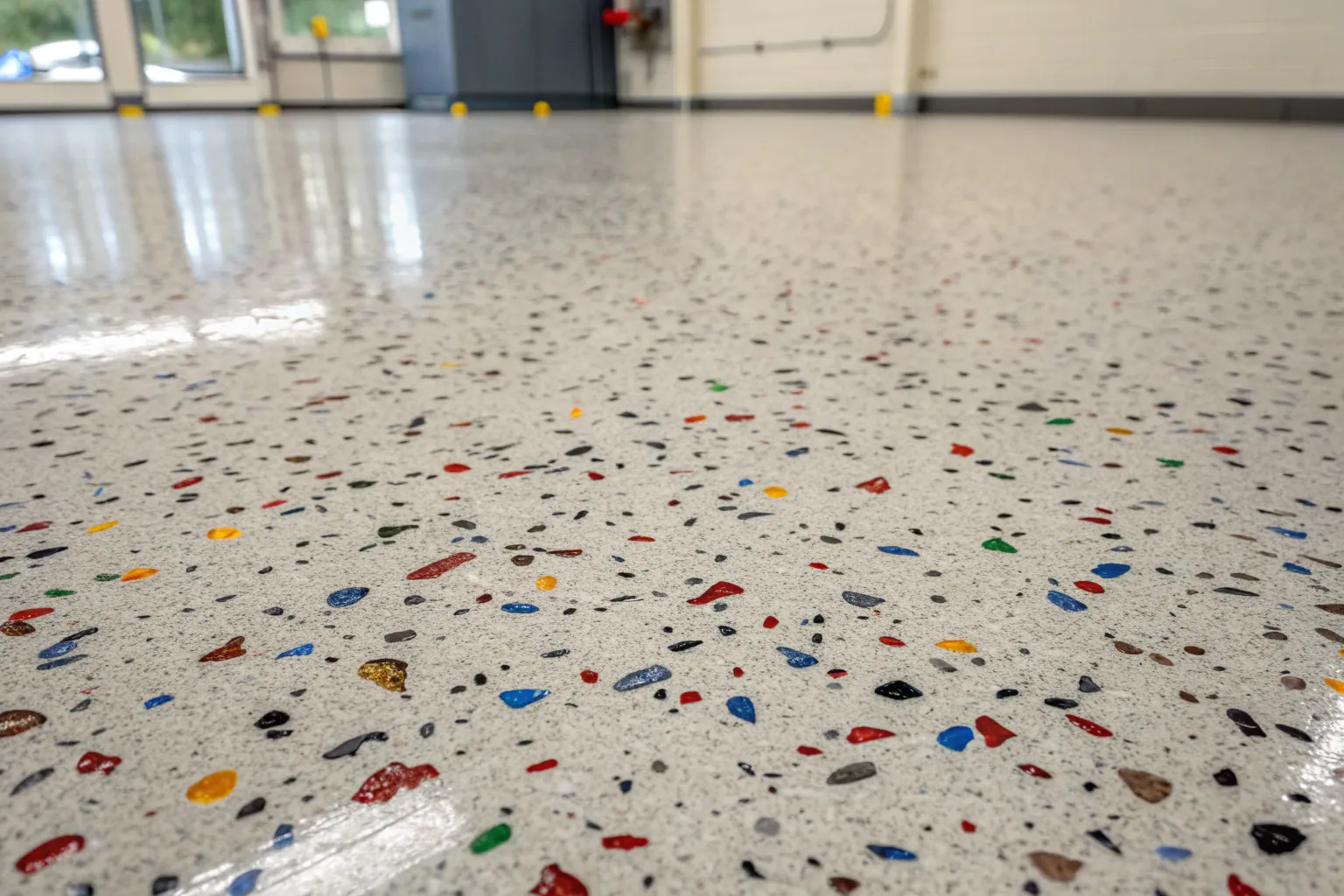
Preparing the concrete creates the right surface profile. This profile gives the coating something to grip, forming a mechanical bond between the coating and the slab.
Moisture matters too. Before application, the concrete's moisture level, the relative humidity and the dew point are checked against the limits for the specific product being used.
Preparation usually involves mechanical grinding. Under NSW rules, grinding concrete is treated as processing crystalline silica, and the dust must be controlled. SafeWork NSW guidance identifies water suppression and on-tool dust capture as effective controls.
Slip-Resistant Epoxy Finishes for Wet and Greasy Work Areas
Kitchens, wash-down areas and other wet zones need careful thought about slips. Workplaces must eliminate or minimise slip risks so far as reasonably practicable. Safe Work Australia guidance points to slip-resistant floor coverings as one way to manage this risk.
An epoxy floor can include slip-resistant aggregate. The amount and type can be chosen to suit the area and how it's used.
You may hear slip resistance described using P ratings. These come from AS 4586-2013, the Australian Standard that classifies the slip resistance of floor surfaces. A related handbook, SA HB 198:2014, gives guidance on which classification suits which type of area.
Recoating an Existing Epoxy Floor or Replacing It
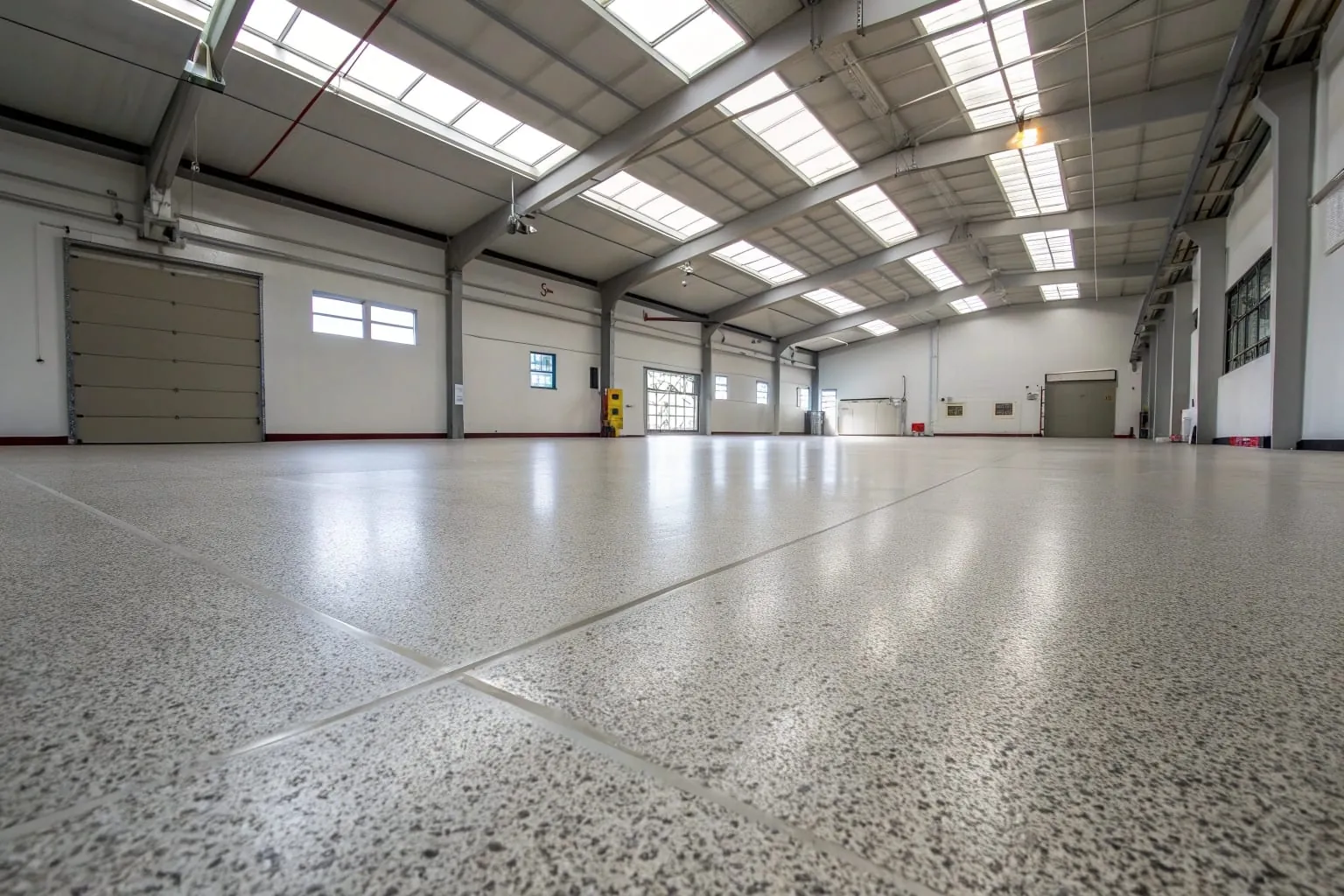
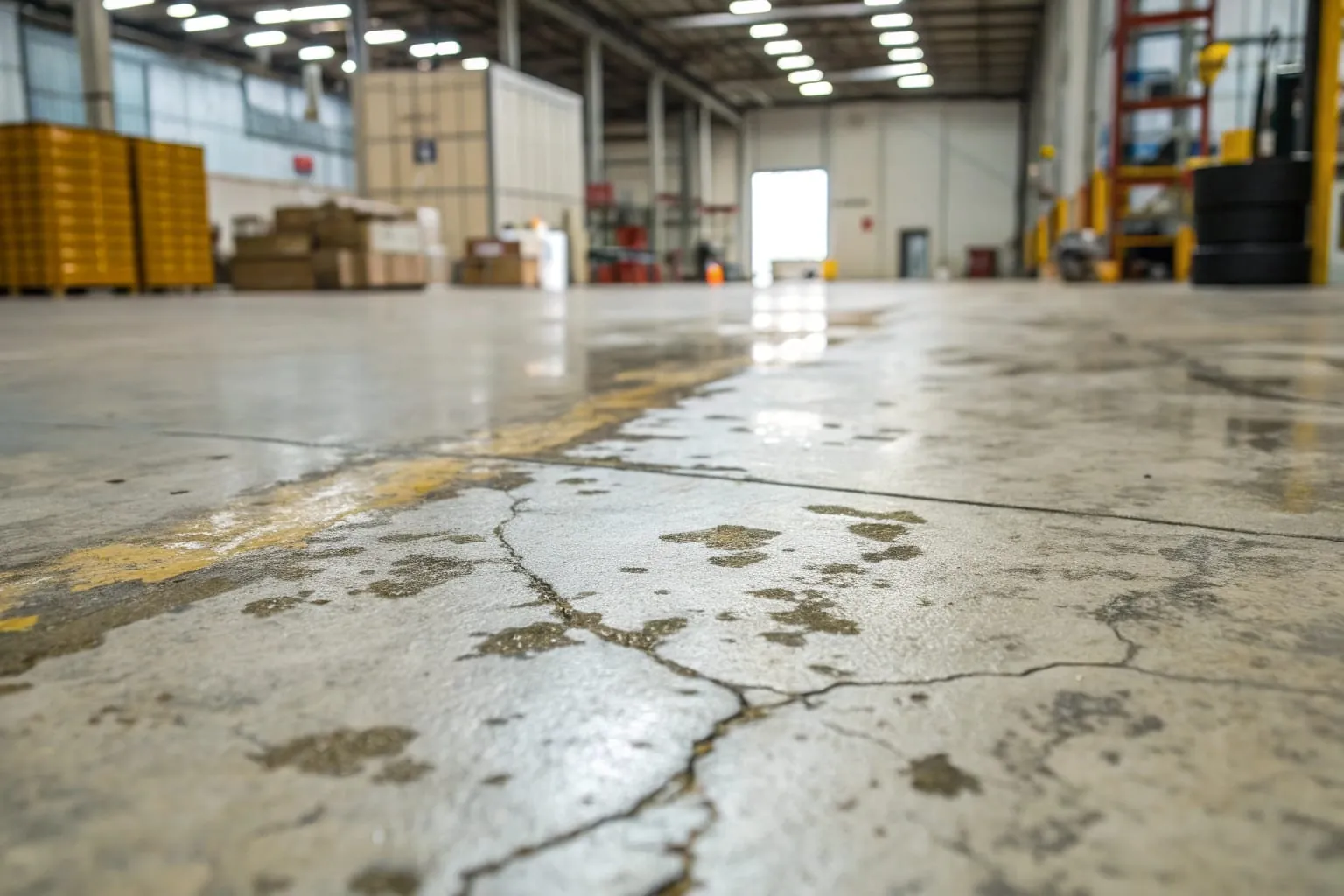
If you already have an epoxy floor, you may be wondering whether new epoxy can go over the old coating. Whether a recoat is possible depends on how well the old coating is still bonded and on the preparation.
A typical recoat involves three main steps:
- Mechanically abrading the old coating
- Cleaning and degreasing the surface
- Checking that the new coat will adhere
Damaged or delaminated areas should not be recoated without repair first. Coating over a problem area doesn't fix what's underneath.
An assessment of your floor is what shows whether recoating or stripping and replacing is the right path.
Planning for Downtime, Site Conditions and Epoxy's Known Limitations
If your business is trading, one of your first questions is likely to be how long you'll need to close. Scheduling needs to fit around your trading hours. Cure times and site conditions can shift the timeline, so it helps to plan with some flexibility.
Epoxy application is sensitive to conditions on the day. Applying it too close to the dew point, or in low temperatures combined with high humidity, can cause blooming. Blooming is a cloudy or greasy film that can form on the surface.
Epoxy also has some known limits. Some epoxy products can discolour under sunlight and some artificial lighting. A clear UV-resistant topcoat may not prevent this. This is worth thinking about for shopfronts and areas under skylights.
Finally, the results of any epoxy floor depend on the quality of the preparation underneath it.
Frequently Asked Questions
Do I need to include the floor finish in plans lodged with Wollongong City Council?
Yes, according to Council's guide. Wollongong City Council's food premises guide says plans must be lodged before building or renovation work starts, and those plans must include floor finishes. The guide also notes that registered food premises can be inspected without notice. Because the guide dates from 2017, check the current requirements directly with Council before you begin.
How long does a commercial epoxy floor last?
Lifespan depends on the system type, the quality of the preparation and how the floor is used. A system matched to the traffic and conditions in your space, laid on well-prepared concrete, gives the floor the best footing.
What affects the cost of a commercial epoxy floor?
Several things can affect the cost, including:
- the size of the area
- the system type and its thickness
- the condition of the concrete
- whether moisture needs to be managed
- whether an old coating is removed or recoated
- coving and floor falls
- slip-resistant aggregate or decorative finishes
- site access and after-hours scheduling
- dust-controlled preparation
Is an epoxy floor waterproof?
Manufacturer data describes epoxy finishes as impermeable and seamless at product level. How the floor performs on your site still depends on the system chosen and how it's prepared and applied.
Is epoxy better than tiles for a commercial floor?
It depends on what matters most in your space. If easy cleaning is a priority, epoxy gives you a seamless surface without grout lines, which means fewer joins where dirt and grime can collect.