
Residential & Commercial Epoxy Specialists
Flake Epoxy Flooring in Wollongong for Garage and Concrete Floors
- Illawarra-Wide Coverage
- Fast, Free Quotes
Get a Free Quote
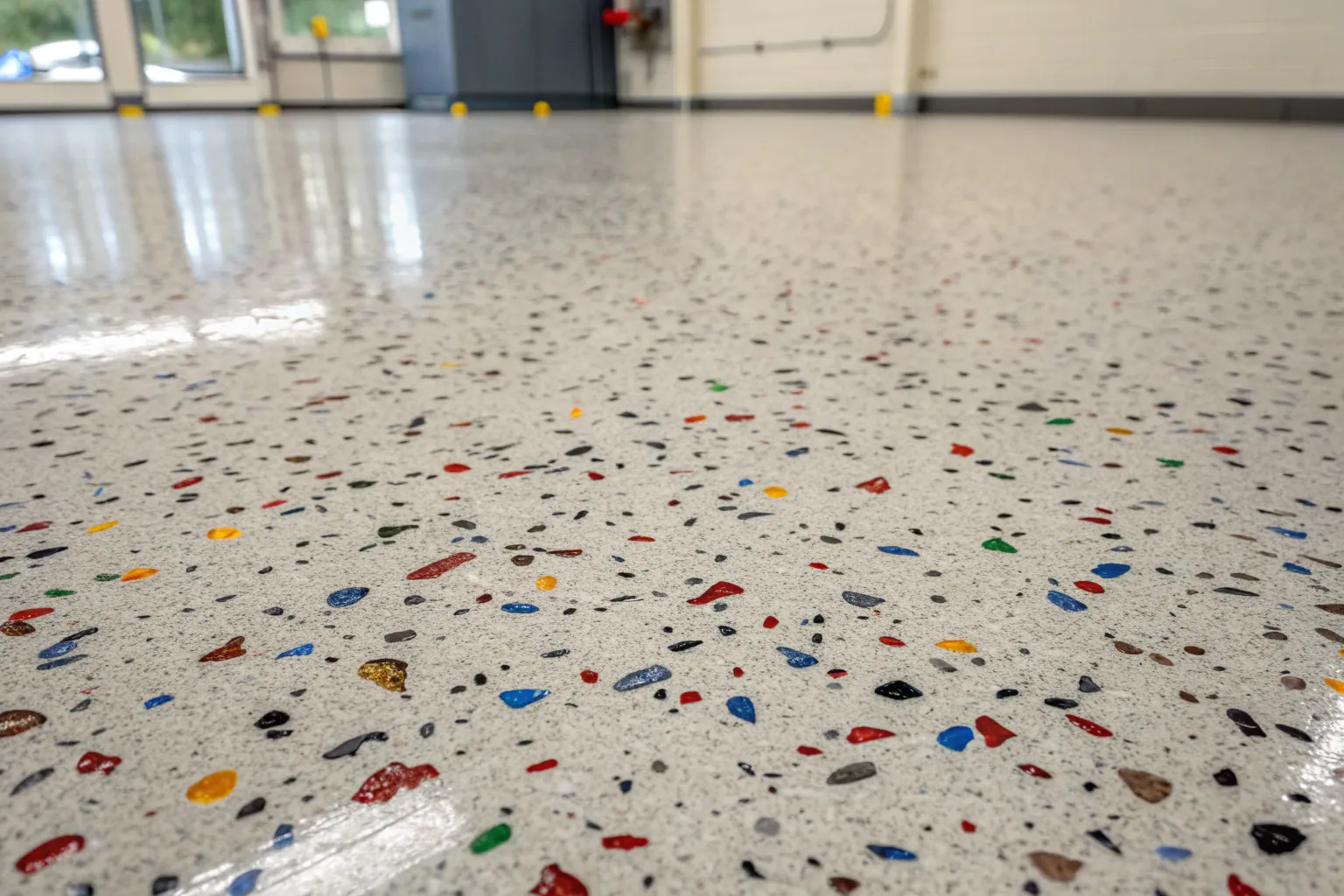
Is your concrete floor looking dull, stained or worn? We install flake epoxy flooring in Wollongong for homeowners who want to upgrade bare or tired concrete, especially in garages.
You may like the idea of an epoxy floor but not be sure how a flake finish differs from plain epoxy. That’s a fair question, and it helps to have the answer before you book.
On this page, we explain how a flake floor is built, layer by layer. We cover full and partial flake broadcast options, surface preparation, and how installation conditions are checked. You’ll also see what the finished surface feels like and the limitations to weigh up.
When you’re ready, get in touch to discuss your floor and request a quote.
How a Flake Epoxy Floor Is Built, Layer by Layer
The difference between epoxy and flake epoxy flooring is the flake layer. With flake epoxy, vinyl flakes are broadcast by hand into the epoxy base coat. The flakes embed as the coating cures and are then sealed with clear topcoat(s). This creates a seamless, textured, multi-coloured finish. Plain epoxy has no flake layer, so it keeps a uniform look without that decorative texture.
A flake epoxy floor is built in stages. Each layer has its own job:
- Preparation: The concrete is prepared so the coating has a sound surface to bond to.
- Primer, where used: Some systems include a primer coat before the base coat.
- Pigmented base coat: A coloured epoxy layer is applied across the floor.
- Hand-broadcast vinyl flakes: Flakes are spread by hand into the wet base coat.
- Scraping and vacuuming: Once cured, loose and raised flakes are scraped back and vacuumed away.
- Clear topcoat(s): One or more clear coats seal the flakes in.
As the base coat cures, the flakes lock into place. That’s what gives the floor its seamless surface and speckled, multi-coloured appearance.
So when you book a flake epoxy floor, you’re booking this full layered system, not a single coat of paint-on epoxy.
Full vs Partial Flake Broadcast: Choosing Coverage and Look
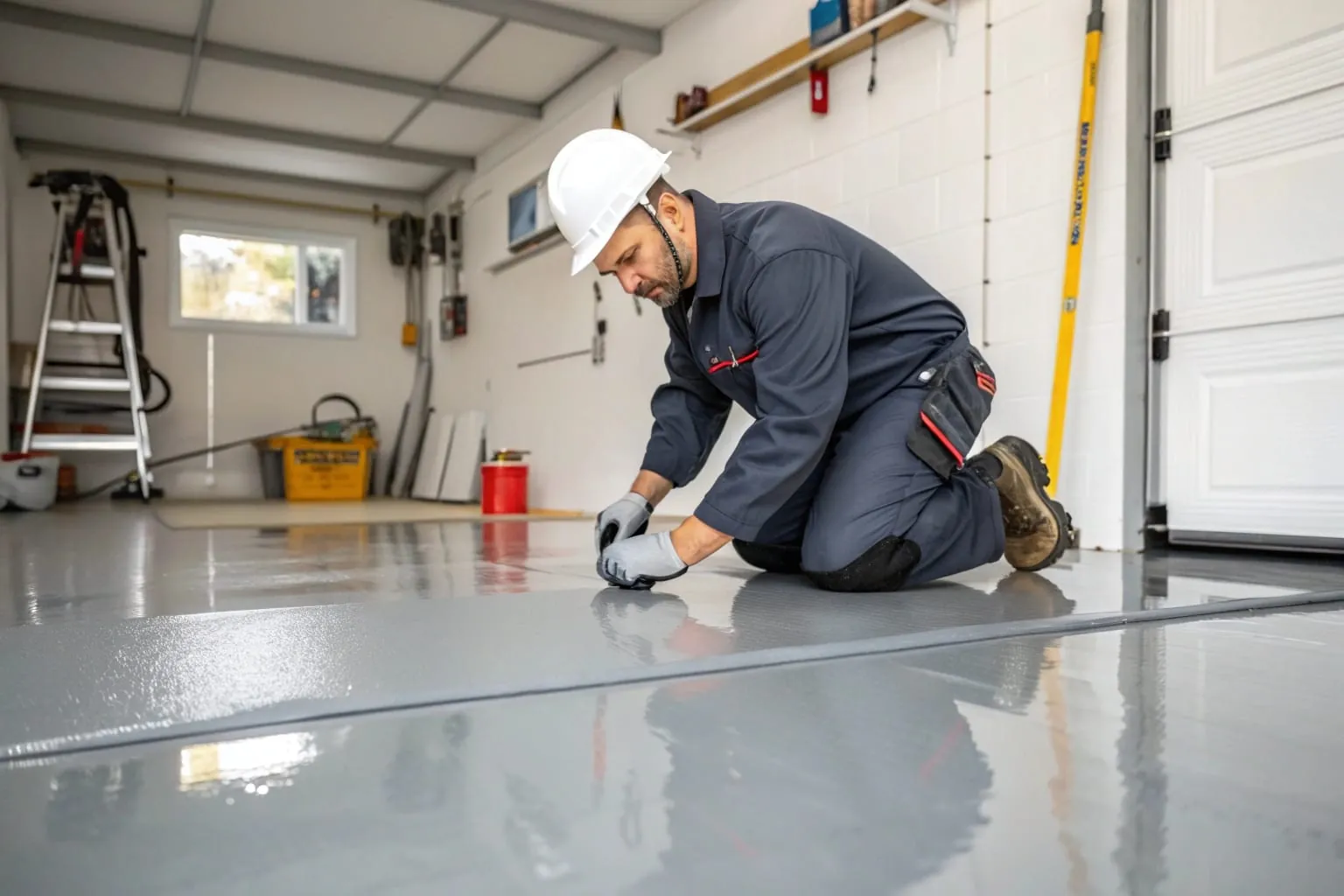
One of the main choices with a flake floor is how many flakes go into the base coat. This is called the broadcast, and there are two common options.
Full broadcast: Flakes are spread until they aim to cover the base coat entirely. The coloured base coat sits underneath, hidden by a dense layer of flakes.
Partial or random broadcast: Flakes are scattered more lightly, so some of the base coat colour shows through. This option is mainly decorative. It does not have the same protective attributes as a full broadcast.
The density of the broadcast shapes three things: how the floor looks, how the surface feels underfoot, and how much protection the flake layer adds.
You’ll also choose a flake blend and colour. This is part of picking the overall look of your floor.
When deciding, it helps to weigh the appearance you want against the level of coverage you need. We can talk through both options with you before any work begins.
Surface Preparation Is the Foundation of the Floor’s Bond
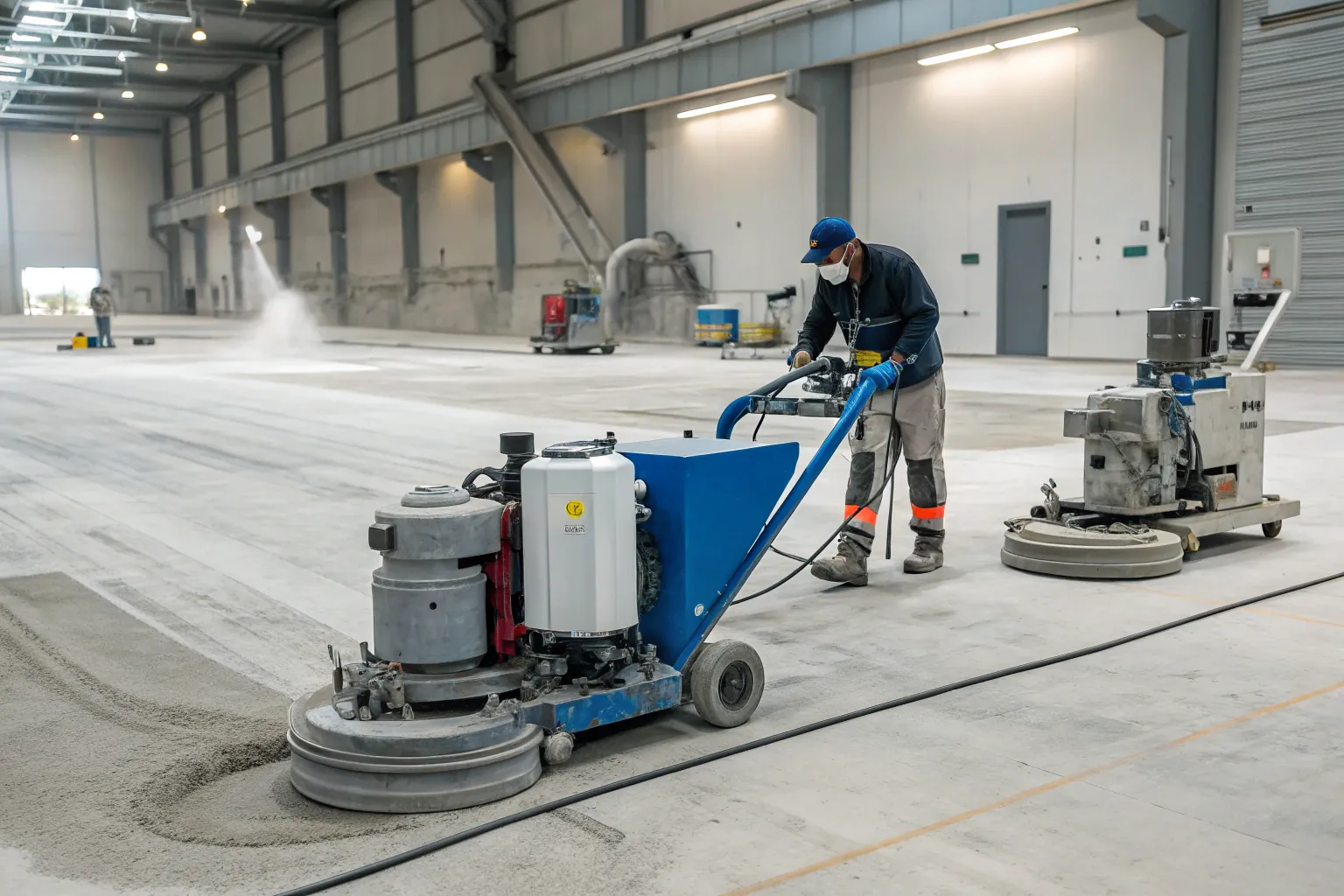
If you’ve seen an epoxy floor peel or lift, preparation is often part of the story. A coating can only hold on as well as the surface underneath it allows. That’s why preparation is a key part of the quality of a flake floor.
Preparation usually involves several steps:
- Cleaning: Dirt, grease and other contaminants are removed from the concrete.
- Mechanical profiling: The surface is opened up by diamond grinding or shot blasting. This gives the coating a surface it can bond to.
- Repairs: Cracks, holes and control joints are repaired before any coating goes down.
- Moisture assessment: The slab is checked for moisture.
Moisture matters because water in the slab can push against the coating from below. One manufacturer warns that applying epoxy without a moisture barrier risks delamination from hydrostatic pressure. Delamination is when the coating separates from the concrete.
The layers you see on top depend on the work done underneath. Good preparation gives the whole flake system a sound base to bond to.
Checking Humidity, Dew Point and Temperature Before Installing in Wollongong
Weather can affect when a flake epoxy floor is installed. Air moisture, surface temperature and rain all play a part in how the coating goes down and cures. That’s why installation conditions are checked before work starts.
Humidity: For standard epoxy systems, relative humidity should typically not exceed 85%.
Dew point: The concrete surface should be at least 3 °C above the dew point, and preferably 5 °C above it. If it isn’t, a defect called blush or bloom can occur on the coating.
Rain: One manufacturer advises against applying the coating when rain is expected.
Temperature: Cooler temperatures increase drying time.
Here’s how this relates to Wollongong. Bureau of Meteorology data from the Wollongong University station shows about 1,323.7 mm of mean annual rainfall, spread over about 101 rain days. Mean 9am relative humidity sits between 55% and 73%. These averages are below the 85% guide, but conditions still change from day to day.
In the cooler months, mean minimum temperatures in July and August are 8.3–8.8 °C. Cooler weather like this means drying can take longer.
For your project, you can expect installation days to be checked and scheduled around the conditions on the day.
Topcoats, Texture and Slip: What the Finished Surface Feels Like
A flake floor has some texture, but it shouldn’t feel overly rough. After the base coat cures, the floor is scraped. This knocks down flake edges that stick up, so the surface isn’t left jagged.
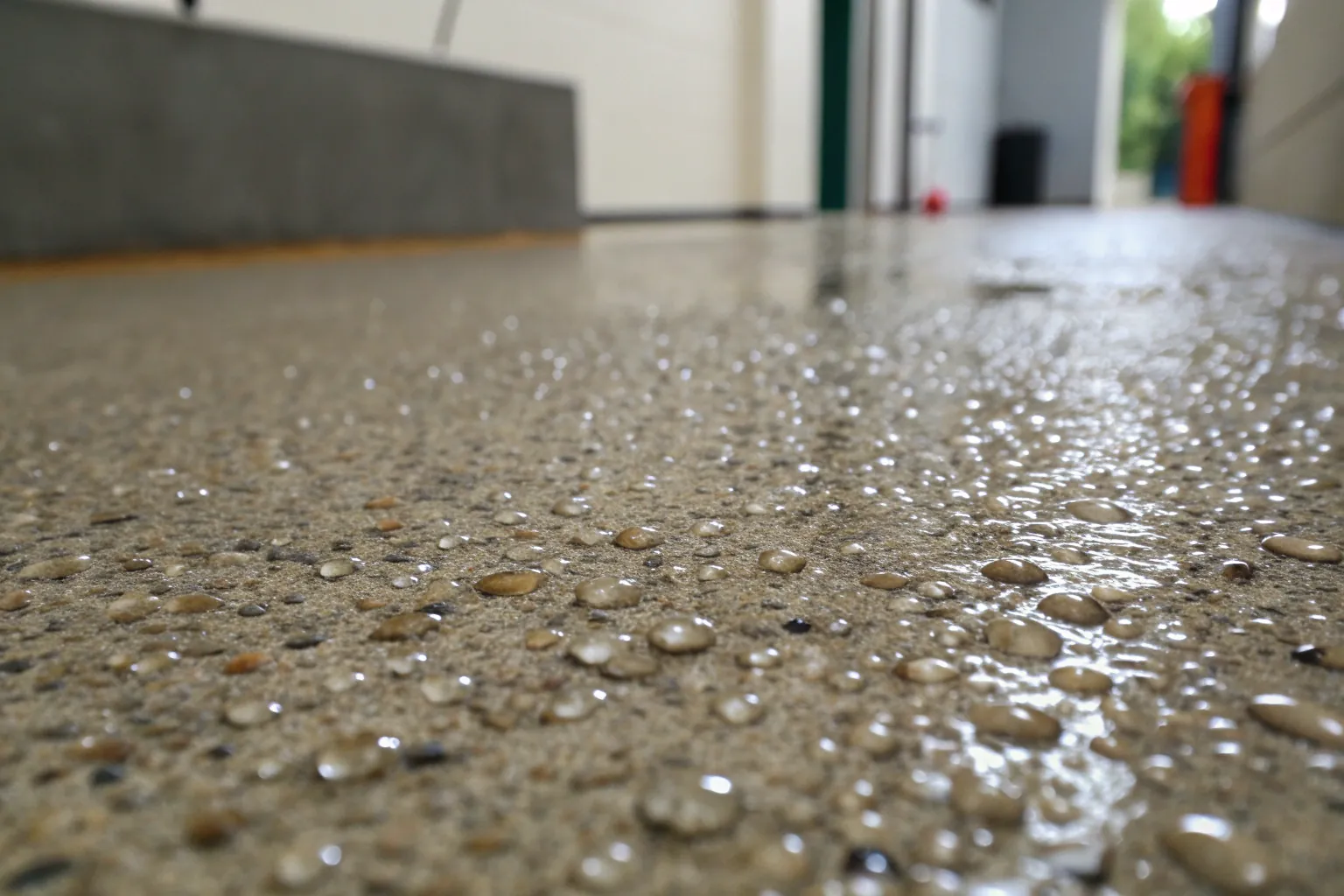
Topcoats and texture: The number of topcoats depends on the texture you want and the level of encapsulation. Encapsulation means how fully the flakes are sealed in. Fewer coats leave more of the flake texture. More coats bury the flakes more deeply for a smoother feel.
What topcoats do: Topcoats are usually polyurethane or polyaspartic clears. They help protect the colour, add UV stability and make the floor easier to clean.
Slip: If you’re wondering whether the floor will be slippery, it’s a fair thing to ask. SafeWork NSW notes that sealed interior concrete can become more slippery. It also refers to AS 4586, the Australian Standard that classifies the slip resistance of new pedestrian surfaces.
We’re happy to talk through topcoat and texture choices with you, so you know what to expect from the finished floor.
Limitations to Weigh Before Choosing a Flake Epoxy Floor
Every flooring option has downsides. Knowing them up front helps you make a clear decision before you book.
Yellowing and chalking: Epoxies can chalk and yellow with age and extended UV exposure. Extended exposure to artificial light can have a similar effect. Your topcoat choice is relevant here, so it’s worth discussing if your floor gets a lot of light.
Slab moisture: Moisture in the concrete can lead to delamination where it isn’t addressed. This is one reason the slab is checked for moisture during preparation.
Poor preparation: When epoxy floors fail, poor preparation comes up again and again. A coating that goes onto a dirty, smooth or damaged surface has a weaker base to bond to.
Hot tyre pickup: Hot tyre pickup is a known concern with garage coatings. It’s where hot tyres can lift or mark the coating after a car is parked.
These risks relate to how the floor is prepared and which system is chosen. We can talk through each one with you, so you can weigh them against what you want from your floor.
Frequently Asked Questions
How long does a flake epoxy floor last?
There’s no single lifespan that applies to every flake floor. How long it lasts depends on several factors, including the quality of the preparation, moisture in the slab, the type of topcoat, UV exposure and how the floor is used.
Do flake epoxy floors crack?
Existing cracks and joints in the concrete are assessed and repaired during preparation, before the coating goes down. The coating itself doesn’t stop the concrete slab underneath from cracking.
Can flake epoxy go over an existing epoxy floor?
It depends on the condition of the existing coating. Some jobs may involve removing the old coating before the floor is prepared. The right approach comes down to what’s already on your floor.
Can flake epoxy be applied to a new concrete slab?
New concrete needs time to cure first. As one example, a manufacturer requires at least 28 days of concrete curing and recommends slab relative humidity below 80%. Requirements vary by product.
What affects the cost of a flake epoxy floor quote?
Several things shape the cost of a flake epoxy floor, including:
- floor area
- slab condition and any repairs needed
- removal of an existing coating
- the preparation method
- a moisture primer, if needed
- broadcast density
- topcoat type and number of coats
- access to the area
Get in touch to discuss your floor, and we can talk through what your quote would include.