
Residential & Commercial Epoxy Specialists
Chip and Scratch Epoxy Repair in Wollongong
- Illawarra-Wide Coverage
- Fast, Free Quotes
Get a Free Quote
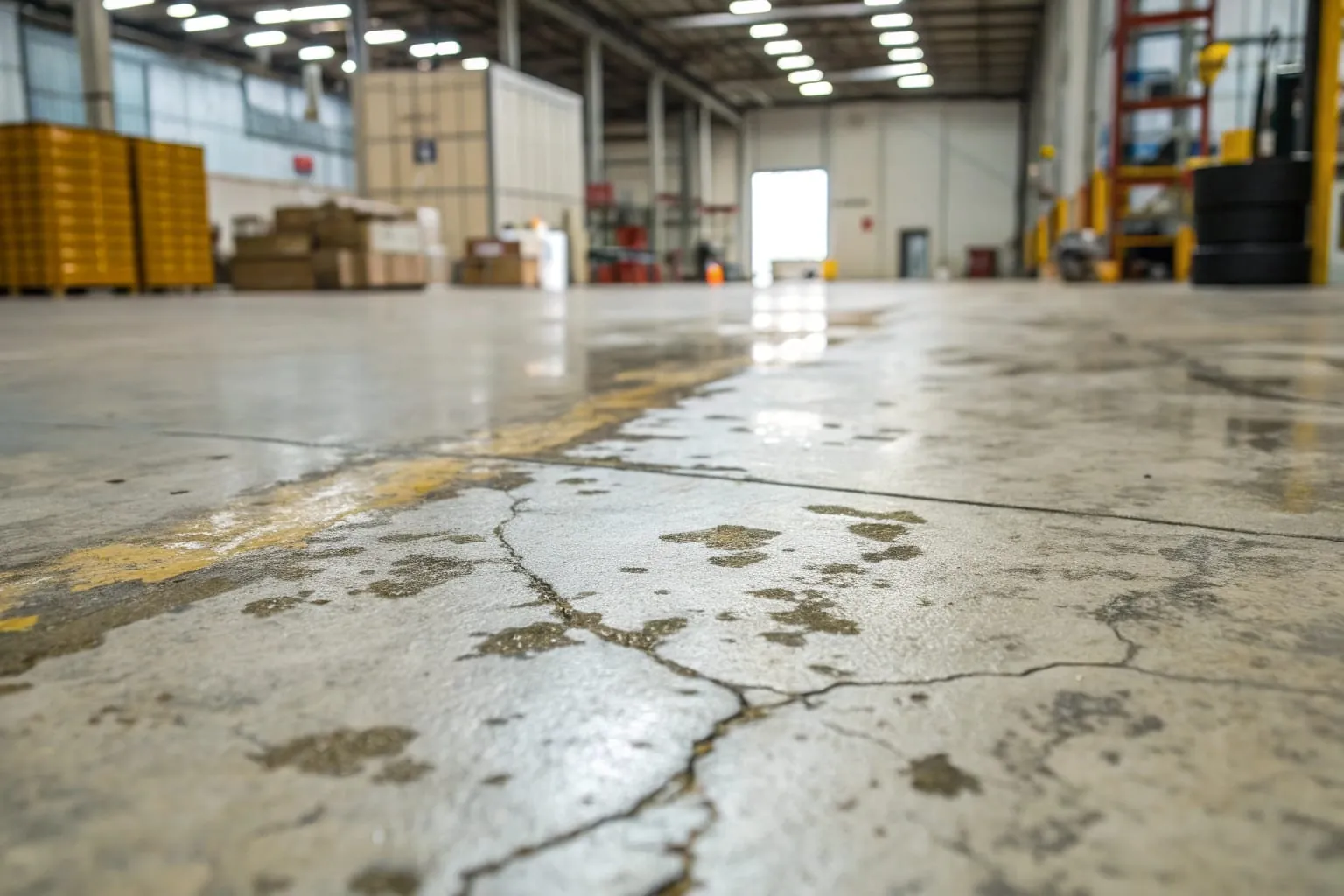
We provide chip and scratch epoxy repair in Wollongong for epoxy floors that are still sound but have picked up localised damage.
Most repairs start with one of two problems. A chip is typically caused by impact, such as a dropped heavy object, and it can expose concrete underneath. Scratches are different. They are marks worn into the coating, and they can dull the look of your floor.
On this page, we explain how each type of damage is repaired and when a patch may not be enough. We also cover what to expect with colour matching and curing.
If your epoxy floor has chips or scratches, contact us on 0242026324 to arrange an assessment.
How Chips and Scratches in Epoxy Floors Are Repaired
An epoxy floor can generally be touched up where the surrounding coating is sound. Loose coating is removed, the edges are bevelled or abraded, and the damage is filled with a compatible epoxy. Touch-ups generally overlap into the sound coating around the repair. If the floor is peeling, bubbling or delaminating, it may need a recoat instead.
Chips and scratches are different types of damage, so they are repaired in different ways.
Chips are typically caused by impact, such as a heavy object dropped on the floor. A chip can expose concrete under the coating. Deeper chips and gouges need an epoxy patch to fill the damaged area.
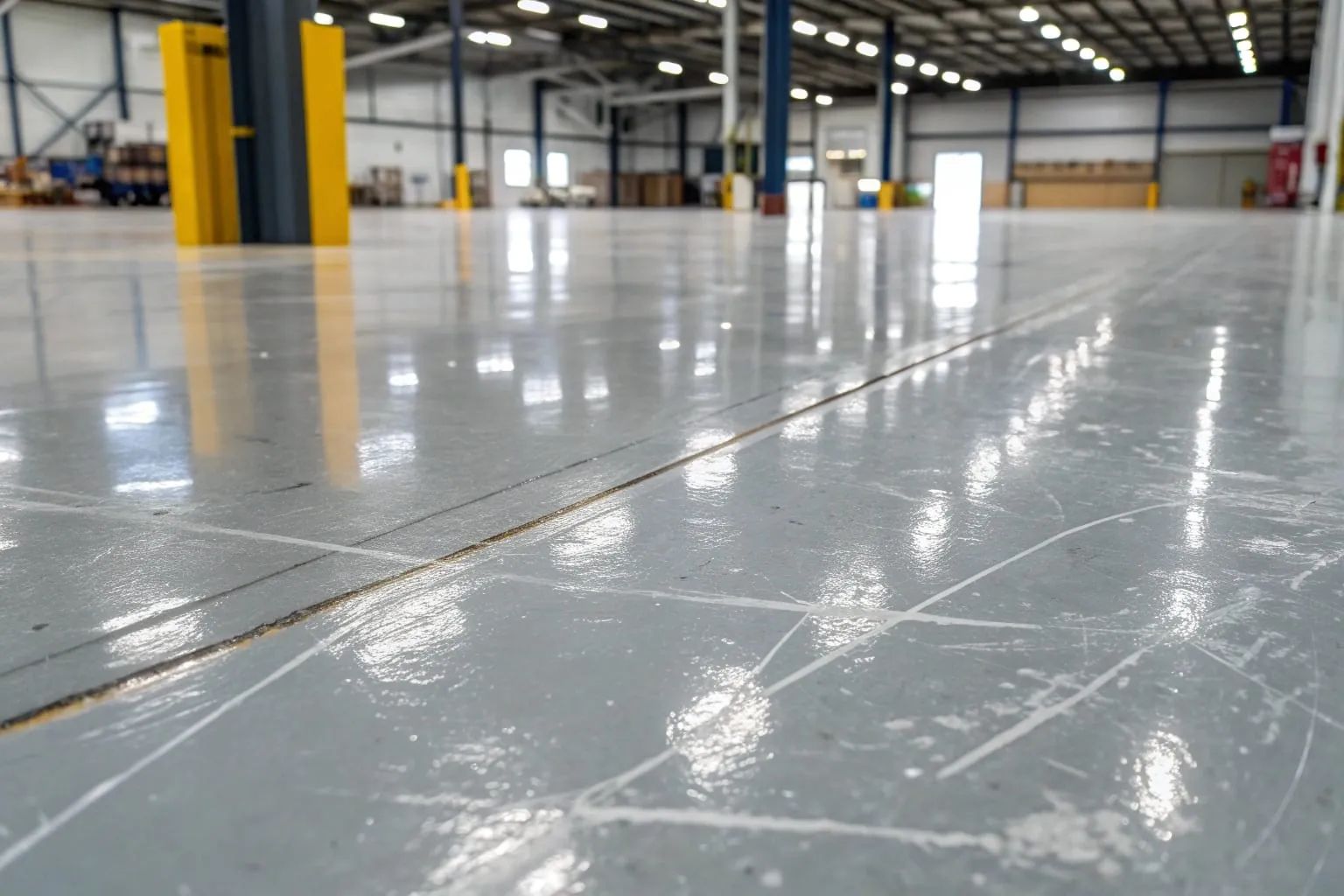
Scratches are abrasion marks in the epoxy film. Light surface scratches may be addressed with surface refinishing or a topcoat.
This service repairs chipping damage in an existing epoxy coating. It is not the same as "chip" or flake flooring, which is a decorative epoxy finish.
What the Epoxy Chip Repair Process Typically Involves
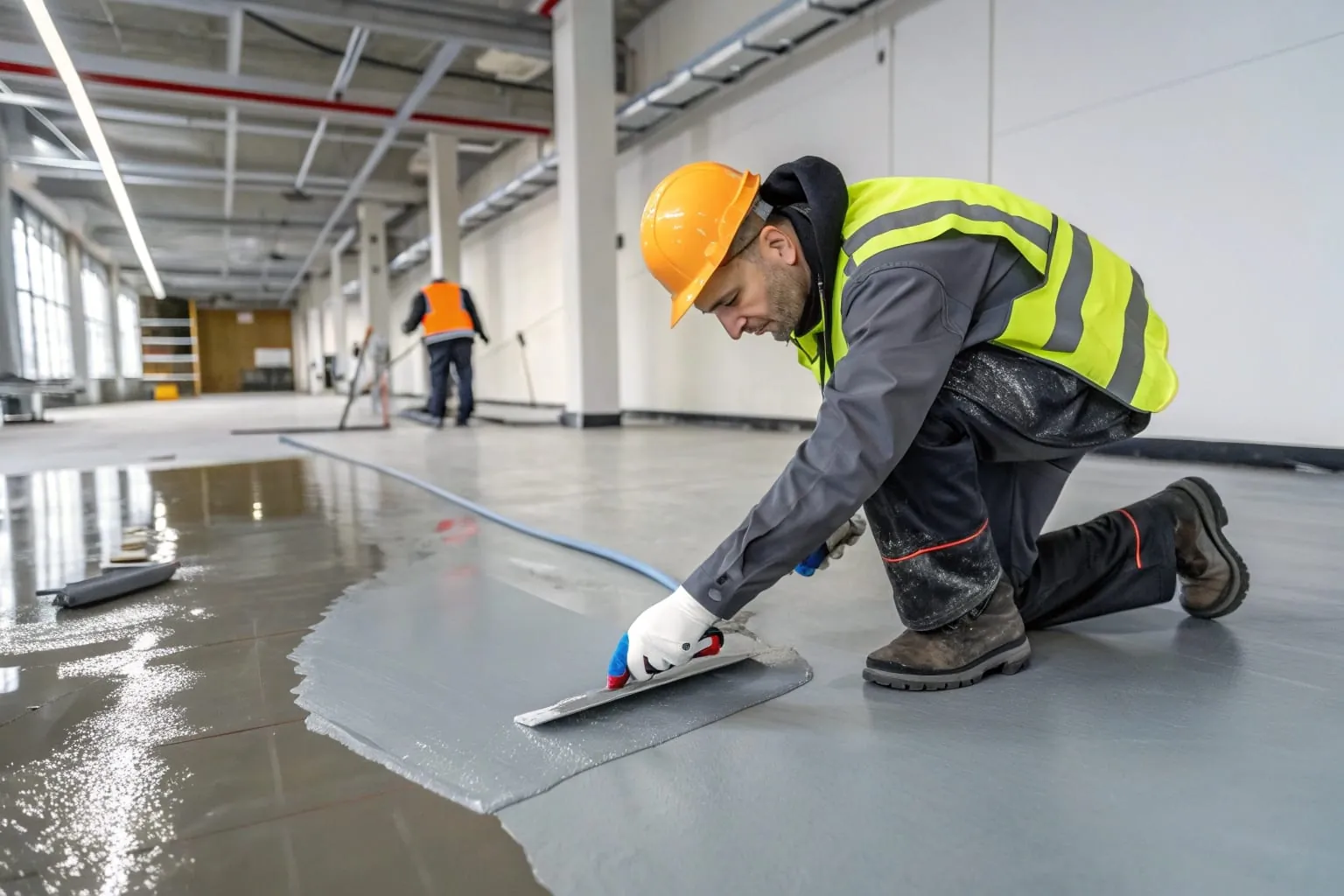
Every repair starts with preparation. Loose or weak coating is removed first, because a repair placed over unsound coating is not reliable.
A typical chip repair involves these steps:
- Assess the damage and the surrounding coating.
- Clean and degrease the area.
- Remove any loose or weak coating.
- Bevel or abrade the edges of the damaged area.
- Fill the damage with a compatible epoxy.
- Level the repair once it has cured.
- Apply a topcoat where needed.
Touch-ups generally overlap into the sound coating around the damaged area.
Some preparation work involves grinding or sanding concrete. Concrete can contain crystalline silica, and in NSW, dust from processing silica-containing materials is regulated. You can read more about these rules on the SafeWork NSW website.
When a Spot Repair May Not Be the Right Fix
A spot repair works best when the coating around the damage is still sound. A repair placed over unsound coating is not reliable, so the condition of the surrounding floor matters as much as the chip or scratch itself.
Some types of damage generally call for more than a patch. If your coating is peeling, bubbling, delaminating or soft, it usually needs grinding and reapplication rather than a spot repair.
The amount of damage can also point to a different fix. If chips are widespread across the floor, or they appear alongside peeling or discolouration, your floor may need a recoat.
An assessment is the best way to find out whether a spot repair suits your floor. We look at the damage and the surrounding coating before recommending the next step.
Realistic Expectations for Colour and Finish Matching
A good repair can blend well with your floor, but it may not be completely invisible. A few factors affect how closely a repair matches the surrounding coating.
Epoxy colour can vary between batches. This means new repair material may look slightly different from the coating that was originally laid.
Many epoxies are not UV colour-stable. Over time, they may yellow or amber, so an older floor may no longer match its original colour.
Flake, quartz and metallic floors need extra care. These systems need tinted, colour-matched repair material to suit the existing finish.
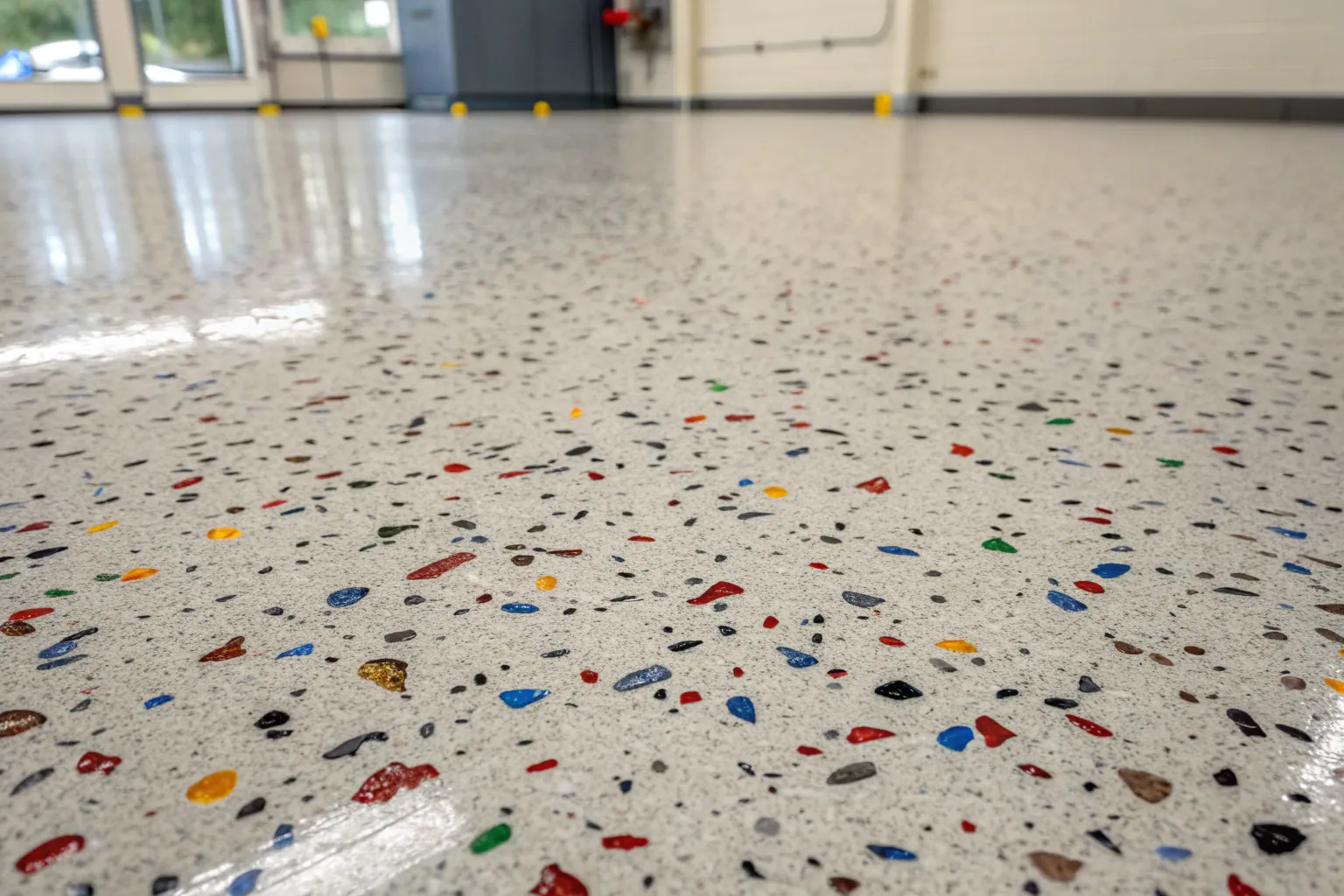
To help the repair sit more evenly with the rest of the floor, a topcoat may be applied over a wider blend area. Clear aliphatic urethane topcoats can reduce UV colour change over time.
How Wollongong's Cooler Months Can Affect Curing and Return to Use
How soon you can use your floor again depends on the repair product and the conditions on site. There is no single cure time that applies to every repair.
Temperature plays a big part. Manufacturer data shows that lower substrate temperatures can make epoxy thicker and slow down how quickly it cures.
In Wollongong, mean winter maximum temperatures sit around 17°C. This means cure and return-to-use times can be longer in cooler months.
Conditions are checked before a repair goes ahead, so you have a clearer idea of when your floor can be used again.
Frequently Asked Questions
Will new epoxy bond to my existing epoxy floor?
New epoxy can bond to an existing epoxy floor when the old coating is sound and clean. Once cured epoxy has passed its maximum recoat time, the surface needs to be abraded so the new material can adhere. This is why most repairs to an older floor can't be done without sanding or abrading the area first.
What affects the cost of repairing chips and scratches in epoxy?
Several factors affect the cost of a repair, including:
- the number, size and depth of the chips or scratches;
- the type of coating system on your floor;
- how wide the blend area needs to be;
- the condition of the surrounding coating;
- the preparation and dust-control needs of the job.
Should I try to repair epoxy chips myself?
There are a few things to think about before trying a repair yourself. Some uncured epoxy products are classified as skin sensitisers, which means they may cause an allergic skin reaction. Grinding concrete can also create silica dust, which is regulated in NSW. Correct preparation affects how well the repair bonds and how closely it matches the rest of your floor.
How can I help prevent new chips and scratches?
A few simple habits can help protect your floor. Use mats in high-use areas, lift heavy items rather than dragging them, and clean up spills and dirt promptly.
How should I clean my epoxy floor after a repair?
Use gentle, pH-neutral cleaners on your epoxy floor after a repair.