
Residential & Commercial Epoxy Specialists
Metallic Epoxy Flooring in Wollongong: Decorative Resin Finishes for Concrete Floors
- Illawarra-Wide Coverage
- Fast, Free Quotes
Get a Free Quote
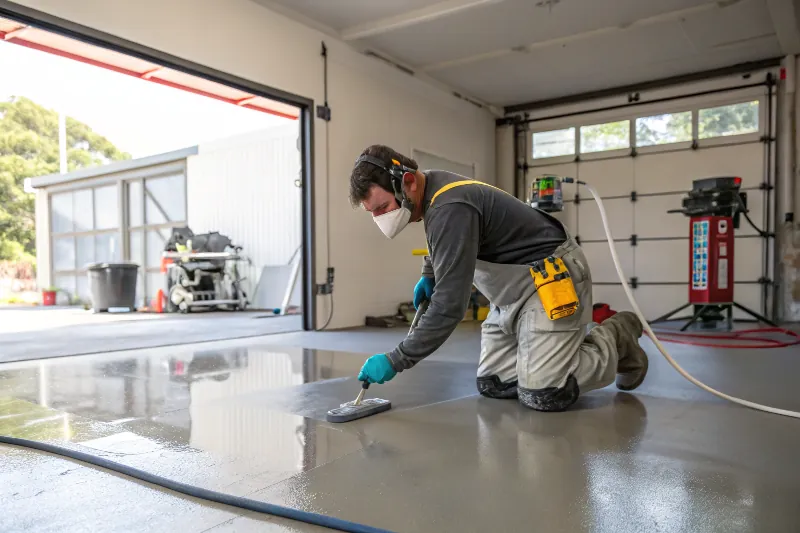
Metallic epoxy flooring in Wollongong is a decorative, seamless resin coating applied over concrete. If you want a distinctive finish for your garage, living area, showroom or retail space, it’s one option worth looking at.
This page explains how the metallic finish is created and what goes into the layered system beneath it. We also cover why surface preparation matters, how site conditions can affect installation and curing times, and the trade-offs to weigh up before you decide.
When you’re ready, get in touch to discuss your space and request a quote.
How Metallic Epoxy Differs From Standard Epoxy Flooring
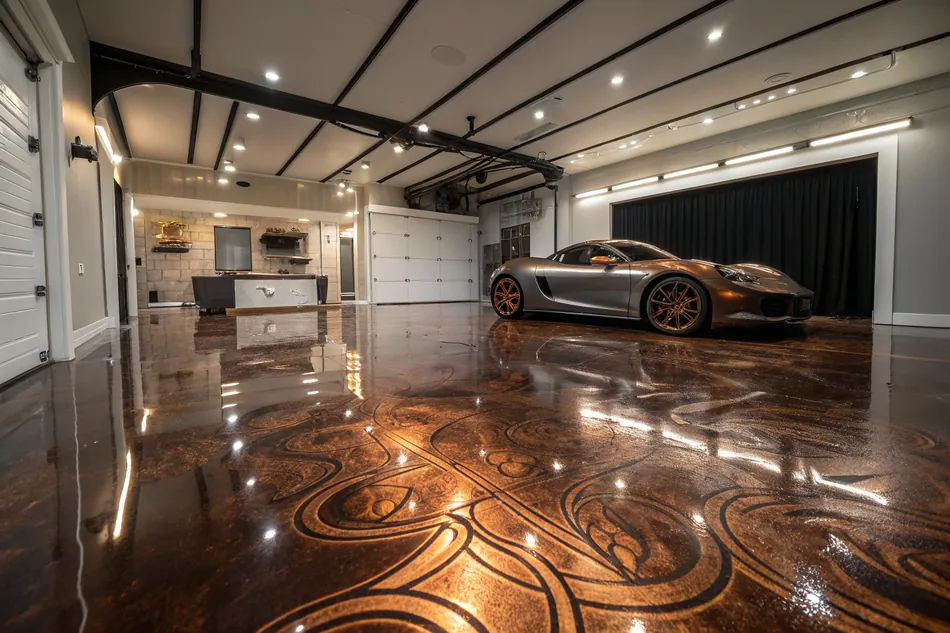
Metallic epoxy starts with clear epoxy resin. Metallic pigments are blended into the resin before it goes down. While the material is still wet, it is moved across the floor so the pigment forms swirls and cells.
Because the pattern forms while the resin is wet, no two floors turn out the same. Each metallic floor has its own unique look.
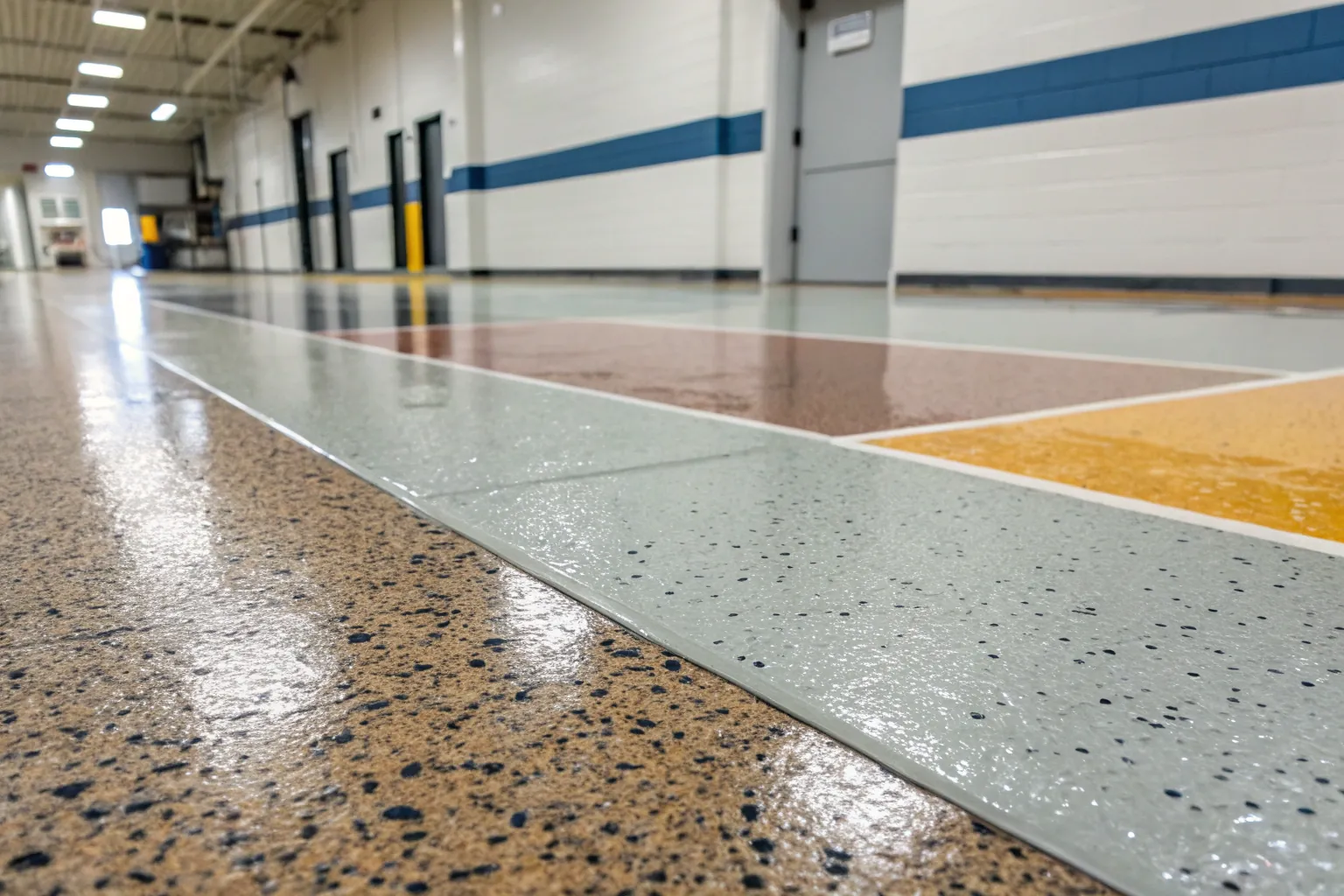
This is what sets it apart from other epoxy finishes. A flake or chip finish has a speckled look. A solid-colour finish is one even colour across the floor. Metallic epoxy has a flowing, layered effect with depth and movement.
If you’re drawn to that swirling, one-of-a-kind look, metallic epoxy may be the finish you’re after. If you’d prefer a speckled or single-colour floor, a different epoxy finish would be a closer match.
Design Choices and Spaces Suited to a Metallic Epoxy Finish
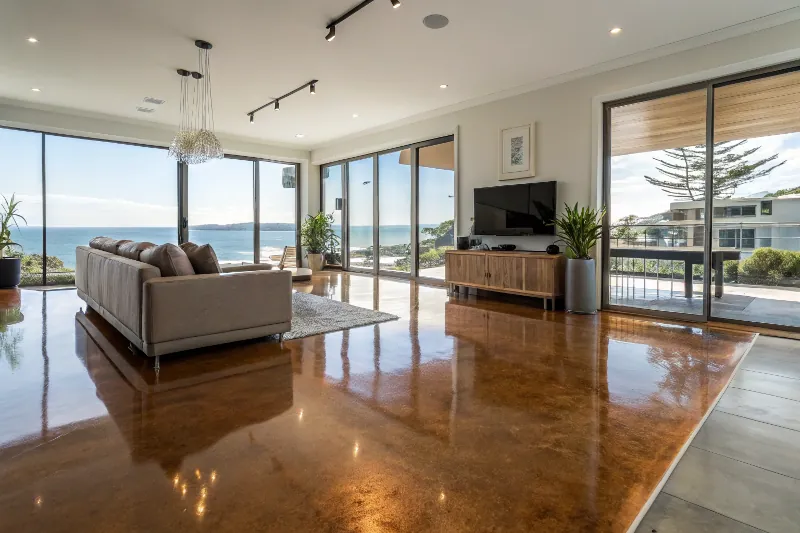
A metallic epoxy floor gives you a few design choices to work through. These include:
- the colours you select;
- how many colours are used;
- how much movement or effect you’d like in the pattern;
- the finish or sheen of the surface.
Metallic epoxy is commonly used in garages, interior living areas, showrooms and retail spaces. In each case, the coating is applied over a concrete floor.
Keep in mind that every metallic floor is unique. Your design choices guide the overall look, but the final pattern forms as the resin is worked. That means no two finishes will look identical, even when the same colours are used.
The Surface Preparation and Layered System Behind a Quality Metallic Floor
The look of a metallic floor depends on what happens before any colour goes down. Preparation comes first.
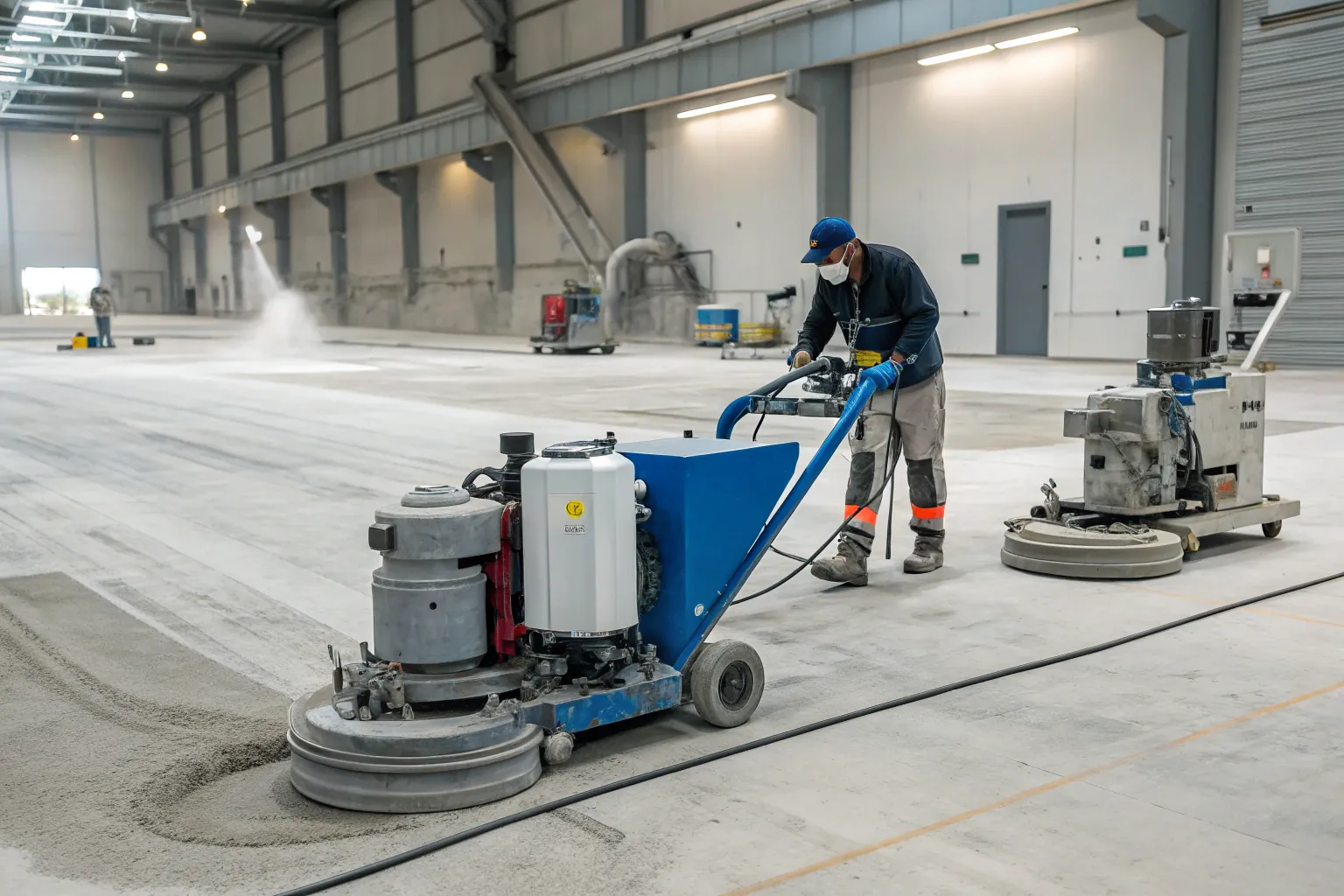
The concrete is ground using industrial machinery. Next, cracks are inspected and filled with epoxy filler. The filler is left to cure fully before any coating is applied.
The moisture in the concrete is also checked before application. Manufacturer data sheets specify no rising moisture. Where needed, a moisture vapour barrier may form part of the system.
Once the concrete is ready, the floor is built up in three layers:
- Base coat: a pigmented coat that hides the grey concrete underneath.
- Metallic body coat: the layer that creates the swirls, cells and movement.
- Topcoat: a clear urethane or polyaspartic coat that adds scratch and UV protection.
Grinding concrete can also generate silica dust. Concrete can contain up to 90% silica, and control measures are required when processing it. You can read more in SafeWork NSW’s guidance on working safely with crystalline silica.
Why Site Conditions in Wollongong Can Affect Installation and Curing Times
Metallic epoxy is sensitive to the conditions around it while it goes down and cures. That’s why checks happen before any resin is poured.
Manufacturers direct installers to check three things before application:
- the moisture in the concrete;
- the relative humidity of the air;
- the dew point.
Manufacturer guidance is to keep the concrete and the uncured floor at least 3°C above the dew point. This helps reduce the risk of condensation or blooming on the surface.
Temperature and humidity also affect how long the floor takes to cure. At low temperatures and/or high humidity, curing time will increase. While the floor cures, it must be protected from damp, condensation and contact with water.
For some local context, historical Bureau of Meteorology data for the Wollongong Post Office site (1907–1950) shows a mean 9am relative humidity of 64–74% and a mean 3pm relative humidity of 63–73%. Conditions on the day of your installation are what matter, so they are checked on site.
The result is that your timeline can vary. How soon you can walk or drive on the floor depends on the conditions during and after installation.
Weighing the Trade-Offs: Slip Resistance, UV Ambering and Topcoat Choice
Metallic epoxy has a striking look, but it also comes with trade-offs. It helps to know them before you decide.
The main disadvantages of metallic epoxy flooring are:
- The high-gloss surface can be slippery. An anti-slip additive is an option.
- Direct sunlight and UV may cause yellowing or ambering over time. UV-stable topcoats slow this but do not entirely prevent it.
- The result depends on thorough surface preparation and moisture checks.
- Humidity and dew point can extend curing time and affect the finish if conditions are not managed.
- Each pattern is unique, so the exact look cannot be replicated.
Slip resistance. The glossy finish is part of the appeal, but it is a real slip trade-off. An anti-slip additive is an available option. If the coating extends to stairs, ramps or landings, the National Construction Code (NCC) requires slip-resistance classifications under AS 4586 for those areas.
UV ambering. Australia has some of the highest UV levels in the world. Direct sunlight and UV may result in chalking, colour variation and yellowing over time. This matters most in spots like sun-facing rooms or garages where the door is often left open. UV-stable topcoats slow ambering significantly but will not entirely prevent it over a long period.
Topcoat choice. The topcoat can be epoxy, urethane or polyaspartic. The one you choose affects how well the floor is protected, so it’s worth talking through for your space.
Frequently Asked Questions
Is a metallic epoxy floor better than tiles?
Neither is better for every space. Metallic epoxy gives you a seamless, decorative finish, and every floor has its own unique pattern. It also comes with the trade-offs covered on this page, such as a glossy surface that can be slippery, possible yellowing from direct sunlight over time, and curing times that depend on site conditions. The right choice depends on the look you want and how you use the space.
Can metallic epoxy be applied over an existing floor coating?
It depends on the condition of the existing coating. In some cases it may need to be removed first. This is assessed as part of preparation, before any new coating goes down.
How should a metallic epoxy floor be cared for over time?
Sweep the floor regularly and clean up spills promptly. The topcoat provides scratch and UV protection, so it does much of the work of protecting the metallic layer below. Prolonged direct sun may contribute to yellowing, so it helps to limit strong sunlight where you can, such as by closing the garage door or using blinds in sun-facing rooms.
What affects the cost of a metallic epoxy floor?
Several things can affect the cost of your floor, including:
- the size of the floor area;
- the condition of the slab and any crack repair needed;
- removal of existing coatings;
- moisture mitigation needs;
- the type of topcoat;
- whether an anti-slip additive is added;
- the complexity of the design and the number of colours;
- stairs, edges and access to the space.
Do I need strata approval for a metallic epoxy floor in my unit?
Check before any work is booked. Your strata by-laws may set out what approvals are needed. Speak with your owners corporation, strata committee or strata managing agent to confirm what applies to your unit.
Does a metallic epoxy floor installer need a licence in NSW?
In NSW, a licence is required for residential building work valued at more than $5,000 (incl GST) in labour and materials. Before work begins, it’s a good idea to check the contractor’s details.