
Residential & Commercial Epoxy Specialists
Concrete Surface Preparation in Wollongong for Coatings, Sealers and Overlays
- Illawarra-Wide Coverage
- Fast, Free Quotes
Get a Free Quote
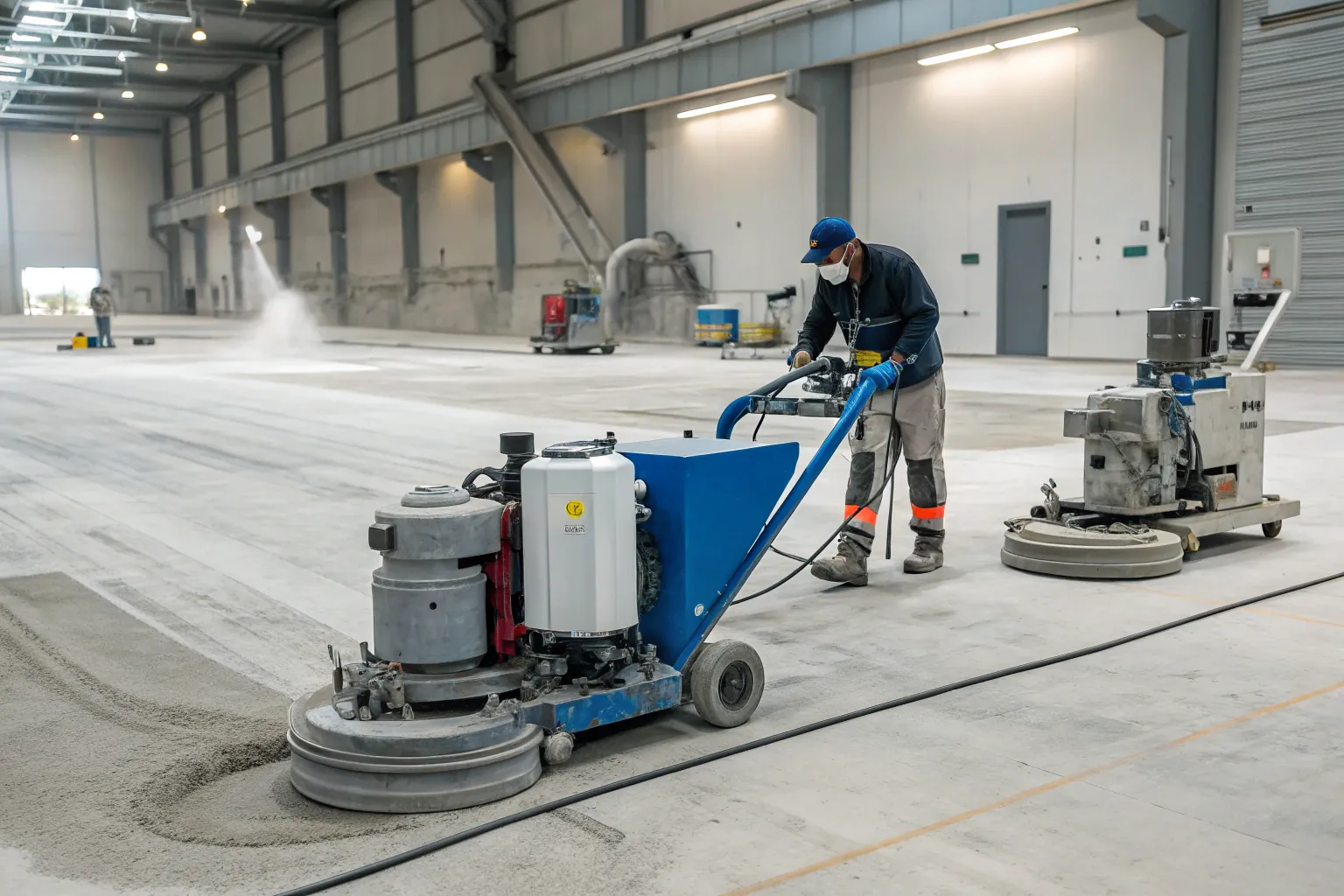
Our concrete surface preparation in Wollongong gets existing concrete ready to receive a finish, such as a coating, sealer or overlay. It is not the ground or sub-base work done before new concrete is poured.
You may be looking at this service because a coating has failed to bond. There may be an old film or sealer still on the floor. Oil or other contaminants may be sitting in the surface. Or you may not be sure what condition the slab is in.
This page explains what the service covers and the main prep methods. It also covers surface profile, moisture checks and how dust and safety are managed. If you have a floor that needs a new finish, get in touch to discuss the floor and what you plan to put on it.
Preparing Existing Concrete So a Coating or Overlay Can Bond
Concrete needs preparing before epoxy or other coatings because resinous coatings bond to concrete mainly through mechanical interlock rather than chemical adhesion. The coating grips the texture of the surface. For that to happen, the concrete needs to be clean, sound and roughened to a suitable profile. Laitance, dirt, oil, existing films, paint and old coatings are removed first. The profile required depends on the system going on top.
The goal of this service is simple: a clean, sound, roughened surface that is ready for the next stage.
Preparation typically moves through these stages:
- Substrate assessment – looking at the slab before any work starts.
- Mechanical removal – taking off surface films, contaminants and weak material.
- Weak or uneven areas – dealing with sections that are not sound or level.
- Final industrial vacuuming – removing dust and debris from the prepared surface.
- Moisture checks – confirming the slab's moisture condition before a finish goes down.
Applying the coating itself is a separate stage. This service covers getting the concrete ready to receive it. Concrete surface preparation is part of our floor refinishing service.
Removing Laitance, Old Coatings and Surface Contaminants
Getting the surface clean and free of films is often the first job. Laitance, curing compounds, existing coatings, paint and adhesives are all removed mechanically. That includes old paint, epoxy, sealer and glue.
Oil and other stains matter too. Manufacturer guidance lists industrial contaminants such as form oils, hydraulic or fuel oils, brake fluid and grease. These contaminants can block the bond between the concrete and the new coating, so they need to come off before any finish goes down.
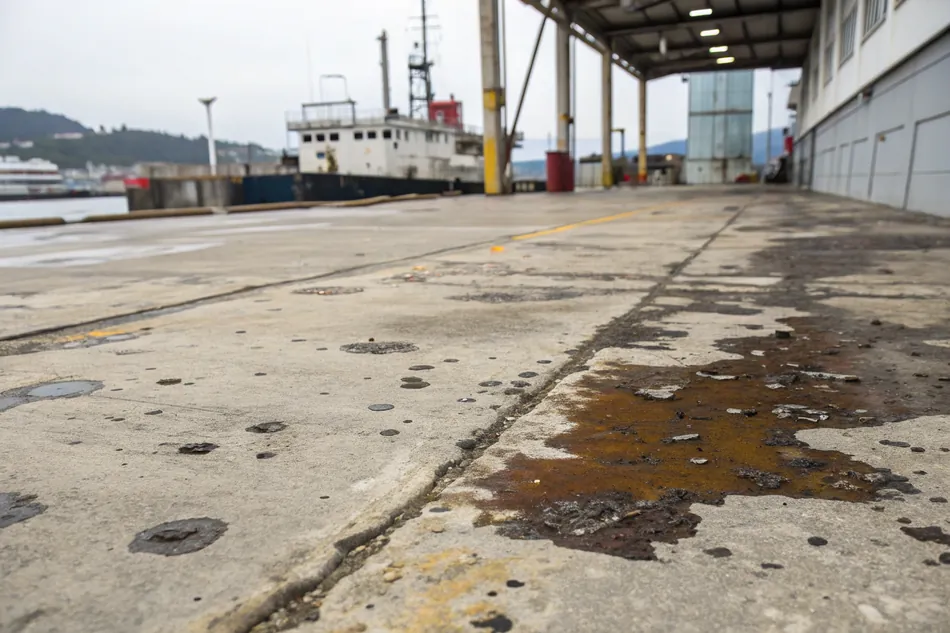
Wollongong has substantial industrial and workshop floor space, including around Port Kembla and Unanderra. Oil contamination is a recognised issue when preparing floors like these.
If your floor still has old vinyl, tiles or other coverings on it, these are not treated as routine removal. See the section on older floors and asbestos below before anything is disturbed.
Matching the Surface Profile and Prep Method to Your Intended Finish
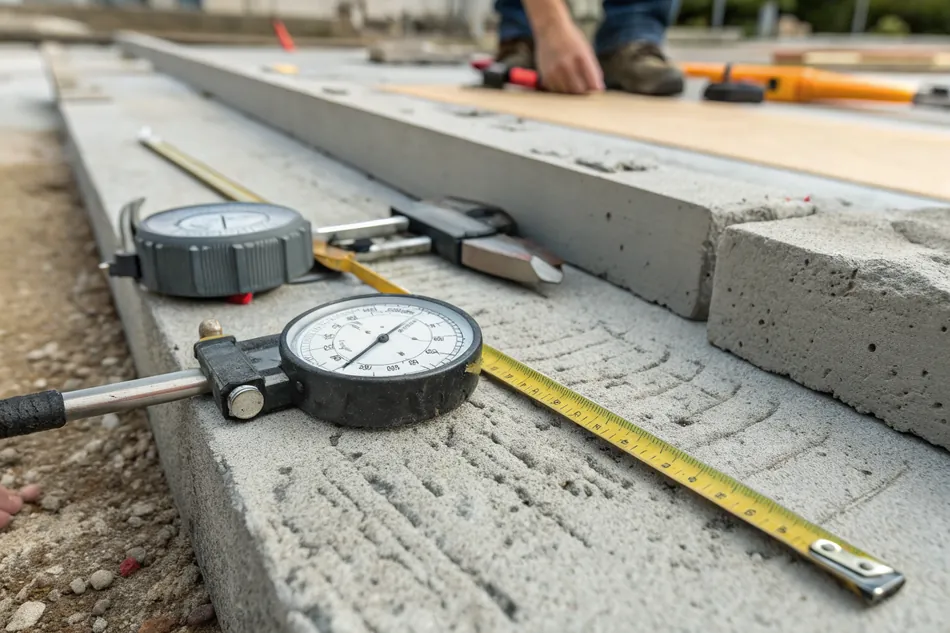
Surface profile describes how rough the prepared concrete is. It is measured using the ICRI Concrete Surface Profile (CSP) scale. The scale runs from CSP 1, which is minimal roughness, to CSP 10, which is very rough.
Industry guidance generally pairs profiles with finishes like this:
- CSP 1–2 – thin films.
- CSP 3–5 – self-levelling resinous or cement mortars.
- CSP 6–10 – conventional overlays.
These ranges are industry guidance, not an Australian Standard requirement. The profile your floor needs is set by the coating or overlay system and its manufacturer. That is why it helps to know what finish you plan to use before prep starts.
The method is then chosen to reach that profile. Mechanical options include diamond grinding, shot blasting and scarifying. Industry sources associate shot blasting with larger areas.
Checking Slab Condition and Moisture Before Any Coating Goes Down
Before a coating goes down, the slab needs to be checked. An assessment may cover the floor's construction, age, cohesive strength, cracks, porosity and moisture.
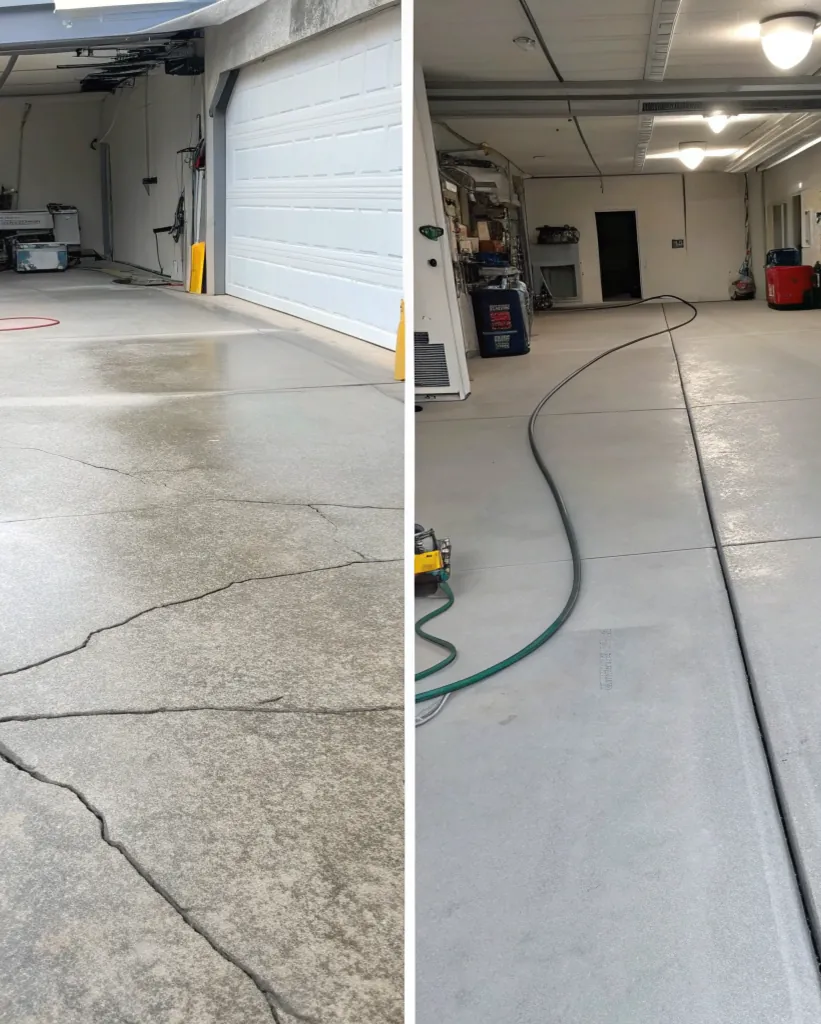
If parts of the slab are damp, cracked or uneven, these are dealt with before the finish is applied. Per manufacturer guidance, weak or deteriorated concrete is removed back to sound concrete, and high spots are ground off.
Moisture needs particular attention. It is a recognised cause of coating failure. One recognised way to check it is in-situ relative humidity (RH) probe testing to ASTM F2170. The acceptable RH limit for a coating is set by the coating manufacturer, so the result is read against the product you plan to use.
Controlling Silica Dust and Slurry During Concrete Prep in NSW
Grinding and other prep methods can create fine dust from concrete. In NSW, this is covered by work health and safety rules on crystalline silica. Under these rules, a person conducting a business or undertaking (PCBU) must not carry out or allow the processing of crystalline silica substances unless it is controlled.
Controlled processing requires at least one listed measure, such as:
- wet suppression;
- on-tool extraction;
- local exhaust ventilation.
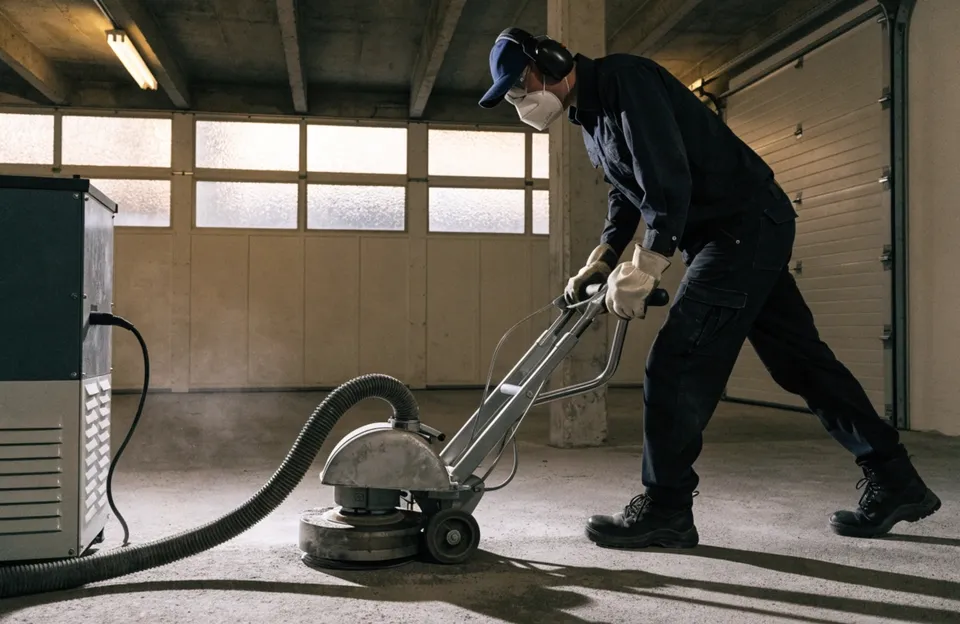
SafeWork NSW's code for working with concrete also calls for M or H class extraction units and vacuums. Respirators must be rated P2 or better. Surgical masks are not suitable.
For wet methods and outdoor areas, slurry containment matters as well. Slurry should be contained and kept out of stormwater. Wollongong City Council requires cutting and washout to happen away from the kerb and gutter, and significant fines can apply.
Older Wollongong Floors Where Coverings May Contain Asbestos
If your floor has old vinyl, tiles or lino on it, it should not simply be ground off. Some older floor coverings may contain asbestos.
Wollongong City Council says houses built before 1990 have a good chance of containing asbestos, with vinyl tiling among the common locations. You can read the Council's guidance on being asbestos aware before disturbing old floor coverings. The NSW Government also lists floor tiles, vinyl sheets, plastic tiles and lino as known uses of asbestos.
SafeWork NSW advises doing nothing at a suspect site until a licensed professional has checked it. It recommends using a licensed removalist for any amount of asbestos.
For commercial buildings built before December 2003, ask to see the building's asbestos register before any work is planned.
Asbestos is not accepted at Whytes Gully, so disposal also needs to be handled through the right channels.
Frequently Asked Questions
Is concrete surface preparation the same as preparing the ground before pouring concrete?
No. Concrete surface preparation gets an existing or new slab ready to receive a finish, such as a coating, sealer or overlay. Preparing the ground or sub-base before concrete is poured is a different service.
Is acid etching enough to prepare concrete for a coating?
It depends on the product. Manufacturer guidance generally favours mechanical preparation. Some manufacturers state that acid or chemical etching is not acceptable for certain products. Check what the manufacturer of your chosen coating requires before deciding on a method.
Does a brand-new concrete slab still need preparing?
It may. New slabs may still need laitance removal and moisture checks. ARDEX notes that a typical 100 mm slab drying from one face with good ventilation takes about four months to reach equilibrium. Whether the slab is ready for a coating depends on the manufacturer's RH limits.
Can I prepare the concrete myself?
Grinding concrete produces respirable crystalline silica. SafeWork NSW sets controls for PCBUs, including wet suppression or on-tool extraction, M or H class vacuums, and respirators rated P2 or better. The profile and method also need to suit the coating you plan to use.
What affects how much preparation a floor needs?
Several things can affect the scope of the job:
- floor area and the prep method used;
- existing coatings or adhesives;
- contamination on or in the surface;
- the profile the finish requires;
- weak areas or cracks;
- moisture testing and any mitigation needed;
- dust and slurry containment;
- access to the area;
- possible asbestos assessment;
- waste disposal.