
Residential & Commercial Epoxy Specialists
Surface Grinding and Shot Blasting in Wollongong for Concrete Floor Preparation
- Illawarra-Wide Coverage
- Fast, Free Quotes
Get a Free Quote
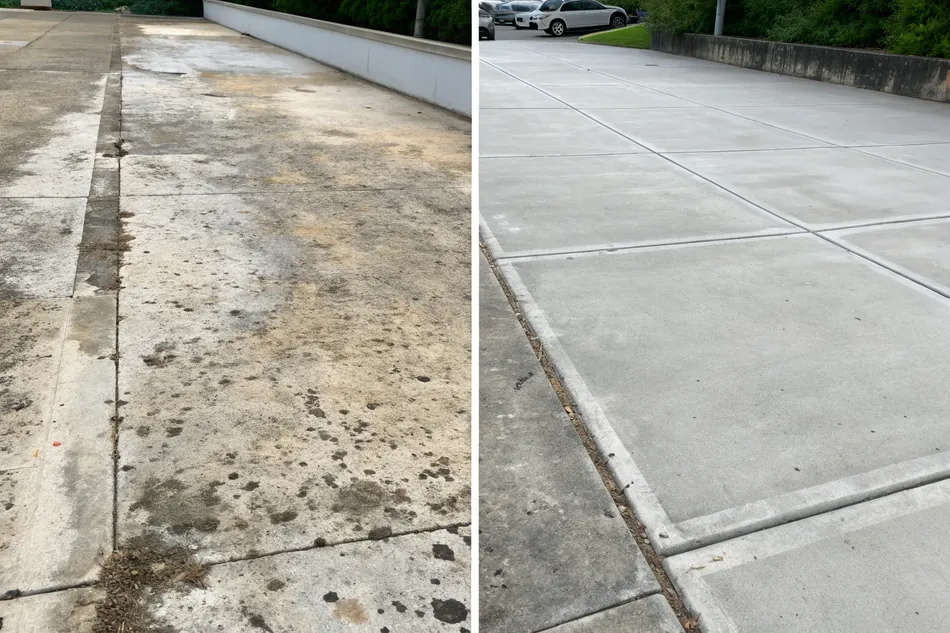
Surface grinding and shot blasting are mechanical ways to prepare concrete floors in Wollongong. Before a new coating or overlay goes down, the slab needs to be clean, sound and profiled. That preparation stage is what this service covers.
On this page, you can compare the two methods and see where each one fits. We also explain surface profile, how old coatings and markings are removed, and the safety checks that should happen before work starts on some floors.
If you're planning a new system for your floor, get in touch. Tell us about the slab and what's going down next, and we can talk through the preparation it needs.
How Surface Grinding and Shot Blasting Prepare Concrete Floors
Both methods get a concrete slab ready for whatever goes on top of it. They work in different ways.
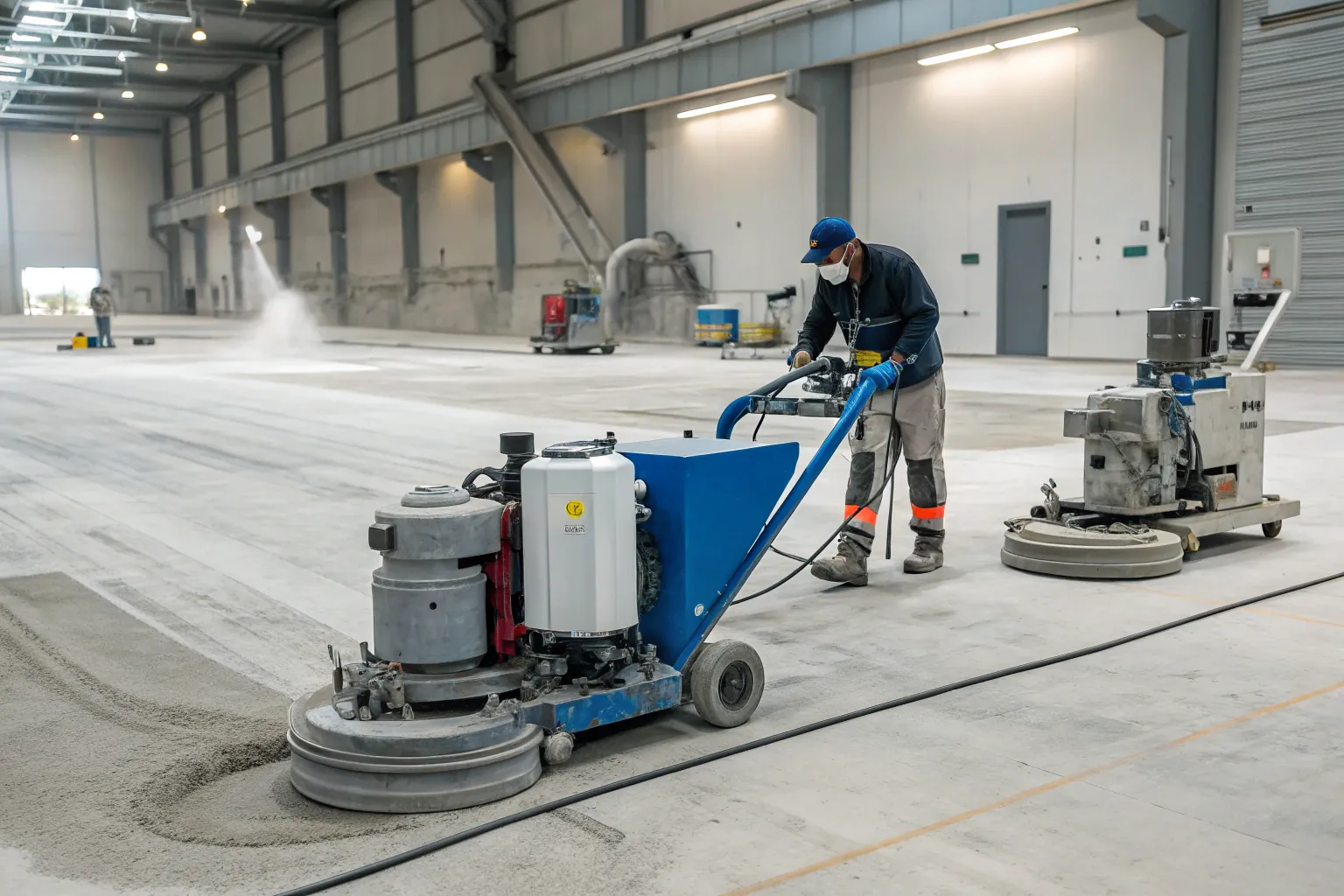
Shot blasting uses a centrifugal wheel to throw steel shot at the concrete surface. The shot strips away contaminants, weak surface concrete and previous coatings. What's left is a clean, profiled surface for the next system to bond to.
Diamond grinding uses diamond tooling to abrade the surface. It gives more control over how much material is removed and where.
Grinding and shot blasting are the preparation stage only. Applying a coating or overlay afterwards is a separate job and sits outside this service.
Surface grinding and shot blasting is part of our floor refinishing services.
Choosing Grinding, Shot Blasting or a Combination of Both
The main difference between concrete grinding and shot blasting is how the surface is worked. Shot blasting throws steel shot from a centrifugal wheel and is suited to large, open, sound slabs that need a repeatable profile. Diamond grinding uses diamond tooling for more control, which suits edges, transitions and isolated high spots. Shot blasters can't get within a few inches of walls and obstructions, so both methods are often used on one job.
| Shot blasting | Diamond grinding | |
|---|---|---|
| How it works | Steel shot thrown by a centrifugal wheel | Diamond tooling abrades the surface |
| Suited to | Large, open, sound slabs needing a repeatable profile | Targeted work and areas that need more control |
| Typical areas | Open floor space | Uneven repairs, transitions, curled joints, isolated high spots, edges |
When shot blasting fits
Shot blasting is suited to big, open areas where the slab is sound and needs an even, repeatable profile. That can include warehouse and industrial floors, such as those on Wollongong's industrial land at Port Kembla and in emerging areas like West Dapto and Tallawarra.
When grinding fits
Grinding suits targeted work. It's used for uneven repairs, transitions between surfaces, curled joints and isolated high spots.
Why many jobs use both
Shot blasters can't get within a few inches of walls, columns, drains or machine bases. Grinding is typically used in those areas instead. That's why both methods are often used on one job, with blasting across the open floor and grinding around the edges and obstructions.
If you're not sure which method your slab needs, get in touch and tell us about the floor.
Matching the Surface Profile to the Next Coating or Overlay
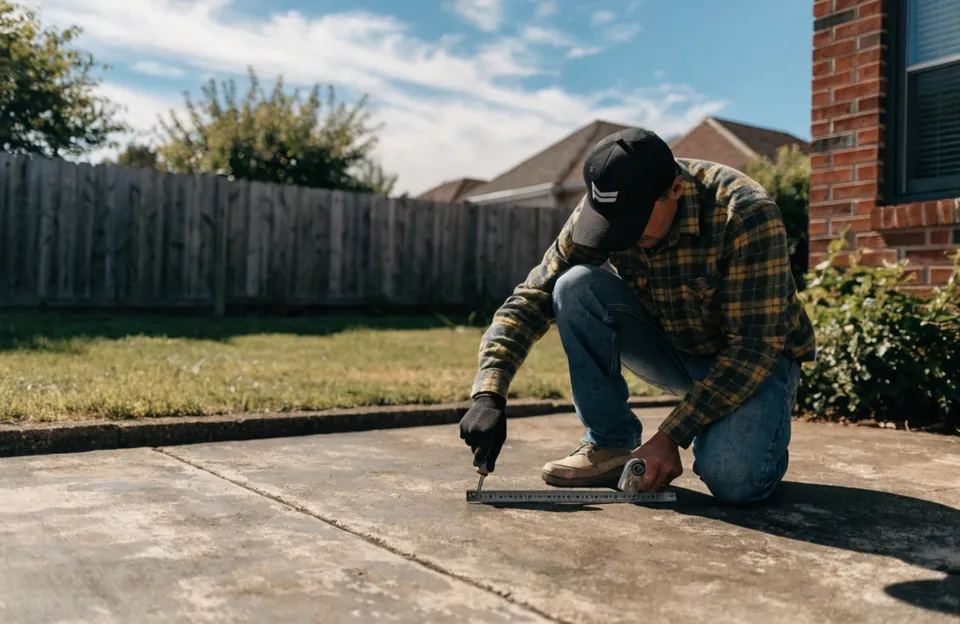
Surface profile describes how rough the concrete is after preparation. Different coatings and overlays need different levels of roughness to bond properly, so the profile should suit what's going on next.
The CSP scale
The International Concrete Repair Institute (ICRI) sets out a standard way to describe profile in its guideline ICRI 310.2R-2013. It defines ten Concrete Surface Profiles, from CSP 1 to CSP 10. Each one is a distinct level of roughness.
ICRI links some of these profiles to preparation methods as benchmarks:
- CSP 2 – grinding
- CSP 3 – light shotblast
- CSP 5 – medium shotblast
Check the requirements first
The profile your floor needs may be referenced in specifications, material data sheets and contract documents. It's worth checking those before preparation starts.
Once you know what the next system requires, that requirement should drive the choice of method. If you have a product or specification in mind, share it with us when you get in touch.
Removing Old Coatings, Paint, Glue and Line Markings
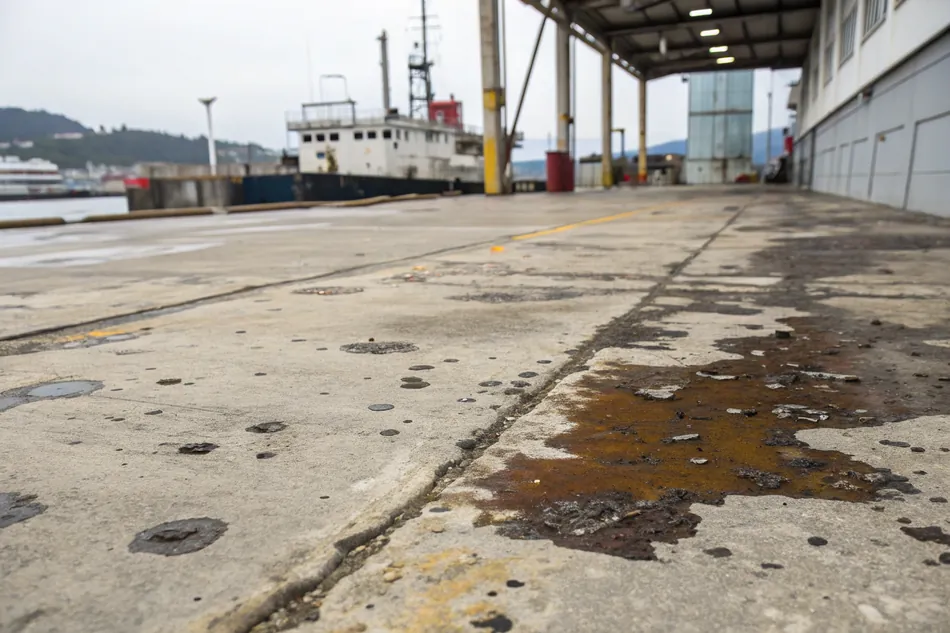
Many floors already have something on them that needs to come off before a new system can go down. Grinding or shot blasting can remove:
- previous coatings
- paint
- adhesives and glue
- line striping and markings
Choosing the right method for removal
The best method may depend on what's on the floor now. The type of material, how thick it is and the size of the area can all play a part. A thin layer over a large open slab may call for a different approach than a thick build-up in a smaller space.
This work is about preparing the concrete for what comes next. Removing the old material leaves the slab ready for a new coating or overlay, which is applied as a separate job.
If you're not sure what's on your floor, get in touch and describe what you can see.
Checking Older Wollongong Floors for Possible Asbestos Before Grinding
Wollongong grew strongly in the post-war decades, and the city has plenty of homes and buildings built before 1990. If your floor is in an older property, there's an extra check to make before any grinding starts.
Why older floors need a check
Wollongong City Council states that houses built before 1990 have a good chance of containing asbestos somewhere. Vinyl tiling is one of the places it may be found. Old vinyl tiles and the adhesive underneath them may contain asbestos.
Tool restrictions on suspect flooring
Sanders or grinders should not be used on flooring suspected of containing asbestos. High-speed tools may only be used if designed to capture or suppress airborne asbestos. You can read this guidance from the Asbestos and Silica Safety and Eradication Agency.
What to do before booking preparation
If you think your floor or adhesive could contain asbestos, have the material checked or tested first. If asbestos is found, removal is a separate licensed activity. In NSW, a licensed removalist is required for friable asbestos, or for more than 10 square metres of bonded asbestos. Surface grinding and shot blasting can be discussed once that step is dealt with.
How Silica Dust Is Controlled Under NSW Requirements
Grinding and blasting concrete creates dust. In NSW, that dust is covered by specific work health and safety rules because of the silica it can contain.
Why concrete dust is regulated
Concrete can contain up to 90% silica. Under the NSW Work Health and Safety Regulation, grinding or blasting concrete with power tools counts as processing a crystalline silica substance.
What NSW requires of businesses
Businesses doing this work must assess whether it is high risk and keep a record of that assessment. For high-risk processing in construction work, a Safe Work Method Statement (SWMS) may be used instead of a separate control plan.
Common dust controls
SafeWork NSW lists controls that can be used to manage silica dust, including:
- wet suppression, using water to keep dust down
- on-tool extraction, which captures dust at the tool
- local exhaust ventilation
- isolating the areas where dust is created
These are general NSW requirements that apply to this kind of work. If you have questions about how dust will be managed on your floor, raise them when you get in touch.
Frequently Asked Questions
Do new concrete slabs need grinding or shot blasting?
It depends on what's going on next. New concrete can have laitance, a weak layer on the surface of the slab. Removing laitance from new concrete is a recognised use for shot blasting. Whether your new slab needs preparation comes down to the requirements of the coating or overlay you're planning.
Can grinding level an uneven concrete floor?
Grinding suits targeted correction. It's used on uneven repairs, transitions between surfaces, curled joints and isolated high spots. It's not a way to flatten a whole slab, but it can deal with specific problem areas.
Can surface preparation damage the concrete?
ICRI notes a potential risk of microcracking from some preparation methods. That's one reason the method and profile should suit both the slab and the next system, rather than using the most aggressive option by default.
What hours can grinding and blasting work happen in Wollongong?
Wollongong City Council's standard hours for work on development sites are 7am to 6pm, Monday to Saturday, with no work on Sundays or public holidays. Where a site has development approval, the conditions of that consent set the hours that apply. Council also sets out separate hours for using power tools at home, so it's worth checking those if the work is at a residential property.
What affects the quote for grinding or shot blasting?
Several things can affect the quote, including:
- the size of the area and how open it is
- the surface profile the next system needs
- the type and thickness of any existing coating or adhesive
- edges, columns, drains and other obstructions
- the condition of the slab
- the dust controls needed for the job
- any asbestos testing or removal required before work can start
Get in touch with details of your floor and the system you're planning, and we can talk through what applies.