
Residential & Commercial Epoxy Specialists
Professional Epoxy Flooring Port Kembla - Coastal Experts
Specialised epoxy flooring for Port Kembla’s industrial and manufacturing sector, built for coastal conditions and heavy traffic. Free quote today.
- Illawarra-Wide Coverage
- Fast, Free Quotes
Get a Free Quote
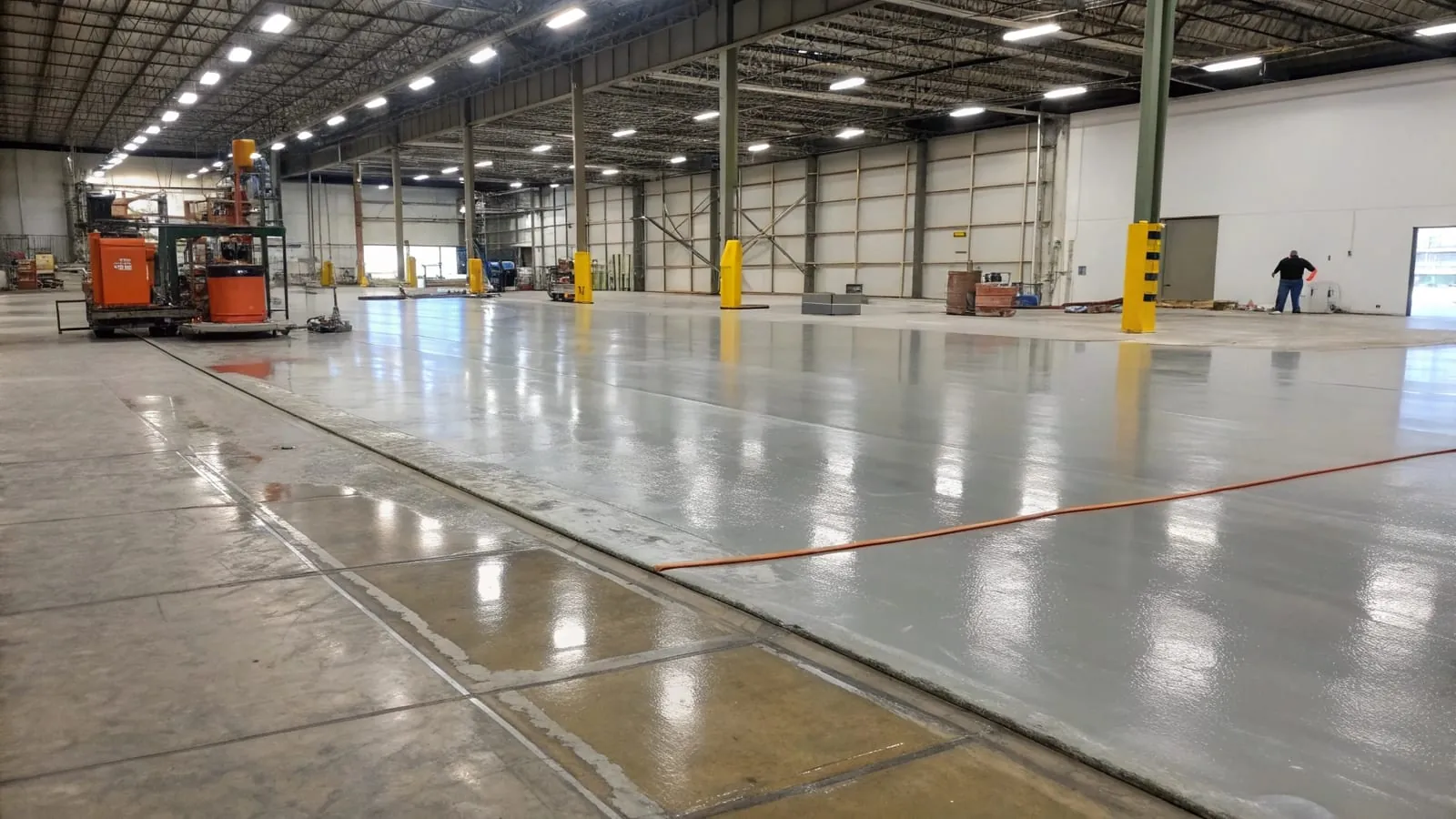
Why Port Kembla’s Industrial Facilities Need Coastal-Grade Epoxy
Local Epoxy Flooring Wollongong brings specialised expertise to Port Kembla’s unique industrial landscape. As coastal coating specialists, we understand the demanding environmental conditions that Port Kembla facilities face daily.
Our team combines advanced epoxy technology with deep local knowledge to deliver flooring solutions that withstand the harsh coastal climate while meeting the rigorous standards of the heavy industry sector.
From warehouses to manufacturing plants, we’ve established ourselves as the trusted choice for businesses requiring durable, chemical-resistant flooring that performs year after year in Australia’s most challenging industrial environment.
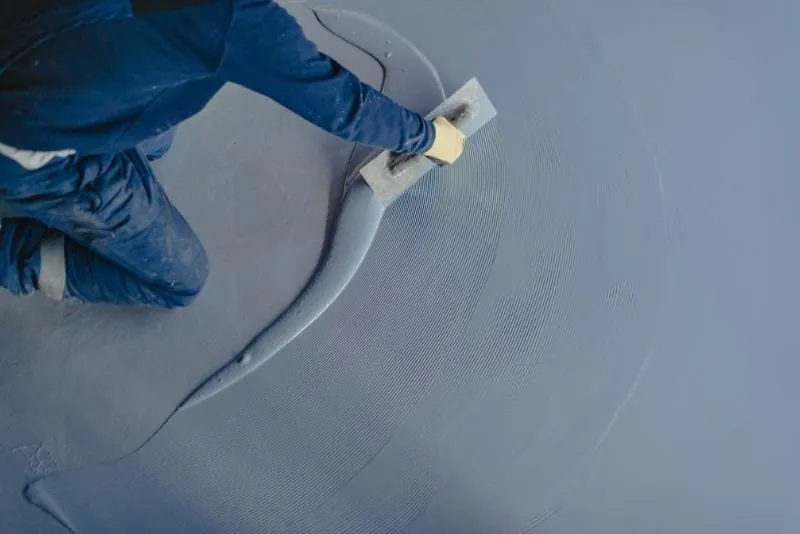
Epoxy Flooring Solutions Port Kembla
Port Kembla’s industrial heritage demands flooring solutions that can withstand the most challenging conditions while maintaining operational efficiency. Our comprehensive range of epoxy coatings addresses every challenge faced by local facilities, from moisture penetration to chemical exposure. Each application is engineered specifically for the coastal industrial environment that defines Port Kembla’s landscape.
Quality Standards and Professional
Local Epoxy Flooring Wollongong maintains the highest industry standards through rigorous quality control protocols and continuous professional development. Our team holds current certifications in advanced epoxy application techniques and adheres to Australian building codes and safety regulations. Every project undergoes comprehensive surface preparation testing, material quality verification, and post-installation inspection to ensure optimal performance and reliability. We utilise only premium-grade materials from trusted manufacturers and employ proven application methods that deliver consistent, long-lasting results across Port Kembla’s demanding industrial environments.
Driveway Epoxy Coating
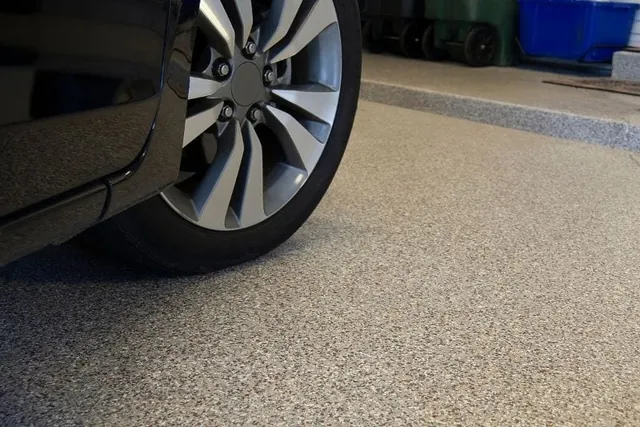
Protective driveway coatings are specifically formulated for Port Kembla’s coastal exposure and heavy vehicle traffic. Our coating systems seal concrete surfaces against moisture infiltration, providing enhanced durability for trucks, forklifts, and other industrial equipment. These applications extend pavement life while improving the professional appearance of facility entrances.


Commercial floors
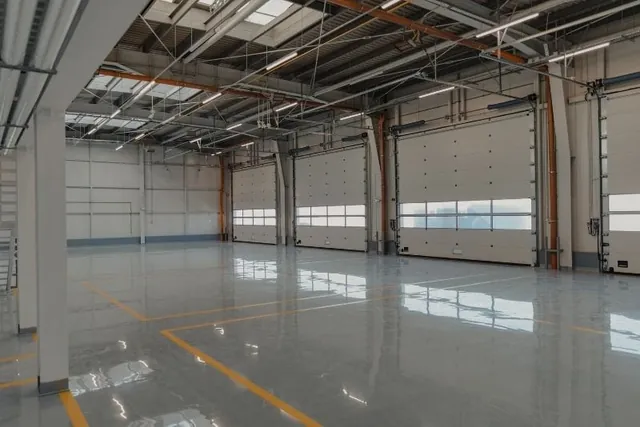
Heavy-duty commercial epoxy flooring is designed for Port Kembla’s demanding business environments. Our seamless coating systems create durable surfaces that resist wear from constant foot traffic, equipment movement, and daily operations. These floors maintain their professional appearance while providing the reliability that businesses depend on for uninterrupted productivity.
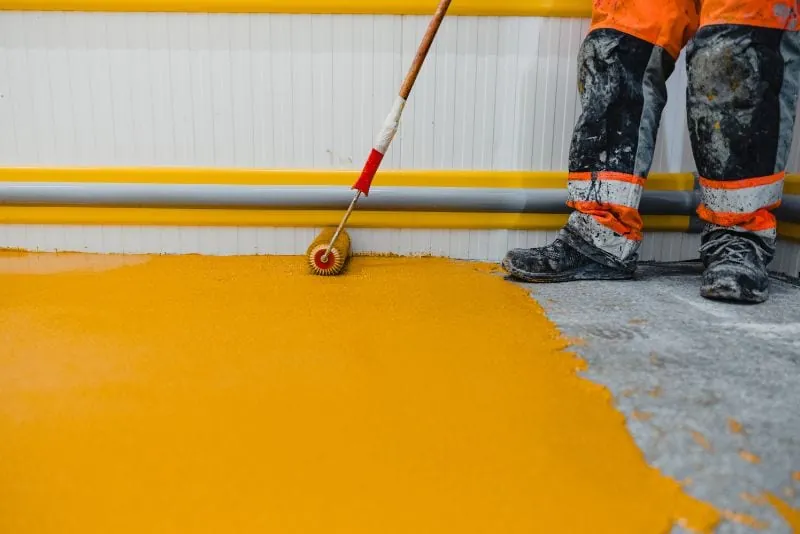
Non-Slip Epoxy Coating
Safety-focused anti-slip epoxy coatings engineered for high-risk industrial zones. Our textured coating systems provide superior traction in both wet and dry conditions, reducing workplace incidents while maintaining easy-to-clean protocols. These specialised coatings meet Australian safety standards while providing the durability required in Port Kembla’s demanding work environments.
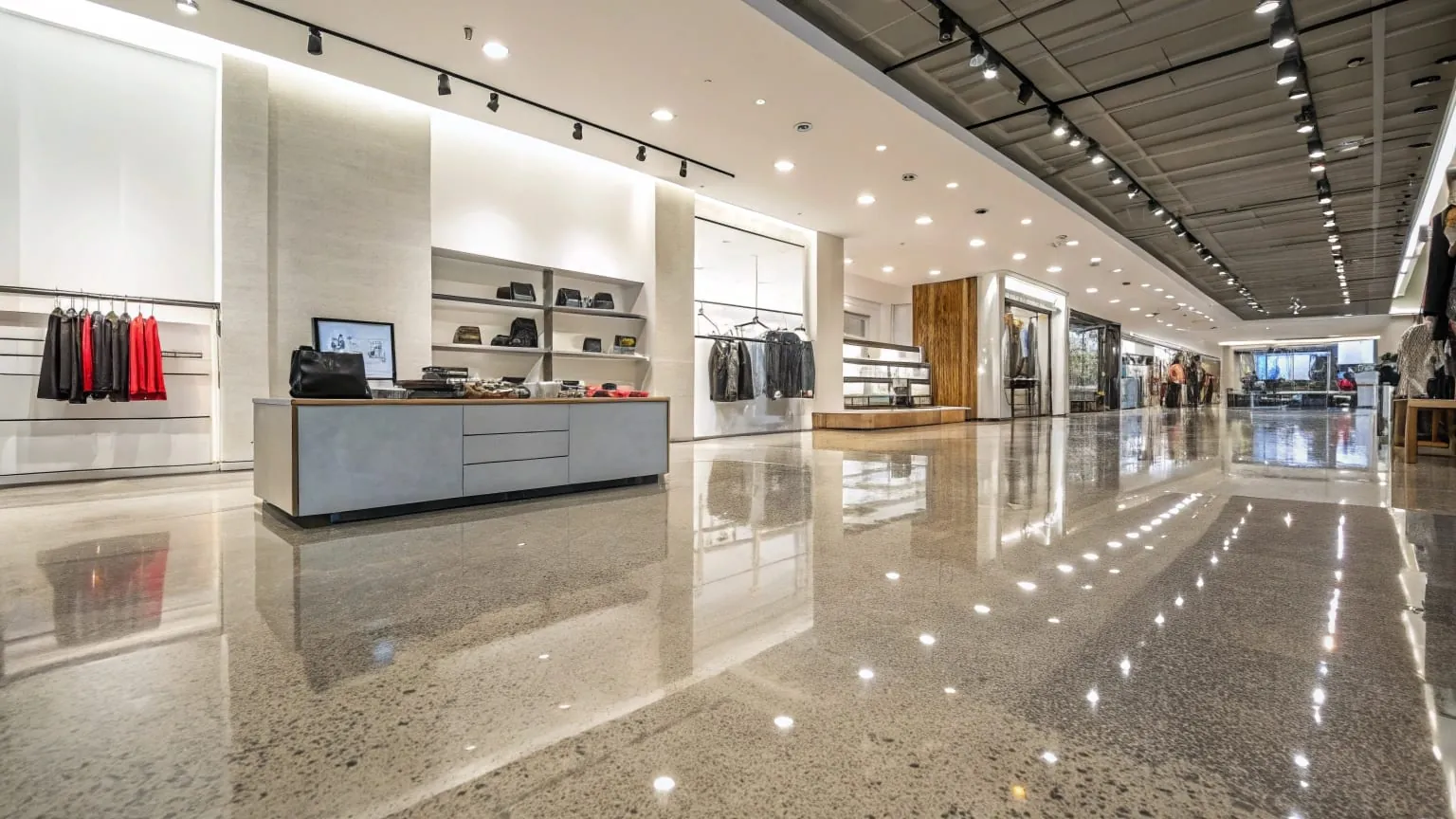
Retail Epoxy Flooring
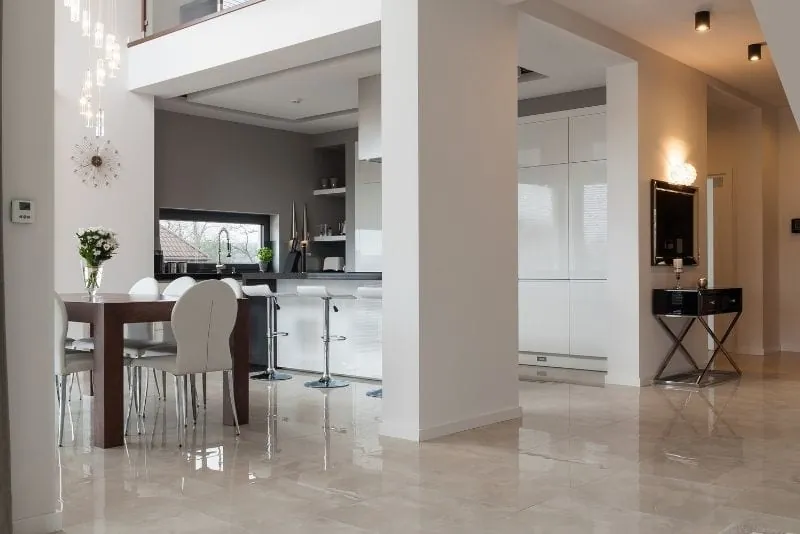
Customer-focused retail flooring that combines aesthetic appeal with practical durability for Port Kembla’s commercial establishments. Our decorative epoxy systems create attractive, easy-to-maintain surfaces that enhance customer experience while withstanding the demands of retail foot traffic and merchandise handling.
Concrete overlays & toppings
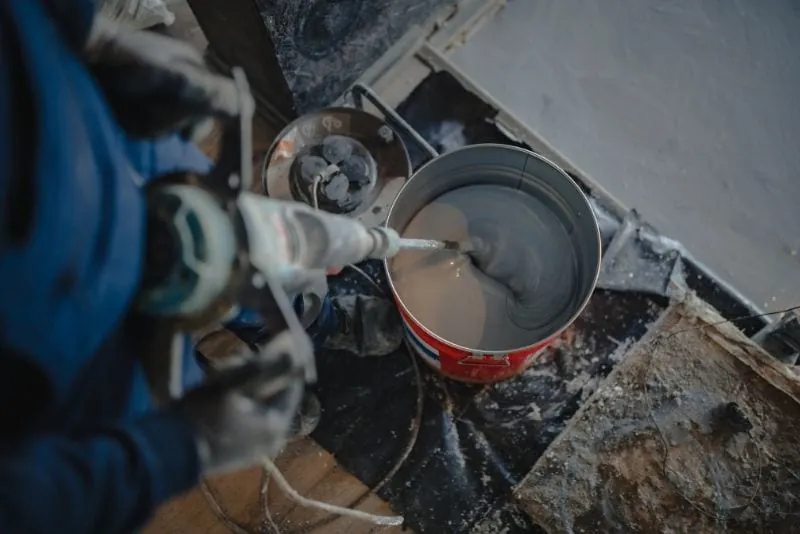
Advanced concrete overlay systems that transform damaged or worn concrete surfaces into high-performance floors. Our polymer-modified toppings create smooth, level surfaces that eliminate substrate imperfections while adding years of reliable performance. These overlays offer cost-effective restoration for Port Kembla facilities, eliminating the need for complete floor replacement.
Why Choose Us
Heavy-Duty Industrial Epoxy for Port Kembla Facilities
Load Bearing Capacity of Industrial Epoxy Systems
Here’s something that surprises a lot of people the first time they hear it — epoxy itself isn’t what carries the load. The concrete substrate underneath does the heavy lifting. What a quality epoxy system does is protect that substrate, distribute stress more evenly across the surface, and stop moisture, chemicals, and impact from degrading the slab over time.
That said, the thickness and formulation of the epoxy coating matters enormously in heavy industrial settings. A standard residential or light commercial epoxy might be 2-3mm thick. For Port Kembla warehouses and manufacturing floors dealing with forklifts and heavy plant equipment, you’re generally looking at:
- Broadcast systems — 4-6mm thick with aggregate broadcast into the resin for added strength and grip
- Self-levelling industrial epoxy — typically 3-5mm, excellent for smooth, even surfaces under consistent heavy loads
- Epoxy mortar systems — 6-12mm thick, the heaviest-duty option available, designed for the most demanding industrial applications
Epoxy mortar in particular is worth knowing about if your facility runs anything over 5,000kg per axle. It uses a sand or aggregate filler that dramatically increases compressive strength — we’re talking systems rated to withstand point loads from machinery that would crack a standard coated floor inside twelve months.
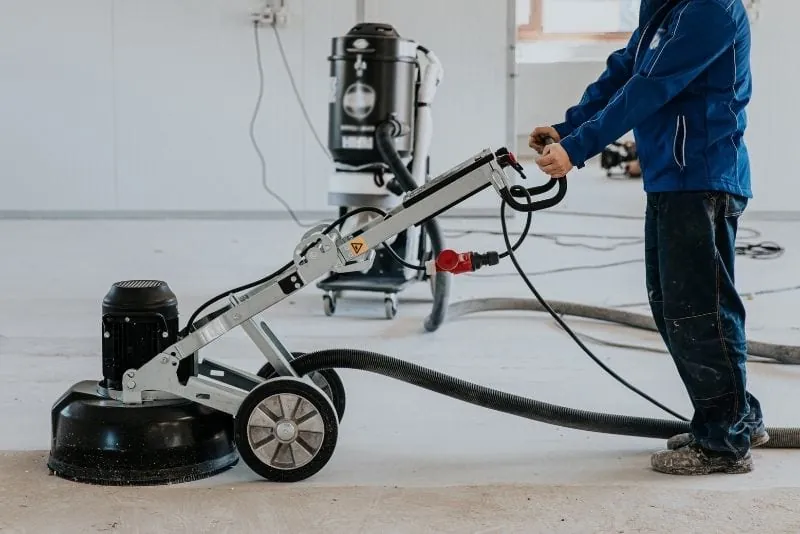
The other factor that gets overlooked is adhesion. An epoxy floor is only as strong as its bond to the substrate. Proper surface preparation — diamond grinding, shot blasting, and moisture testing — is what separates a floor that lasts fifteen years from one that starts delaminating after the first wet season.
Forklift Traffic Patterns and Floor Wear Analysis
If there’s one thing that destroys industrial floors faster than anything else, it’s forklift turning points. The damage isn’t usually from the weight alone — it’s the lateral shear force created when a loaded forklift pivots on the same spot, day after day. That twisting motion is brutal on coatings that aren’t specifically designed to resist it.
In a typical Port Kembla warehouse or distribution facility, the wear pattern is pretty predictable once you know what to look for:
- Entry and exit points — constant traffic concentration, exposure to moisture and debris tracked in from outside
- Loading dock areas — impact from pallet drops, hydraulic tailgate pressure, and heavy foot traffic
- Turning zones near racking rows — the highest shear stress points in any facility, almost always the first areas to show wear
- Fixed machinery footprints — point load concentration and vibration transmission into the slab over time
The reason this matters when you’re specifying an epoxy system is that a one-size-fits-all approach often leaves the most vulnerable areas underprotected. A well-planned installation will actually vary the system thickness and aggregate broadcast in these high-wear zones — heavier build in turning areas and dock approaches, standard specification elsewhere.
There’s also the question of forklift tyre type. Polyurethane tyres, which are common on electric forklifts, are actually harder on floor coatings than pneumatic rubber tyres. They generate more heat through friction and create higher contact pressure per square centimetre. If your facility runs electric forklifts — which is increasingly common given the push away from LPG indoors — that’s a conversation worth having with your installer before they spec the job.
An experienced contractor will walk your facility, map the traffic patterns, and design the system around how your floor actually gets used. That kind of site-specific thinking is what separates a floor that performs for a decade from one that needs patching inside two years.
Reinforcement Options for Extreme Load Applications
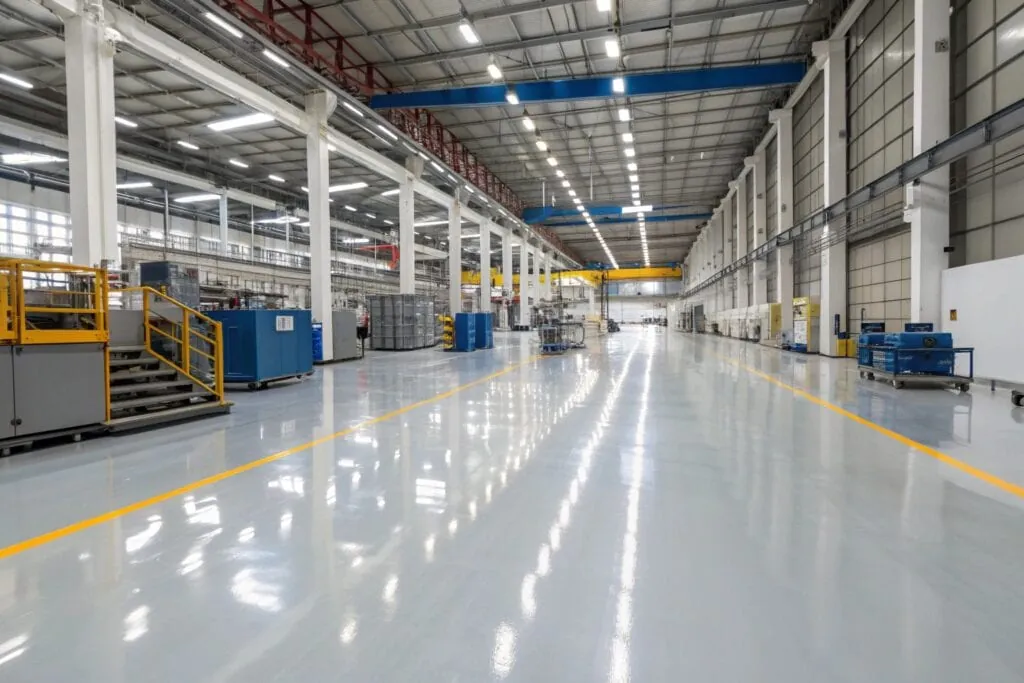
When standard epoxy systems aren’t going to cut it, there are several reinforcement options that can take an industrial floor into a completely different performance category. This is particularly relevant for Port Kembla facilities connected to BlueScope Steel operations, heavy manufacturing, or any site running machinery that would make a standard warehouse look light-duty by comparison.
Epoxy Mortar Systems
Already touched on these above, but they deserve more detail here. Epoxy mortar uses a high ratio of sand or quartz aggregate mixed directly into the resin, creating a floor that’s closer to a reinforced composite than a traditional coating. Compressive strength figures of 70-80 MPa are common — well above what standard concrete achieves on its own. For facilities running overhead cranes, steel coil storage, or heavy press equipment, this is often the baseline specification rather than the premium upgrade.
Fibre Reinforcement
Some installers incorporate fibreglass or polypropylene fibres into the epoxy matrix. This adds tensile strength and crack resistance, which is particularly useful in facilities where the slab has some existing micro-cracking or where thermal expansion and contraction from industrial processes puts stress on the floor over time.
Cementitious Urethane Overlays
Worth mentioning for facilities dealing with extreme thermal shock — areas near furnaces, autoclaves, or steam cleaning operations. Cementitious urethane handles temperature fluctuation better than standard epoxy and bonds exceptionally well to concrete. It’s not strictly an epoxy product, but a lot of industrial floor contractors in the Illawarra region will recommend it as part of a hybrid system for the right applications.
Anti-Static and Conductive Formulations
For Port Kembla facilities handling flammable materials, electronics manufacturing, or any environment where static discharge is a risk, anti-static epoxy systems are available. These are engineered to dissipate electrical charge safely and meet the Australian standards for electrostatic control in hazardous areas as outlined by Safe Work Australia.
The right reinforcement choice comes down to your specific load profile, chemical exposure, thermal environment, and operational schedule. Getting that specification right before installation is far cheaper than trying to fix an underperforming floor while your operation is running around it.
Port Kembla Manufacturing Floor Success Stories
Sometimes the best way to understand what a properly specified industrial epoxy floor can do is to look at how it’s performed in real-world conditions right here in the region. Port Kembla and the surrounding Illawarra industrial precinct — including neighbouring Warrawong — has no shortage of demanding environments, and the floors that have held up best share a few common threads.
One logistics facility near the Port Kembla steelworks was dealing with a deteriorating concrete floor that had been patched repeatedly over several years. Forklifts were catching on uneven joints, dust contamination was becoming a safety issue, and the maintenance cost was adding up. After a full diamond grind, crack repair, and installation of a 6mm epoxy mortar system with a broadcast anti-slip top coat, the facility went from monthly patching jobs to zero reactive maintenance over the following eighteen months. The floor handled a fleet of electric forklifts running two shifts daily without showing meaningful wear at any of the turning points.
A food-grade manufacturing operation in the broader Wollongong area — supplying into Port Kembla distribution channels — had a different challenge. They needed a floor that could handle heavy pallet jack traffic, daily high-pressure washdowns, and meet slip resistance requirements under AS/NZS 4586 simultaneously. A cementitious urethane system with a seamless coved finish up the walls solved all three problems in a single installation. No joints for bacteria to harbour, excellent slip resistance when wet, and the thermal shock resistance to handle steam cleaning without delamination.
What these situations have in common is that neither client was served well by a generic quote. Both needed someone to actually understand the operational environment before recommending a system. That’s the difference between a floor that becomes a problem and one that quietly does its job for a decade without anyone having to think about it.
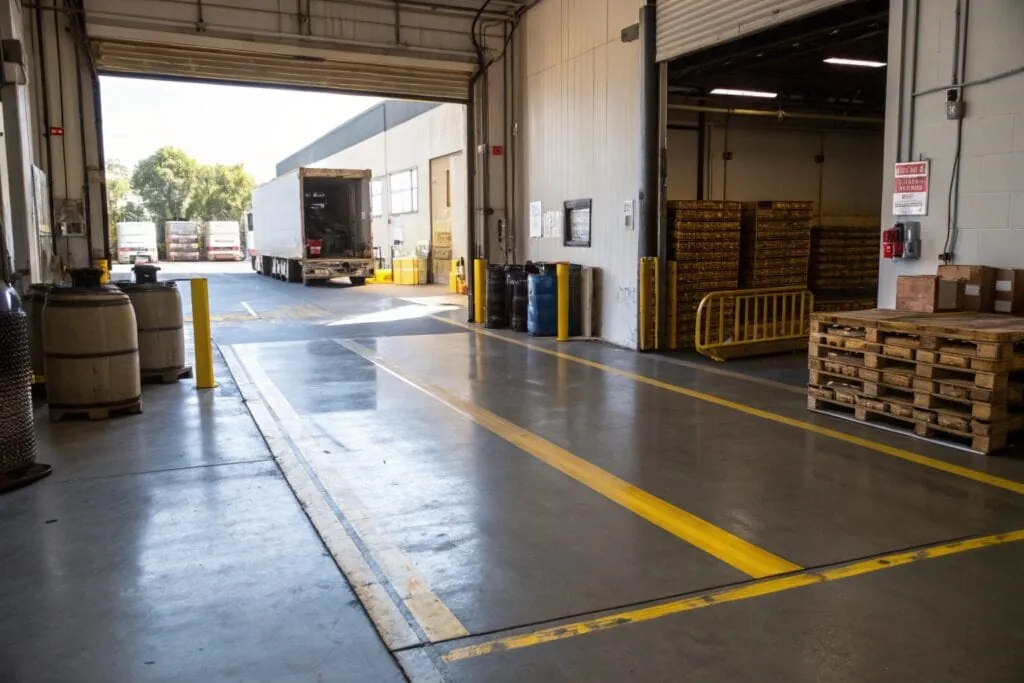
The Port Kembla industrial precinct has specific conditions worth factoring in too — coastal salt air accelerates corrosion of exposed concrete and poorly sealed joints, and the volume of heavy vehicle traffic in the area means floors near loading docks take a particular beating. Local knowledge of those conditions isn’t something you get from a contractor who doesn’t regularly work in the region.
Considering commercial & industrial flooring for your own property? Explore our industrial epoxy coating service, or Get a Free Quote.
Maintenance Schedules for High-Traffic Industrial Areas
A quality industrial epoxy floor doesn’t look after itself, but the maintenance requirements are a lot more straightforward than most facility managers expect. The goal is simple — catch minor wear before it becomes structural damage, and keep the surface clean enough that abrasive debris isn’t grinding into the coating under forklift tyres every day.
For most Port Kembla industrial facilities running heavy machinery and forklift traffic, a practical maintenance schedule looks something like this:
Daily
- Sweep or auto-scrub to remove grit, metal filings, and debris
- Spot clean chemical spills immediately — epoxy is resistant, not impervious, and prolonged exposure to certain acids or solvents will eventually cause damage
Monthly
- Full wet scrub with a pH-neutral cleaner
- Visual inspection of high-wear zones — turning points, dock approaches, and fixed machinery footprints
- Check expansion joints and coved edges for any lifting or separation
Annually
- Professional inspection of coating thickness and adhesion integrity
- Touch-up of any areas showing early wear before they become full delamination issues
- Assessment of whether a maintenance top coat is warranted to extend the system life
One thing worth understanding is that the annual inspection is where you protect your investment. Catching a 200mm patch of wear at a forklift turning point costs a fraction of what it costs to grind back and re-coat an entire bay because the damage spread unchecked for two years.
The facilities that get the longest life from their epoxy floors are the ones that treat maintenance as a scheduled operational cost rather than something that only happens when there’s a visible problem.
Frequently Asked Questions
Is epoxy flooring more cost-effective than other flooring options?
When considering lifespan and maintenance costs, epoxy often provides superior value. Unlike tiles or carpets that require regular replacement, quality epoxy installations can last decades with minimal maintenance.
Can epoxy flooring be applied over existing concrete?
Yes, epoxy can be applied over existing concrete surfaces that are structurally sound. Our team assesses concrete condition, performs necessary repairs, and ensures proper surface preparation for optimal adhesion and longevity.
Will epoxy flooring slip when wet?
Standard epoxy can be slippery when wet, but we offer non-slip additives and textured finishes specifically for areas prone to moisture. These solutions provide excellent traction while maintaining the benefits of epoxy coating.
Can epoxy flooring handle heavy machinery and forklift traffic?
Our industrial-grade epoxy systems are designed specifically for heavy equipment loads, including forklifts, pallet jacks, and manufacturing machinery common in Port Kembla facilities.
Do you work around operational schedules for Port Kembla businesses?
We offer flexible scheduling, including weekend and after-hours installation, to minimise disruption to your facility’s operations and production schedules.
What cleaning products should I avoid?
Avoid using acidic cleaners, abrasive scrubbers, and citrus-based products, as they can dull the finish over time. We provide a list of recommended and prohibited cleaning products with every installation.
Can epoxy flooring withstand Port Kembla's coastal salt air and humidity?
Yes, our specialised coastal-grade epoxy formulations are specifically engineered to resist salt air corrosion and moisture penetration common in Port Kembla’s marine environment.