
Residential & Commercial Epoxy Specialists
Industrial Warehouse Flooring in Wollongong: Resin Floor Systems Matched to Your Traffic, Loads and Operating Conditions
Warehouse slabs in Wollongong take constant wear. Forklift traffic, pallet impact, abrasion, chemicals and regular cleaning all put pressure on the concrete.
Over time, a slab can become worn, stained or damaged, or start dusting. You may also have a new or newly leased warehouse that needs its floor sorted before racking goes in and operations begin.
This page explains our industrial warehouse flooring service. It covers the main resin system options, slab preparation and moisture testing, slip resistance and safety markings, and how to plan a project around your operations.
When you're ready, contact us to arrange a site assessment and request a quote.
- Illawarra-Wide Coverage
- Fast, Free Quotes
Get a Free Quote
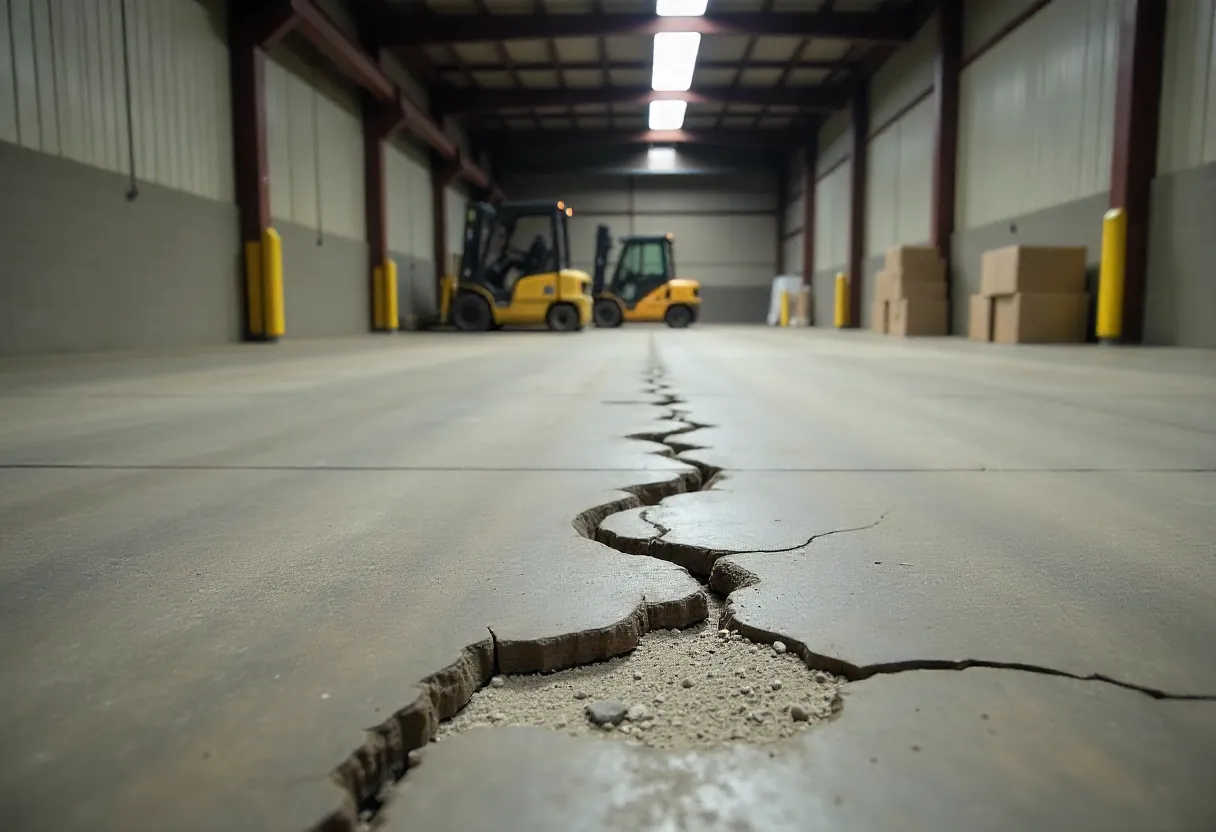
Industrial Warehouse Flooring for Wollongong's Industrial and Logistics Operations
Our industrial warehouse flooring service installs seamless, performance-rated resin systems over existing warehouse concrete slabs.
Industrial warehouse flooring is one of the services we offer as a flooring contractor in Wollongong.
A warehouse floor has to handle a lot. It needs to resist abrasion, impact and mechanical wear. It needs to cope with heavy foot traffic and vehicle traffic. It may also face chemical exposure, and it needs to be easy to clean.
Most enquiries start in one of two ways. Either the current slab is worn, dusting, damaged or stained, or a new or newly leased warehouse needs its floor done as part of the fit-out.
Wollongong's industrial lands are spread across the local government area, including the lands around the Port of Port Kembla. NSW planning material also names areas such as Unanderra and Kembla Grange as industrial support areas.
This service is focused on resin systems for existing warehouse slabs. It does not include new slab construction, office floor coverings, or garage and decorative epoxy.
Choosing Between Epoxy, Polyurethane and PU-Cement Systems for Your Warehouse Conditions
There is no single best flooring for a warehouse. The right choice depends on how the floor will be used. The common warehouse system families are epoxy, polyurethane and polyurethane-cement (PU-cement) hybrid. Selection comes down to forklift traffic, pallet impact, chemical exposure, wash-down and temperature. Performance also depends on slab preparation and moisture conditions.
Each system family comes in different formats. These include thin coatings, self-levelling systems, broadcast systems and mortar screeds.
PU-cement is marketed by its manufacturer for freezers, coolers and areas exposed to thermal shock. According to manufacturer data, it can be applied to substrates with a higher moisture content.
Rather than looking for one "best" floor, it helps to start with your operating conditions. The best option is the one that matches how your warehouse actually works.
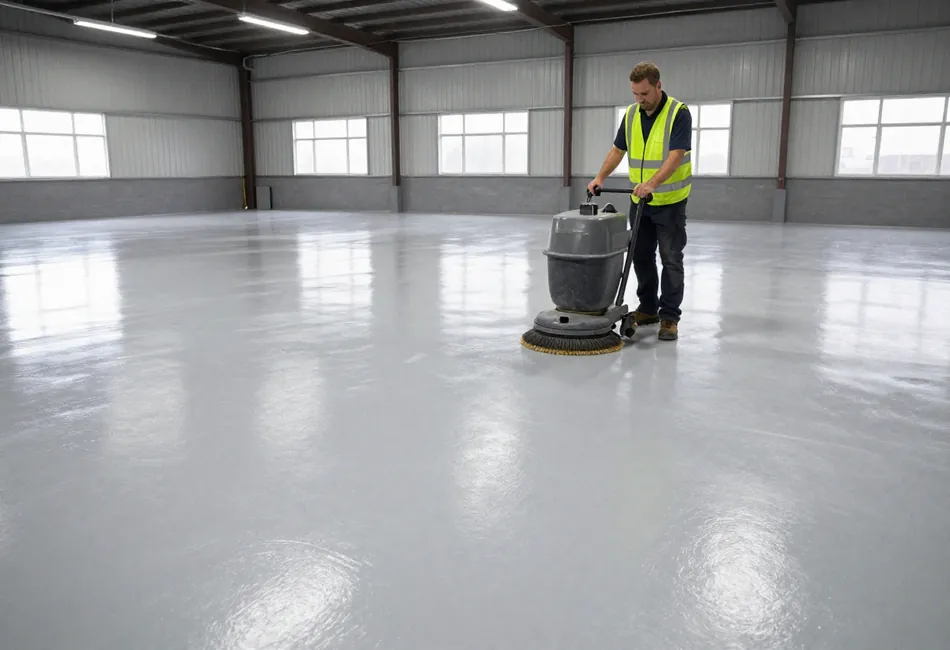
Slab Assessment, Surface Preparation and Moisture Testing Before Coating
How well a resin floor bonds depends on what happens before the coating goes down.
We start by assessing the slab. This covers its condition, any contamination, its strength and its moisture levels.
Next, the surface is cleaned and prepared. Dust, laitance, oils and old paint films are removed. The slab is then mechanically prepared to a specified concrete surface profile (CSP), which gives the coating a surface to grip.
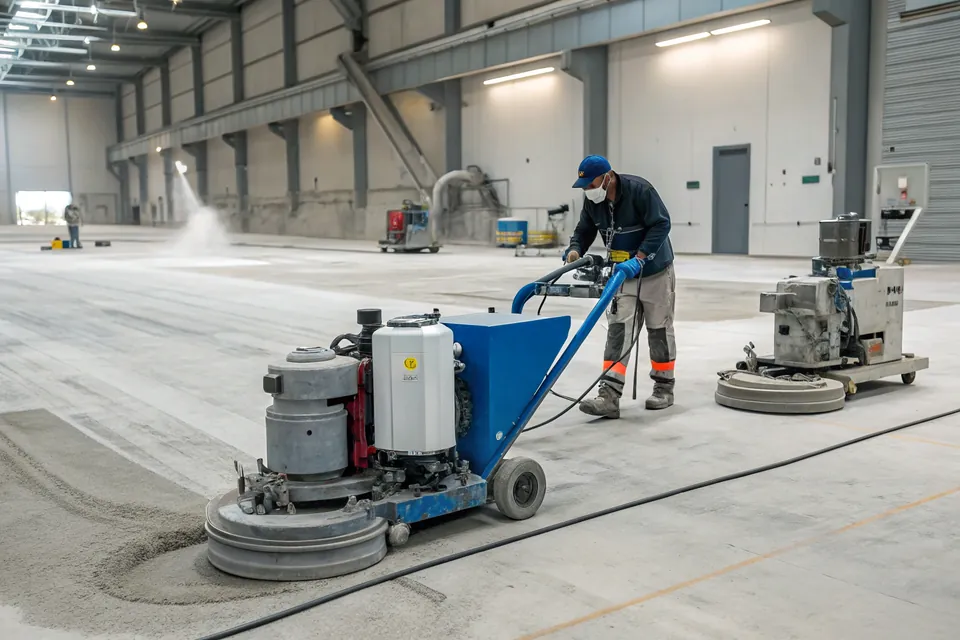
Cracks, spalling and uneven areas are repaired before priming.
Moisture needs close attention. Excess moisture in the slab is cited as the cause of a large percentage of coating failures, and slabs-on-grade are the greatest concern. Where testing shows a moisture issue, mitigation may be needed before coating.
Conditions at the time of application matter too. When surface temperatures are close to the dew point, condensation may lead to adhesion failure.
Building Slip Resistance and Forklift Safety Markings into the Floor
A new floor can include features that support safety on site.
SafeWork NSW identifies slips, trips and falls as the most common cause of serious workplace injuries in NSW, after hazardous manual tasks.
A slip-resistant texture can be added as an optional finish. In Australia, AS 4586 and AS 4663 are the recognised framework for classifying and measuring slip resistance.
Floor markings play a part as well. SafeWork NSW lists traffic-management controls such as marked pedestrian walkways and crossings, exclusion zones like forklift-only areas, and non-slip surfaces.
Safety line marking can be added as part of your floor project, so the floor and markings are planned together.
Planning Your Warehouse Floor Project Around Operations and What Shapes Your Quote
Most warehouses can't simply stop work for a floor project. Installation can be staged, which can help maintain operations where practical. Some systems are also marketed as fast-curing to reduce disruption.
Every warehouse floor is different, so the quote is based on your site. The main factors include:
- floor area and layout
- slab condition and any repairs needed
- contaminant removal and the preparation method
- moisture mitigation, if required
- system type and thickness
- chemical, thermal or food-grade needs
- slip-resistant texture
- the scope of line marking
- how the work is staged
A site assessment gives us the information we need to prepare your quote. Contact us to arrange a site assessment and discuss your warehouse floor.
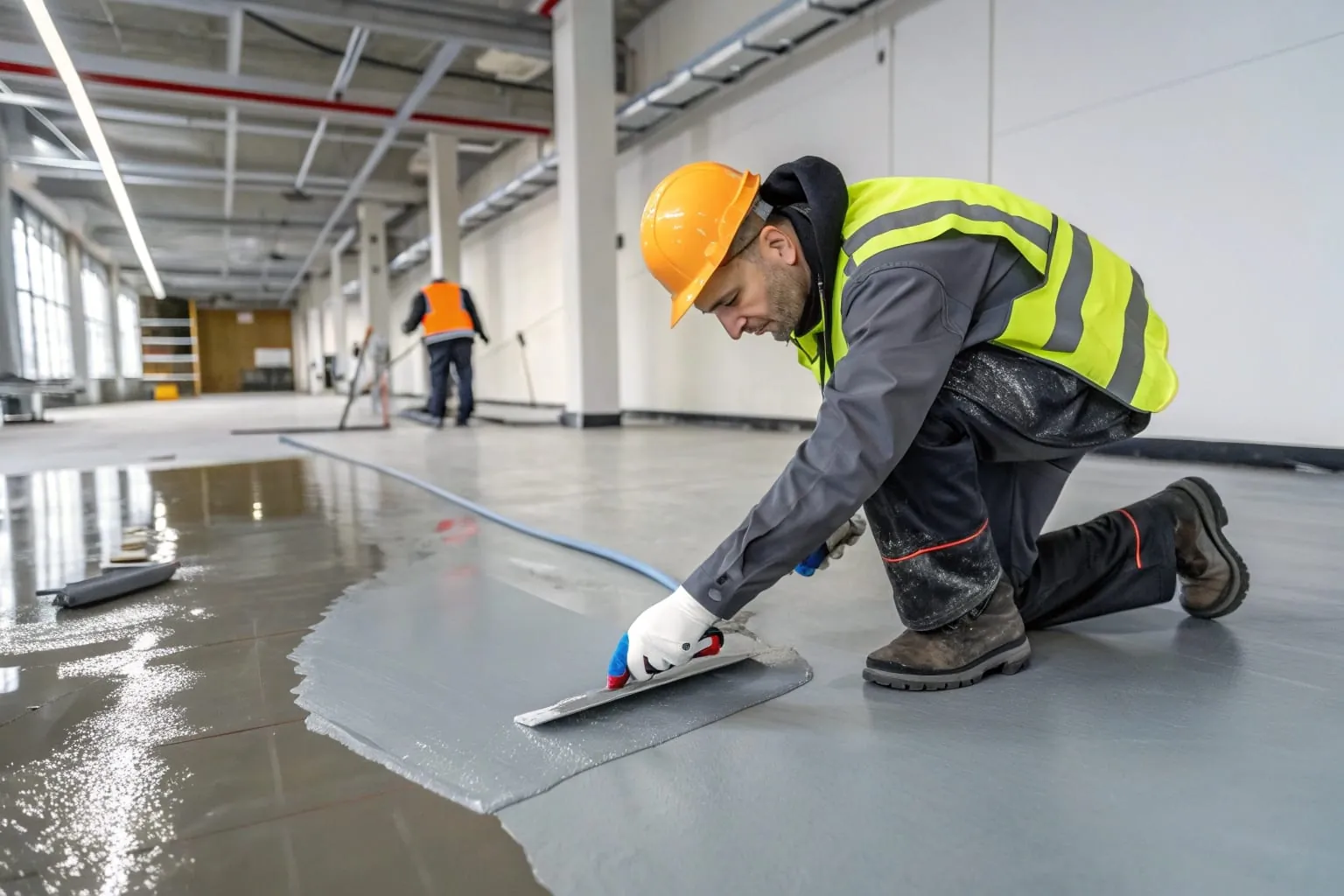
Frequently Asked Questions
Is epoxy strong enough for forklift traffic?
Epoxy systems are used in warehouse and logistics environments, including areas with forklift traffic. Whether epoxy suits your floor depends on how heavy and frequent the traffic is, the thickness and format of the system, and how well the slab is prepared.
Why do coatings on existing warehouse floors peel or blister?
Excess moisture in the slab is cited as the cause of a large percentage of coating failures. Inadequate surface preparation and condensation during application may also contribute. That's why we assess the floor before any recoat or repair, so the cause can be identified first.
What should happen when forklift and walkway floor markings fade?
Guidance from WorkSafe Queensland, the Queensland regulator, says pedestrian floor markings should be highly visible and not faded. With that in mind, remarking may form part of your ongoing floor maintenance.
How should a resin warehouse floor be looked after?
Clean the floor using methods suited to the system installed. It also helps to keep an eye on wear and on the condition of your floor markings. How long a resin floor lasts depends on how it's used and how well it's maintained.