
Residential & Commercial Epoxy Specialists
Non-Slip Epoxy Coatings in Wollongong: Textured Floor Coatings Designed for Better Grip
- Illawarra-Wide Coverage
- Fast, Free Quotes
Get a Free Quote
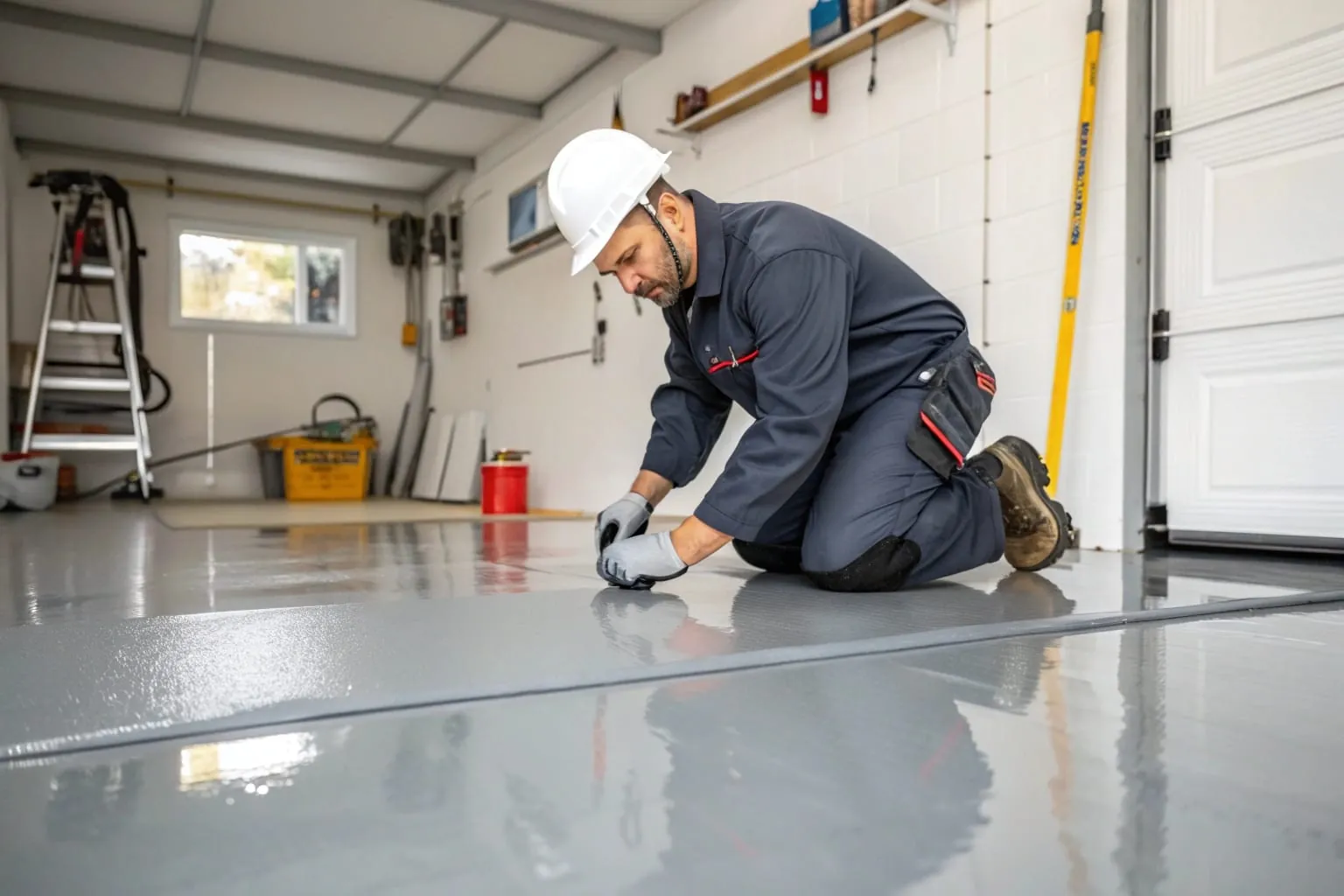
We apply non-slip epoxy coatings in Wollongong for floors that become slippery when wet, oily or smooth. A smooth concrete or epoxy surface can be slippery once water, oil or other spills are on it.
Slip risk shows up in many places. Garages, entries, workplaces, ramps and stairs are common problem areas, especially where floors may become wet or contaminated.
On this page, we explain how the texture in a non-slip epoxy coating is created and which aggregates are used. We also cover how slip ratings work in Australia and where a rated surface is required. Non-slip epoxy coatings are part of our flooring contractor services.
Before you book, it helps to look at how the area is used and what it is exposed to. The tasks done there, any spills or contaminants, how the floor is cleaned, the footwear worn and whether it gets rain all affect the right approach. To talk through your floor, get in touch with our team.
How Non-Slip Epoxy Coatings Create Grip on Concrete Floors
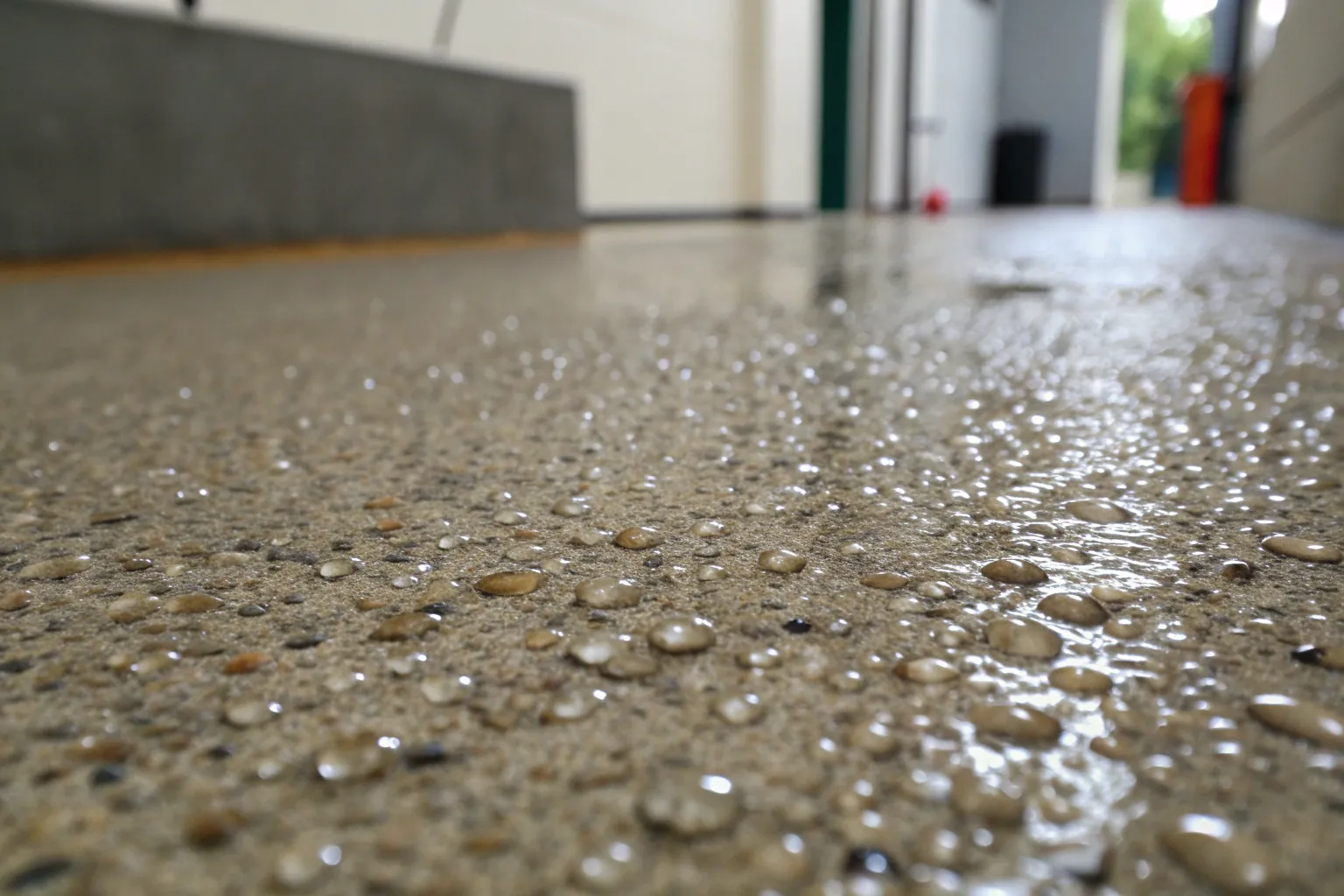
A non-slip epoxy coating gets its grip from texture. That texture comes from small aggregate particles. They are either mixed into the coating or broadcast (scattered) onto the wet epoxy so they bond into the surface.
This means non-slip epoxy is a coating system built in layers. It is not simply a paint with an additive stirred in.
Surface preparation is the first part of that system. Coating manufacturers name methods such as shot blasting or diamond grinding as preferred ways to prepare concrete. Oils and other contaminants also need to be removed so the coating can bond to the floor.
So, how do you make epoxy non-slip? The typical sequence looks like this:
- Prepare the concrete. Remove oils and contaminants, then prepare the surface. Shot blasting or diamond grinding are named as preferred methods.
- Apply the base coat and add aggregate. Aggregate is broadcast onto the base coat while it is almost wet. Alternatively, the particles can be mixed into the coating.
- Seal with a top or lock coat. This final coat locks the aggregate into place.
- Confirm the result if needed. A slip test to AS 4586 can confirm the rating. Texture alone does not guarantee a rating.
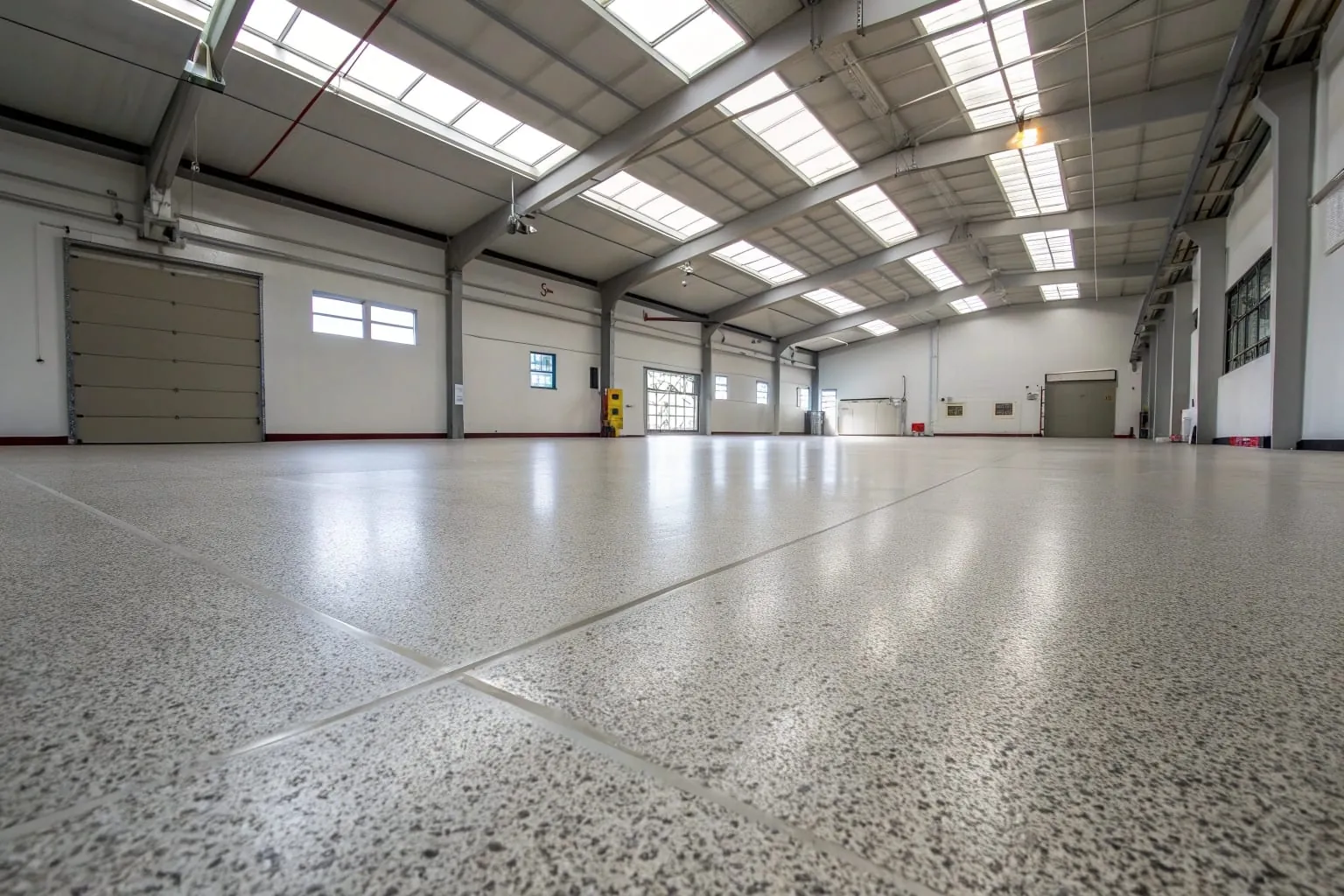
Choosing the Right Aggregate and Texture Level for Your Floor
The two main choices in a non-slip epoxy coating are which aggregate to use and how much of it to add.
Common aggregates include:
- silica sand
- aluminium oxide
- calcined bauxite
- silicon carbide
- polymer beads
Aluminium oxide and calcined bauxite are recommended for heavy-duty areas and wet processing areas. Silica sand suits general dry use, but it is less durable.
More aggregate adds more texture, but it also makes the floor harder to clean. That is the main trade-off between grip and cleanability. A lighter broadcast of larger aggregate can still achieve good slip resistance while keeping the surface easier to clean.
It also helps to know that a rough feel is not the same as a tested result. A coarse finish does not guarantee a high slip rating. Where a specific rating matters, it is confirmed by testing rather than by how the floor looks or feels.
Understanding Slip Ratings and Matching Them to Each Area
In Australia, slip resistance is classified under AS 4586. There are two common types of rating, and each comes from a different test.
P ratings come from the wet pendulum test. Surfaces are classified from P0 to P5, and P5 indicates the lowest slip risk.
R ratings come from the oil-wet inclining platform test.
Because P and R ratings come from different tests, they are not directly interchangeable. A P rating cannot simply be converted into an R rating, or the other way around.
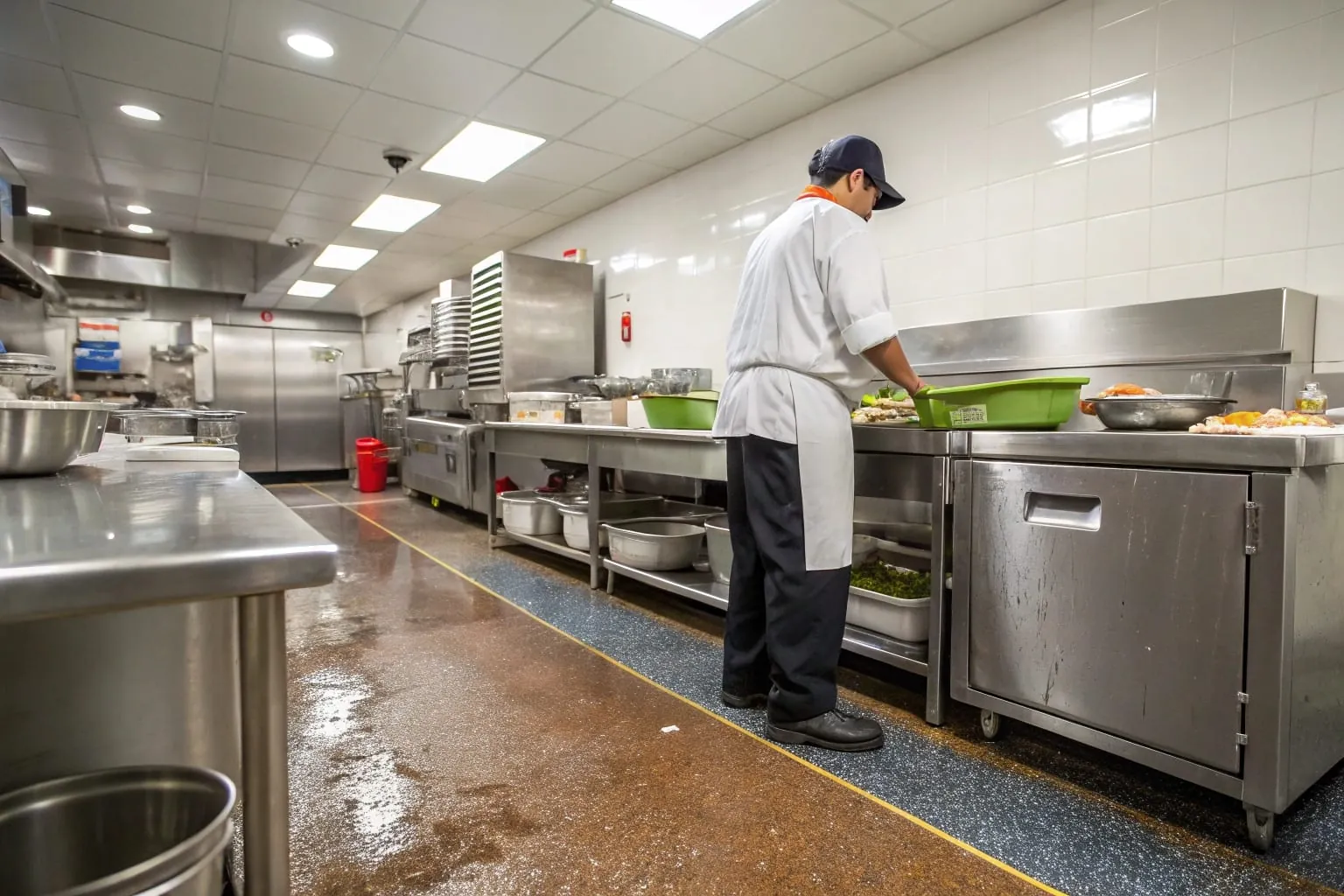
The handbook SA HB 198 recommends ratings for different areas. For example, it recommends P5/R12 for commercial kitchens and undercover loading docks. These recommendations are guidance, not law.
There is no one correct or safe level of slip resistance for every floor. The right rating depends on:
- the surface itself
- the contaminants that may land on it
- the tasks done in the area
- how the floor is cleaned
- the footwear people wear
- the conditions the floor is exposed to
NCC Slip-Resistance Requirements for Stairways, Ramps and Landings
For some areas, slip resistance is not just a recommendation. The National Construction Code (NCC) sets minimum slip-resistance classifications for certain locations.
These requirements cover specific parts of a building only:
- Stairways are covered in both Volume One and Volume Two of the NCC.
- Ramps and landings are covered in Volume One only.
The minimum classifications are set out in NCC Table D3D15:
| Location | Dry surface conditions | Wet surface conditions |
|---|---|---|
| Ramps steeper than 1:14 | P4/R11 | P5/R12 |
| Treads and landings | P3/R10 | P4/R11 |
You can check which locations are covered and the exact minimum classifications in the Australian Building Codes Board's advisory note on slip resistance.
If your floor includes a stairway, ramp or landing, it helps to know first whether it falls under the NCC. Where it does, the surface's classification is determined by testing to AS 4586.
Non-Slip Epoxy for Wollongong Workshops, Warehouses and Industrial Floors
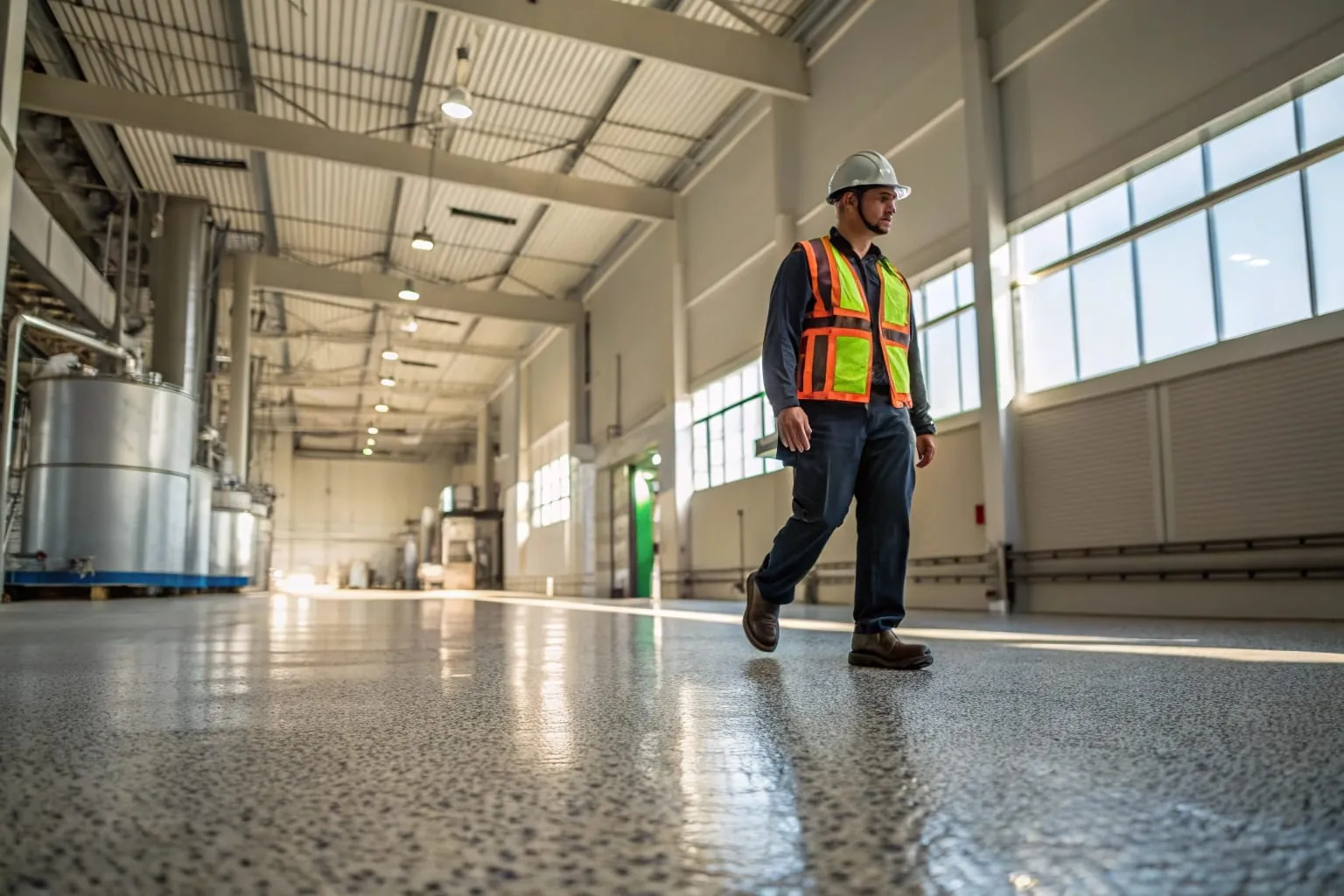
Wollongong has a strong heavy industrial and manufacturing base. It includes the Port of Port Kembla and the BlueScope steelmaking site, and Wollongong City Council has named advanced manufacturing as a target sector. In workshops, warehouses and industrial buildings, floors are often exposed to oils, spills and other contaminants.
For businesses, slip resistance also ties in with work health and safety obligations. The workplace Code of Practice says floors need enough grip to prevent slipping, especially where they may become wet or contaminated.
The Code also explains that the choice of floor surface depends on:
- the type of work carried out
- the materials used
- the likelihood of spills
Entries and exits should be slip-resistant in both wet and dry conditions. Slip-resistant floor coverings are a recognised control measure for reducing slip risk.
In NSW, the work health and safety regulator is SafeWork NSW.
Wet-Condition Grip for Entries, Walkways and Ramps in Wollongong
Rain is a regular part of life in Wollongong. Bureau of Meteorology records from the Wollongong University station show a mean annual rainfall of 1323.7 mm and about 137.3 rain days a year (1970–2008 records).
That matters for outdoor and entry areas that get wet. The wet pendulum test, which gives a P rating, is used for pedestrian areas that can become wet with rainwater. For entries, walkways, carports and ramps exposed to rain, the P rating is the one to look at.
For sloping outdoor areas, SA HB 198 recommends P5/R12 for external ramps, sloping driveways and footpaths steeper than 1 in 14. This is a recommendation, not a legal requirement.
Frequently Asked Questions
Does epoxy flooring get slippery when wet?
It can. Smooth epoxy can be slippery when it is wet or contaminated with oil or other spills. Adding aggregate texture to the coating is how grip is improved. The amount of grip depends on the aggregate used, how much is added and the conditions the floor faces.
Is there anything better than epoxy for slip resistance?
Polyurethane cement products naturally develop higher slip resistance than epoxy-based coatings. That does not make them the better choice for every floor. The right option depends on how the area is used and what it is exposed to.
Is non-slip epoxy suitable for driveways and sun-exposed areas?
Epoxies have yellowing tendencies when exposed to UV light. This is why UV-resistant topcoats are used on areas that get sun. If your driveway or outdoor area is sun-exposed, the topcoat is part of the coating choice.
Does a non-slip epoxy floor need slip testing?
In many cases, testing is optional. It can confirm a rating where a specification or the NCC requires one. AS 4586 applies to testing new surfaces, and AS 4663 applies to testing existing surfaces.
Can I apply a non-slip epoxy floor myself?
It helps to know what is involved first. The concrete needs proper preparation, and manufacturers name shot blasting or diamond grinding as preferred methods. You also need to choose the aggregate and how densely to apply it, then follow the right coat sequence of base coat, aggregate and top or lock coat. A coarse finish does not guarantee a high slip rating, so testing is the way to confirm a rating where one is required.