
Residential & Commercial Epoxy Specialists
Quartz Epoxy Flooring in Wollongong for Textured, Seamless Commercial and Home Floors
- Illawarra-Wide Coverage
- Fast, Free Quotes
Get a Free Quote
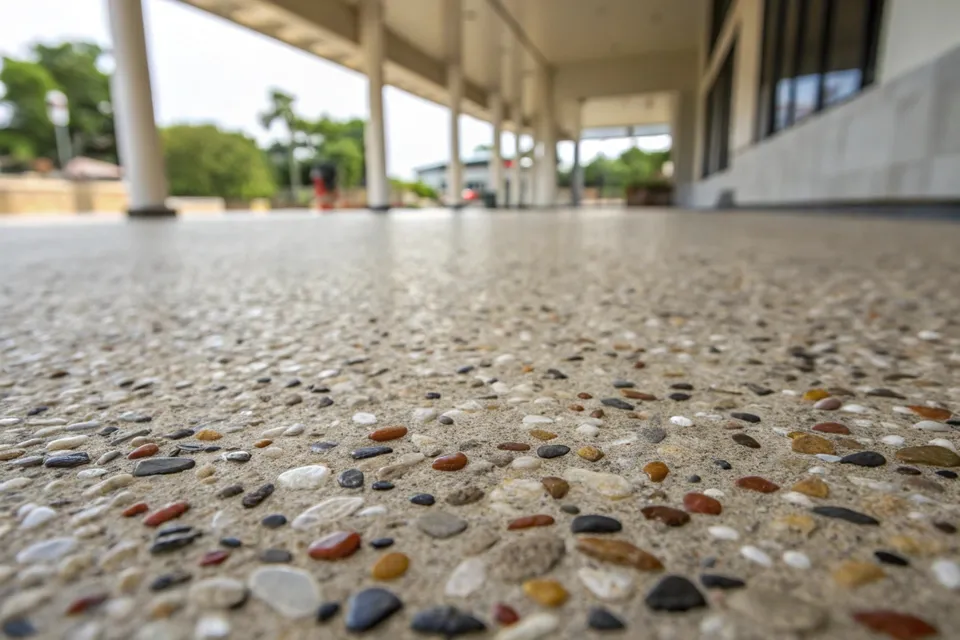
We offer quartz epoxy flooring in Wollongong for properties that need a seamless, textured resin floor.
People often look at quartz epoxy when they're worried about slips in wet or contaminated areas. Others need a floor that can handle heavy daily use, or they're planning a food premises fit-out.
This page explains how a quartz system is built and how slip resistance is specified. It also covers where the floor can suit, what to plan for in food premises, and how slab preparation and installation work.
When you're ready, get in touch to discuss your floor, how it will be used and the conditions on site.
What Quartz Epoxy Flooring Is and How the System Is Layered
Quartz epoxy flooring is a seamless epoxy resin floor system with multicoloured quartz aggregate and clear topcoats. The aggregate is either broadcast into wet epoxy or mixed and troweled as an epoxy mortar. The result is typically a durable, impermeable, lightly textured surface. Its exact texture and sheen depend on the specification.
A broadcast quartz system is built in layers:
- Primer: the first coat, applied to the prepared concrete.
- Epoxy base coat: the wet resin layer that holds the quartz.
- Quartz aggregate: broadcast into the wet base coat "to refusal", which means until the surface can't take any more. Many systems are double-broadcast, with a second base coat and a second layer of quartz.
- Clear topcoats: applied over the quartz to seal the surface.
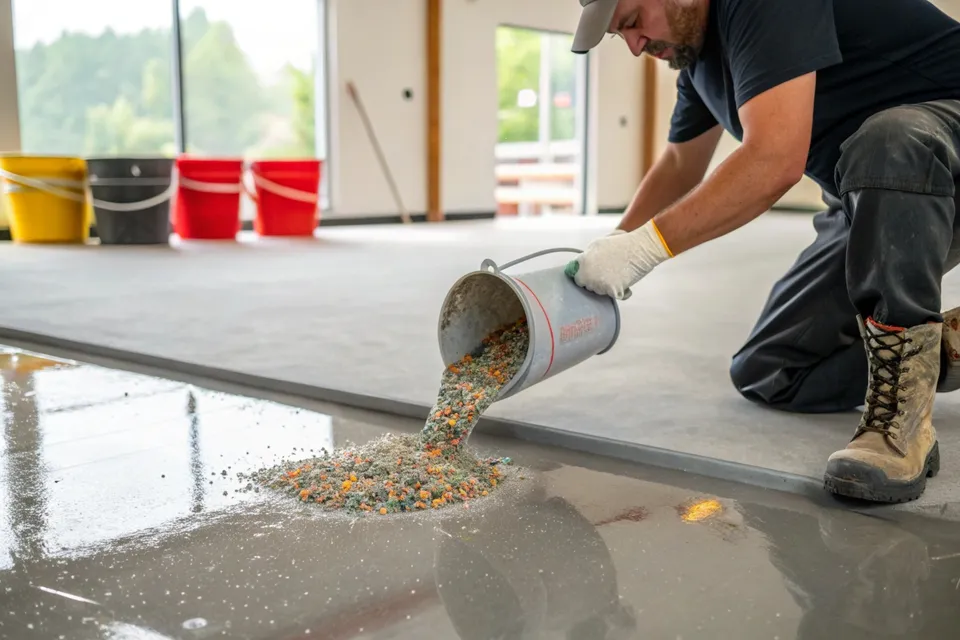
The topcoat you choose affects the floor's sheen, UV stability and texture.
This layered build is what sets quartz epoxy apart from other epoxy finishes. If a system uses coloured quartz aggregate set in epoxy and sealed with clear topcoats, it's a quartz epoxy floor.
Slip Resistance That Depends on Texture and Specification
The texture of quartz is the main reason people choose it over smooth epoxy. But how much slip resistance you get depends on how the floor is specified.
The amount of quartz used can range from a light sprinkle to full coverage. That choice affects three things:
- slip resistance;
- how the floor looks;
- how easy it is to clean.
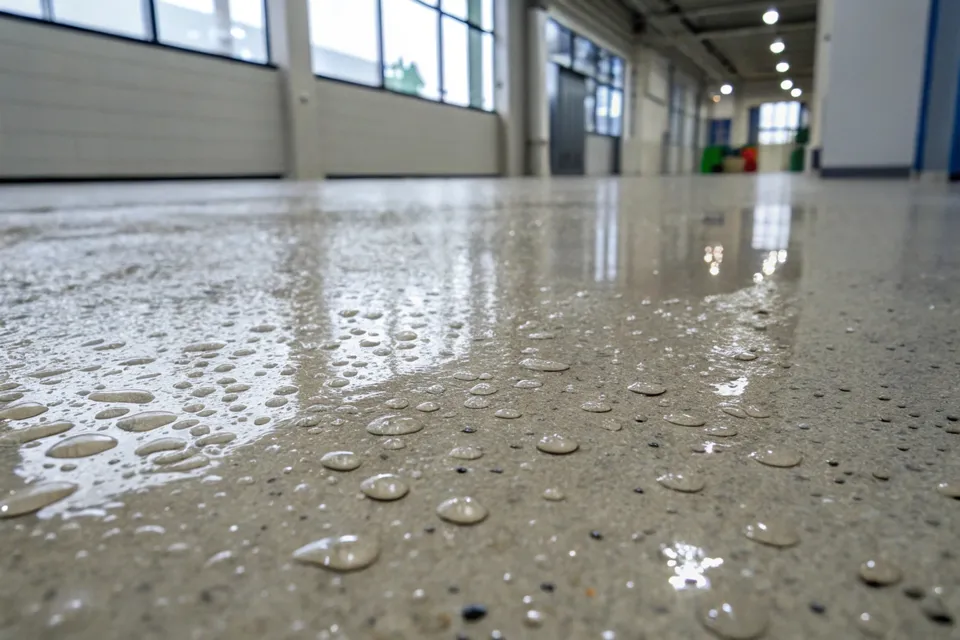
A slip rating isn't automatic. It's an outcome of the specification and of testing to AS 4586, the Australian Standard for slip resistance classification. Two quartz floors can look alike and still perform differently.
Safe Work Australia lists resin coatings among the treatments that can improve slip resistance. If you run a workplace, you also have general duties as a PCBU (person conducting a business or undertaking) to manage slip risks, so far as reasonably practicable.
The practical step is to match the texture to how the floor will be used. A wet or contaminated area may call for a different finish than a dry showroom or garage.
Where Quartz Epoxy Flooring Can Suit Commercial, Wet and Residential Areas
Quartz epoxy is most often considered for commercial, food and wet areas. In these spaces, a textured surface and an impermeable floor both matter.
Manufacturers position quartz systems for mechanical and chemical resistance in heavy-use areas. That's why they're commonly specified for busy commercial floors.
Quartz systems are also marketed for showrooms, garages and homes. Here, the appeal is often a decorative, textured finish rather than heavy-duty use.
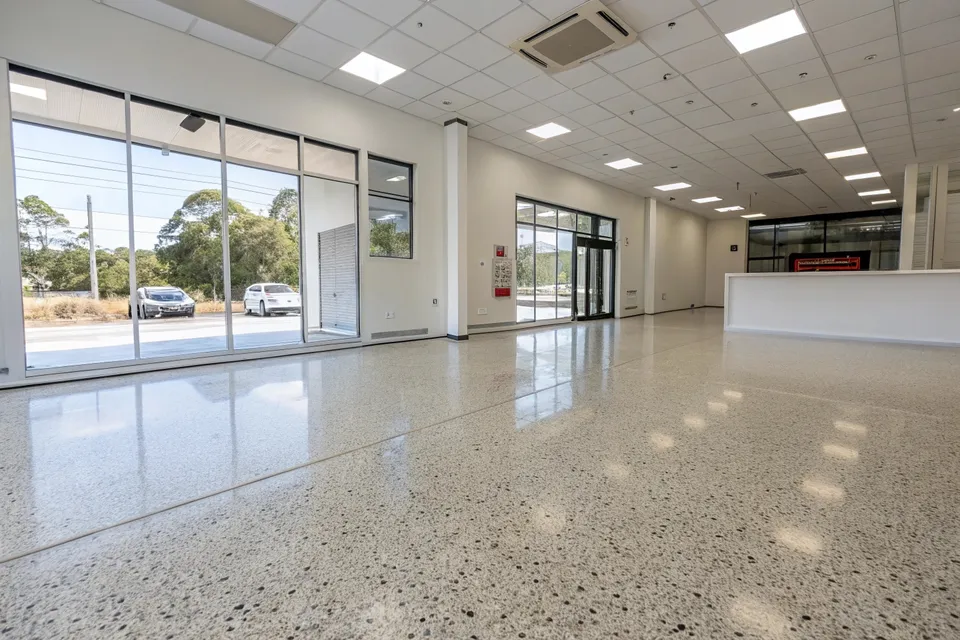
You can choose the colour blend and sheen to suit the space. This lets the same system look quite different in a food business than it does in a home garage.
To judge whether quartz epoxy suits your area, think about:
- whether the floor gets wet or contaminated;
- how much traffic and wear it takes;
- whether you need a working floor, a decorative finish or both.
Planning a Quartz Epoxy Floor Around Wollongong Food Premises Requirements
If you're fitting out a food business, your floor needs to meet Food Standards Code Standard 3.2.3. This standard is outcome-based. It sets out what floors in food handling areas must achieve:
- floors can be effectively cleaned;
- floors are non-absorbent;
- floors are laid so there is no ponding;
- floors, as far as practicable, do not harbour pests.
These floor requirements don't apply to dining, drinking and other public areas.
The standard doesn't mandate epoxy. It only sets the outcomes a floor must meet.
Wollongong City Council's Design and fit-out guide for food businesses lists epoxy resin among its recommended floor finishes. Council doesn't specifically require quartz epoxy.
The guide also sets out coving requirements. Coving is required at wall-to-floor and floor-to-plinth junctions where food is prepared, handled or stored, or where floors are flushed with water. The guide does not permit feather-edge skirting or non-rebated coving.
An integral cove is a documented option with quartz epoxy systems. It forms a curved junction between the floor and wall.
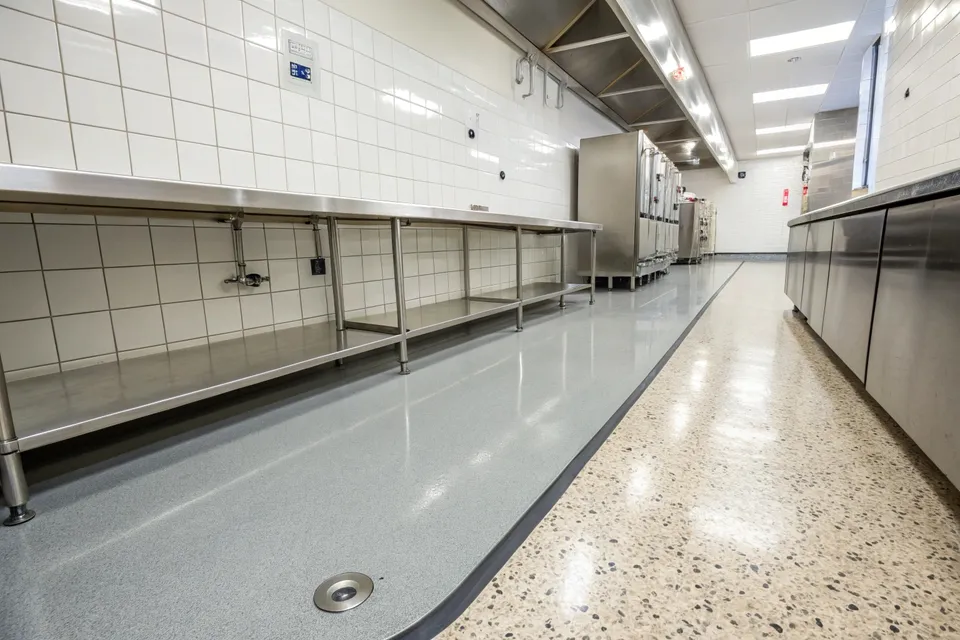
Floor finishes must be specified on the plans you lodge with Council. If you want to use an alternative solution, it needs Council approval.
Planning the floor early helps you get these details onto your plans before you lodge them.
Slab Assessment and Surface Preparation Before Installation
A quartz epoxy floor is only as good as the concrete underneath it. Adhesion depends on a slab that is sound, clean, dry and free of contaminants.
That's why slab assessment comes first. Before any coating goes down, the condition of your concrete needs to be checked.
Preparation is mechanical. The surface is prepared by abrasive blasting or scarifying rather than simply being cleaned.
Moisture matters too. Epoxy primers have maximum substrate moisture limits, and they require no rising moisture from below.
If your slab is damp or damaged, it may need extra preparation or a moisture-tolerant approach. The right path depends on what the assessment finds.
Installation Steps, Cure Times and Weather-Dependent Scheduling
A quartz epoxy floor goes down in stages. The usual sequence is:
- surface preparation;
- primer and epoxy base coat;
- quartz broadcast;
- second broadcast, where specified;
- clear topcoats;
- cove, where required.
Cure and overcoat times aren't fixed. They vary with temperature and humidity, and they generally get shorter as the substrate temperature rises.
Conditions on the day also decide whether work can go ahead. Installers check:
- relative humidity, which must be within the product's limits;
- that the substrate is at least 3°C above the dew point;
- the temperature of the slab.
These checks matter because condensation on the surface can cause blushing or adhesion problems.
In Wollongong, humidity can change a lot from one day to the next. Bureau of Meteorology observations for August 2026 recorded a 9am high of 93%. So it helps to allow some flexibility when planning downtime.
Installation timing may be weather-dependent. Expect your schedule to shift if conditions on the planned day aren't suitable.
Frequently Asked Questions
How is quartz epoxy different from flake epoxy?
The main difference is the material broadcast into the epoxy. Quartz systems use quartz aggregate, while flake systems use vinyl flakes. The two differ in texture and build. With quartz, the aggregate creates a textured surface, and the amount used can be adjusted to suit how the floor will be used.
Does a quartz epoxy floor need to meet a specific slip rating?
Not always. Under the National Construction Code, AS 4586 slip classifications apply to specific elements, such as ramps, stair treads or nosings, and landings. They don't apply to all general floors. For other areas, the slip rating depends on how the floor is specified and tested.
How do you clean and maintain a quartz epoxy floor?
How easy the floor is to clean relates to the amount of quartz used and the texture it creates. A floor specified for more texture will clean differently from a lighter-textured one. That's why slip resistance and cleaning needs should be weighed together when the floor is specified.
Can quartz epoxy be finished in different colours and sheens?
Yes. Multicoloured quartz blends are available. The topcoat you choose affects whether the floor has a gloss, satin or matte sheen. It also affects UV stability.
What affects the quote for a quartz epoxy floor?
Several things shape the quote, including:
- floor area;
- slab condition and moisture;
- whether the system is single or double broadcast;
- the topcoat chosen;
- whether coving is needed;
- the slip-texture specification;
- site access and downtime requirements.
Get in touch to discuss your floor and what it needs.