
Residential & Commercial Epoxy Specialists
Pool Deck Epoxy Applications in Wollongong for Safer, Sealed Pool Surrounds
- Illawarra-Wide Coverage
- Fast, Free Quotes
Get a Free Quote
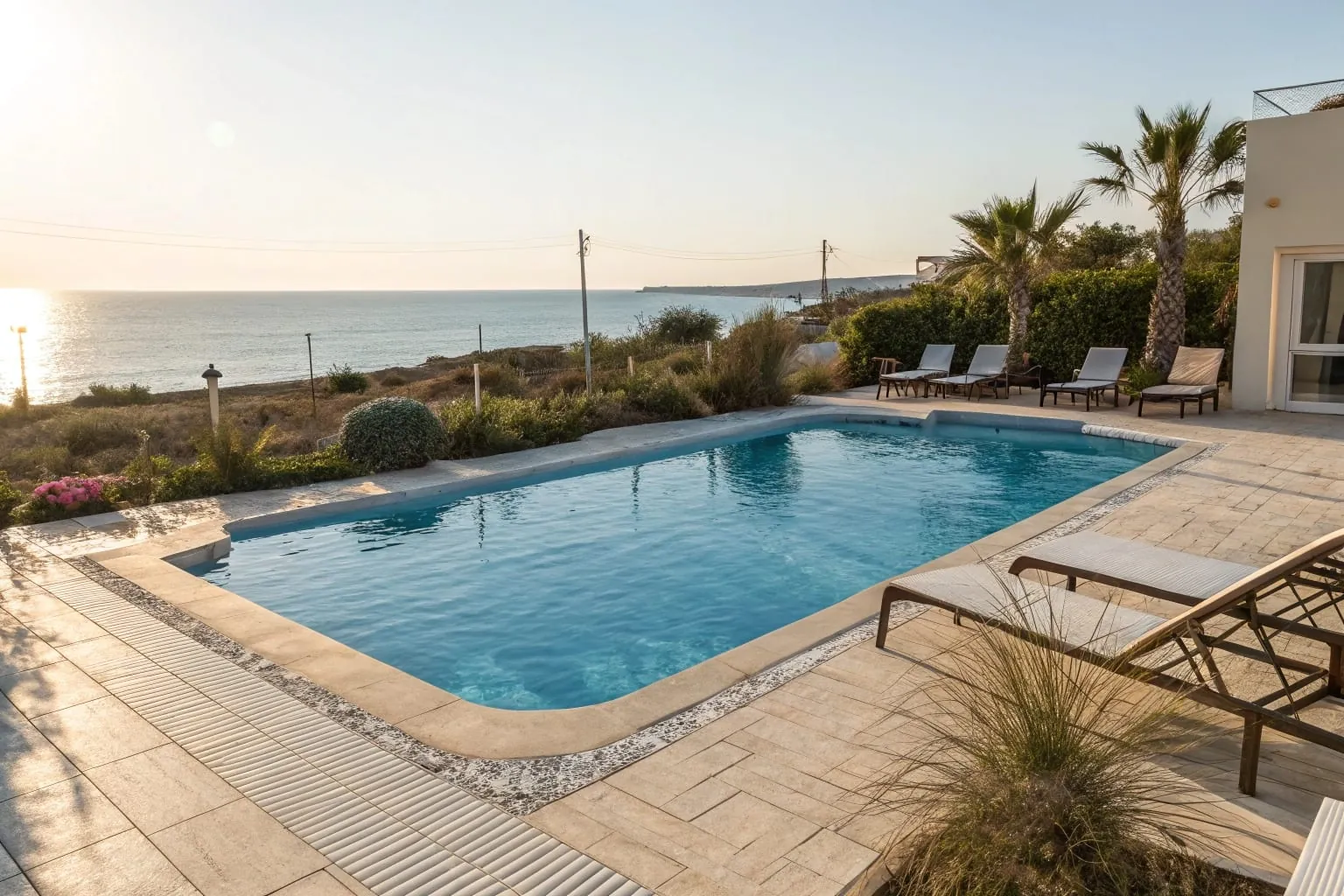
Local Epoxy Flooring Wollongong offers pool deck epoxy applications in Wollongong for existing pool surrounds. The area around a pool handles wet, barefoot traffic and strong sun exposure.
Over time, the concrete around your pool can become slippery, stained, cracked or simply dated. A coating system is one way to refresh that surface.
On this page, we explain how the coating system works and how slip resistance is added. We also cover what preparation involves, how weather affects timing, and how we check whether your existing surface is suitable.
When you're ready, contact us to arrange a site assessment and quote.
Adding Slip Resistance to Wet, Barefoot Pool Surrounds
A pool surround is often wet, and people usually walk on it barefoot. That makes grip the main practical reason to coat it.
In a pool deck epoxy system, slip resistance comes from a slip-resistant aggregate or additive. The texture chosen within the system also plays a part. Different textures give different levels of grip.
In Australia, AS 4586 classifies pedestrian surfaces by how much friction they provide. Surfaces are tested using wet or dry methods. Results are given as a P rating, or as an A, B or C classification for wet, barefoot areas. A rating applies to the new surface and finish that was tested.
Industry summaries report that the HB 198 handbook recommends a P4 or B classification for pool surrounds. They also report a recommendation of one classification higher for ramps and stairs leading into pools. These are recommendations, and they can help guide your choice of texture and finish.
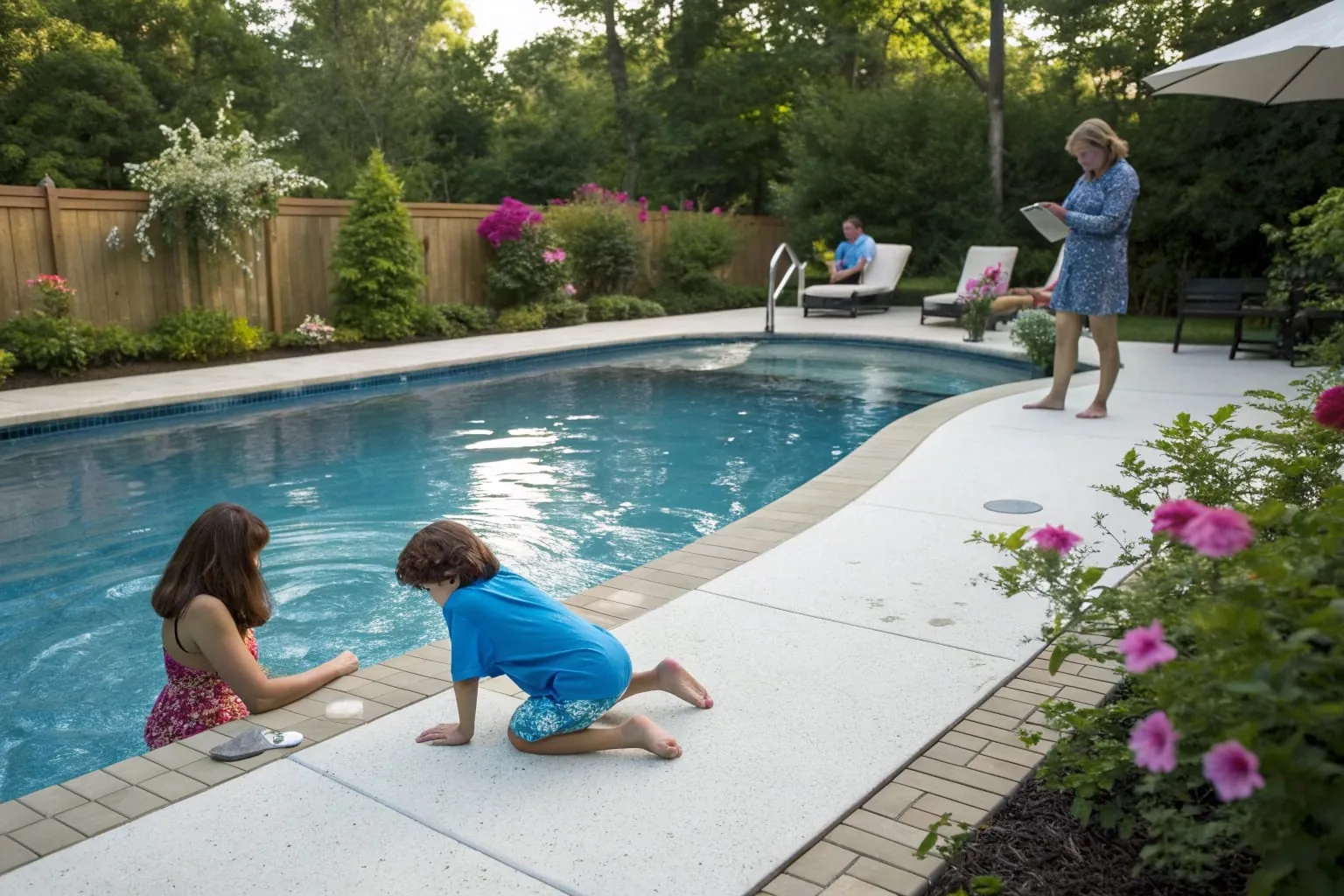
Why an Outdoor Epoxy Pool Deck System Relies on a UV-Stable Topcoat
Yes, epoxy can be used on a pool deck or pool surround, but as part of a multi-coat exterior system rather than on its own. The system typically includes a prepared surface, an epoxy primer or base coat, a slip-resistant aggregate and a UV-stable topcoat. That topcoat is frequently polyurethane-based. Whether it suits your pool surround depends on the condition of the existing surface and our assessment.
The topcoat matters because epoxy is less stable under UV light than polyurethane-based coatings. With UV exposure, epoxy can discolour and develop a chalky surface.
That is why exterior epoxy systems are frequently finished with a UV-stable topcoat, such as an aliphatic polyurethane. It is part of the system itself, not an extra service added on.
Sun exposure is a real factor here. Across NSW, UV levels are high enough to damage unprotected skin for at least 10 months of the year. In Wollongong, the Bureau of Meteorology's Wollongong University station records mean daily solar exposure of 16.0 MJ/m2 across the year. This peaks at 22.6 MJ/m2 in December.
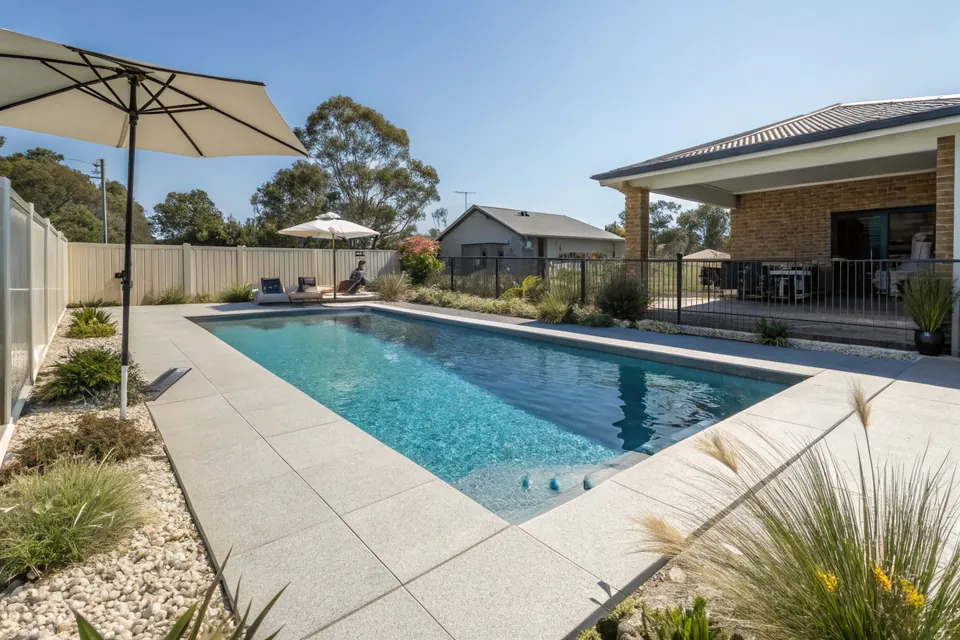
Checking Whether Your Existing Pool Surround Suits an Epoxy Coating
Our pool deck epoxy applications coat your existing pool surround. They do not replace the concrete underneath.
Before any work is booked, we look at the site and the surface. Whether a coating suits your pool surround depends on what we find, including:
- the overall condition of the surface
- any cracks
- existing coatings or sealers
- moisture in the surface
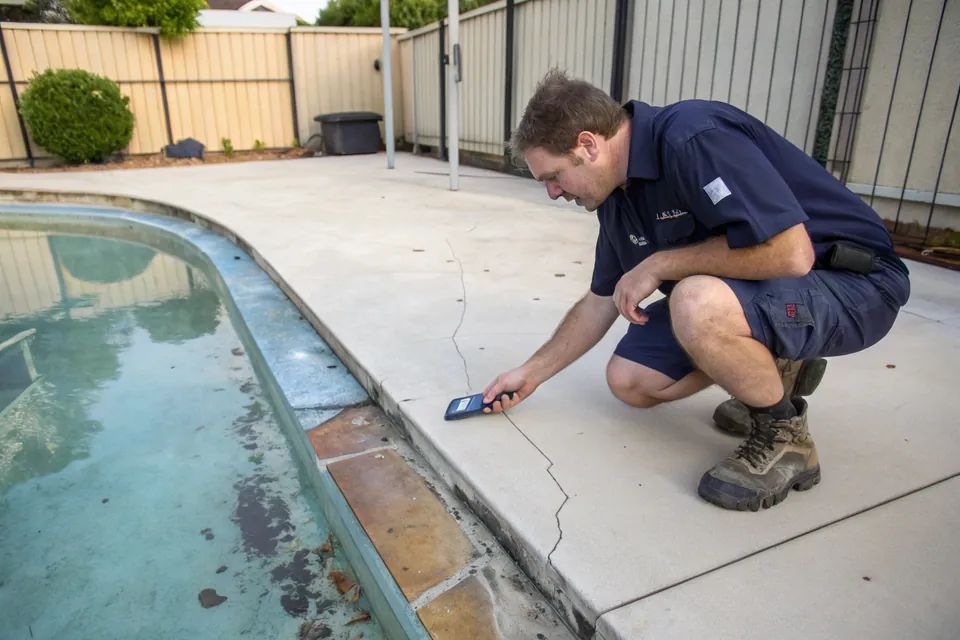
The type of surface also makes a difference. Bare concrete is different from concrete that has been sealed before, and both are different from pavers or tiles. If your surround already has a sealer or coating, it may need to be removed first.
Every pool surround is different, so we check yours before recommending a coating.
Surface Preparation Sets Up Adhesion and Longevity
Preparation is the stage that gives the coating a sound surface to bond to. It usually involves mechanical preparation, such as diamond grinding. Cracks and other surface damage are then repaired before any coating goes down.
Grinding needs to be done with care. SafeWork NSW lists concrete and pavers as materials that contain silica. Uncontrolled grinding can create hazardous airborne dust, so controlled dust handling matters on every job. You can read more in the SafeWork NSW silica safety checklist for construction.
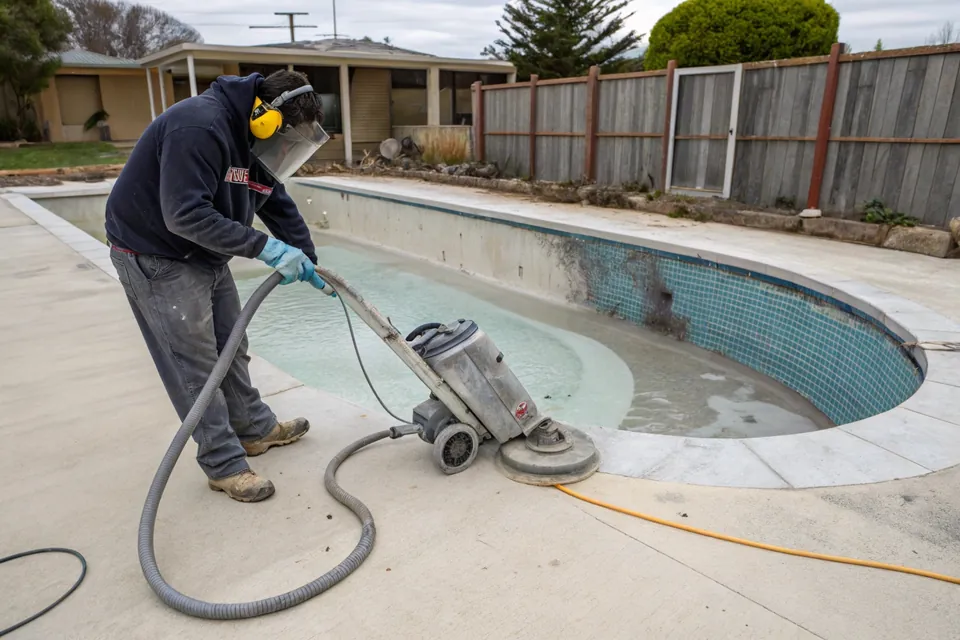
Grinding can also produce slurry and wash water. These are handled responsibly as part of the preparation work.
Weather-Dependent Scheduling and Curing for Outdoor Work in Wollongong
Epoxy is sensitive to moisture, condensation and humidity. This applies while it is being applied and while it cures.
Manufacturer guidance is to keep temperatures within the recommended range for the product. Ideally, the surface should be at least 3°C above the dew point. The dew point is the temperature at which moisture in the air starts to form condensation. Industry literature also sets humidity limits for standard epoxy systems.
Rain is part of life in the Illawarra. The Bureau of Meteorology's Bellambi station records about 1148.5 mm of rain a year. It also records about 92.8 days a year with 1 mm or more of rain.
Because this is outdoor work, we schedule your pool surround coating around dry, suitable conditions. If the weather changes, your booking date may shift.
Choosing a Finish That Balances Appearance and Grip
The finish you choose affects both how your pool surround looks and how it grips underfoot. Options may include decorative flake, solid colour and different levels of texture.
The texture and aggregate you choose affect slip performance. A smoother finish can look sleek, but it comes with a trade-off in grip. We can talk through the options with you so you can weigh up appearance and slip resistance for your pool area.
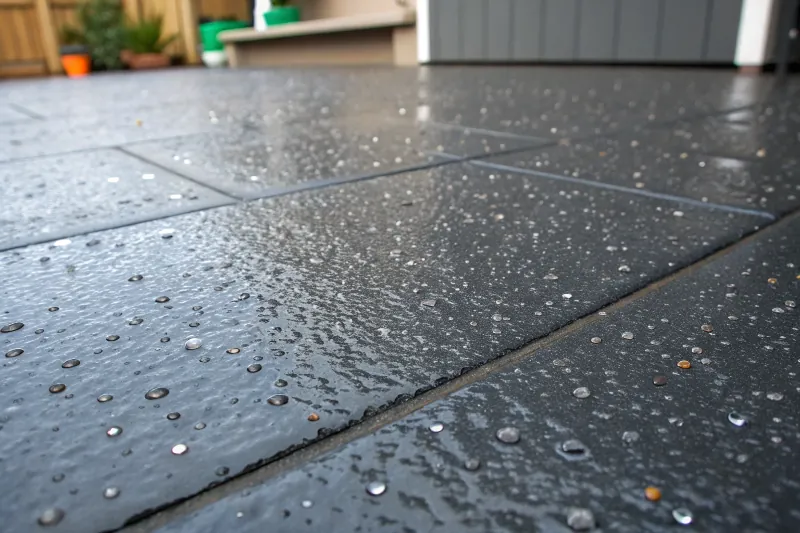
For tired, stained or dated concrete, a coating renews the surface as an alternative to replacing it.
Pool Deck Epoxy Applications FAQs
What affects the cost of coating a pool surround?
Several things affect the cost of coating a pool surround:
- the size and shape of the area, including any steps and coping edges
- the condition of the concrete
- whether existing sealers need to be removed
- the type of surface being coated
- the preparation needed, including dust and slurry control
- how the coating system is built up
- access to the site
- scheduling around the weather
We look at these during the site assessment before giving you a quote.
How long before the pool area can be used after coating?
It depends on the product system used and the conditions while it cures. We confirm the return-to-use time for your pool area when we quote.
Can chlorine or salt water affect an epoxy pool surround?
Chemical exposure from pool water is a relevant factor for a coated pool surround. How well a surround handles it depends on the specific coating system. We can discuss your pool type and the system we recommend when we assess your site.
How should a coated pool surround be cleaned and maintained?
Regular cleaning helps keep your pool surround looking tidy. We can talk you through general care for your coating system. Keep in mind that cleaning products and everyday wear may affect the surface's slip characteristics over time.
Does a slip rating stay the same after years of use?
Not necessarily. An AS 4586 classification is based on the surface when it was tested, and it does not account for wear in service. Over time, use, cleaning, added coatings and wear may affect how the surface grips.