
Residential & Commercial Epoxy Specialists
Marble Effect Epoxy Flooring in Wollongong
- Illawarra-Wide Coverage
- Fast, Free Quotes
Get a Free Quote
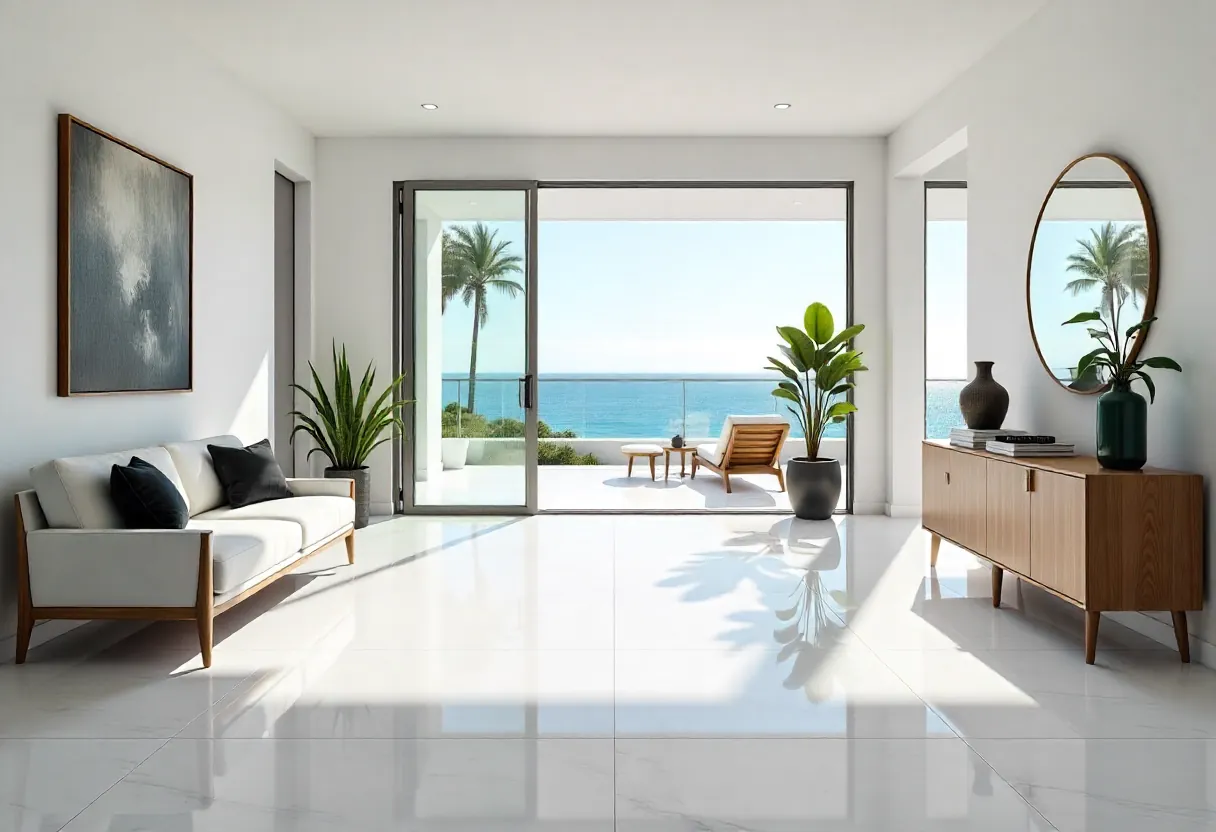
If you want the look of marble without laying natural stone, marble effect epoxy flooring is one option for Wollongong homes and businesses. It creates a seamless metallic resin finish, with veins and movement running across the floor. One manufacturer notes that no two floors look exactly alike, even when the same pigments are used.
On this page, we explain how the system works and the design choices you can make. We also cover concrete preparation, how local humidity and temperatures can affect installation, slip safety options, and the honest drawbacks to weigh up. Marble effect epoxy flooring is part of our flooring contractor services.
When you're ready, contact us to talk through your space and design goals, and we can prepare a quote.
How Marble Effect Epoxy Flooring Creates a Seamless Marble Look
A marble look comes from a metallic epoxy system. Metallic or pearlescent pigments are worked into the epoxy to create veining and movement that resemble marble. The design layer sits over a pigmented base coat and is sealed with a protective clear topcoat.
The floor is built up in layers:
- Prepared concrete – the slab is readied so the coating can bond to it.
- Primer and/or pigmented base coat – this forms the foundation and sets the background colour.
- Metallic design layer – the pigmented epoxy is worked while it is still wet to form the veins and movement.
- Clear topcoat – a protective layer is applied over the design.
Because the pattern is shaped by hand while the resin is wet, each floor has its own look. One manufacturer notes that no two floors look exactly alike, even when the same pigments are used.
This makes marble effect epoxy a multi-layer decorative system. It is not a paint, and it is not a tile product.
Design Choices That Shape Your Marble Floor: Base Colour, Pigments and Finish
A few key choices shape how your finished floor will look.
Base Colour
Metallic epoxy is translucent, so it needs a pigmented base coat underneath. The colour of that base coat may affect the metallic colour you see on top. A lighter or darker base can change how the pigments read across the floor.
Pigments and Veining
You can choose the pigment colours and how they are combined. You can also choose the veining style, from soft movement to bolder, more defined veins.
Topcoat Finish
The clear topcoat can be matte, satin or high-gloss. The finish changes how the floor catches the light. One manufacturer notes that a satin finish detracts from the metallic effect. So the finish you pick is a trade-off between the sheen you prefer and how strongly the marble look comes through.
Where It Suits
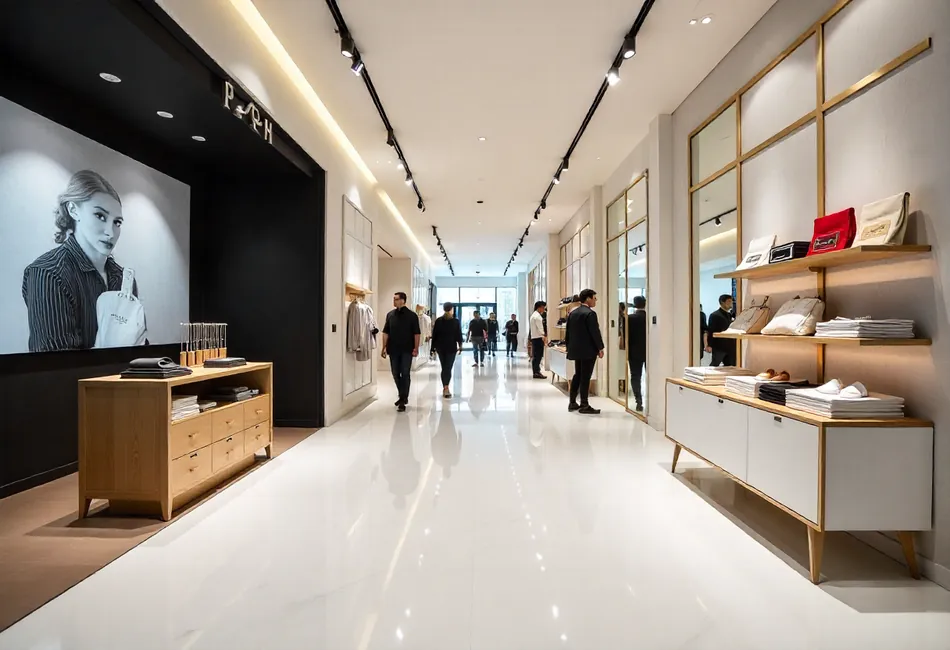
Marble effect epoxy is suited to interior residential and commercial spaces.
Concrete Preparation and Moisture Testing Before Any Coating Goes Down
Preparation is one of the biggest factors in how well a marble epoxy floor turns out. Many common coating problems start with the concrete underneath, not the coating itself.
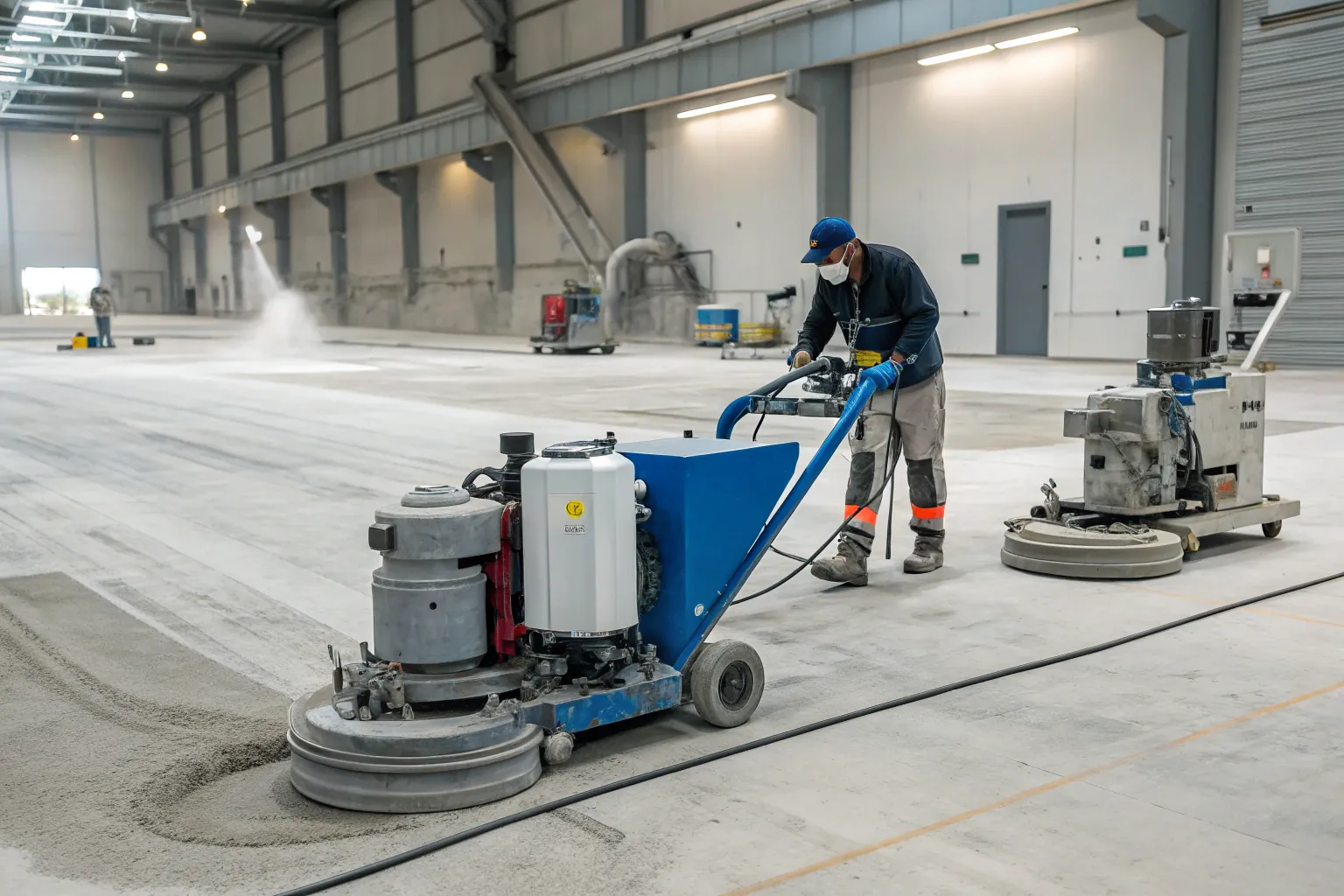
First, the slab is cleaned and repaired. Then the surface is profiled so the coating has something to grip. This is often done by diamond grinding or shot blasting.
Next, the moisture in the concrete is measured before any coating is applied. Too much moisture in the slab can affect how the epoxy bonds. For one epoxy, the limit is 4% or less by mass, measured on a meter. Other products may list different limits.
Where moisture readings are higher, a temporary moisture barrier may be applied before the coating system goes down.
Taking care at this stage is a key step in avoiding common coating problems later.
How Wollongong Humidity and Cool-Season Temperatures Can Affect Installation and Cure Times
Epoxy is sensitive to the air and surface conditions around it. That's why conditions are checked before work starts and monitored during the job.
Bureau of Meteorology records for the Wollongong Post Office station show an annual mean relative humidity of 70% at 9am and 68% at 3pm. At the Wollongong University station, mean minimum temperatures from June to August sit between 8.3°C and 9.5°C. These are overnight lows, not daytime working temperatures. But they show why conditions are measured rather than assumed, especially in the cooler months.
Before application, we measure the humidity, the dew point, and both the air and surface temperature. One product data sheet says these should be rechecked at least every 3 hours. The same data sheet lists a relative humidity range of 30–75%, and a surface temperature at least 3°C above the dew point. If condensation forms, it may cause adhesion failure or blushing, which is a cloudy or greasy film on the surface.
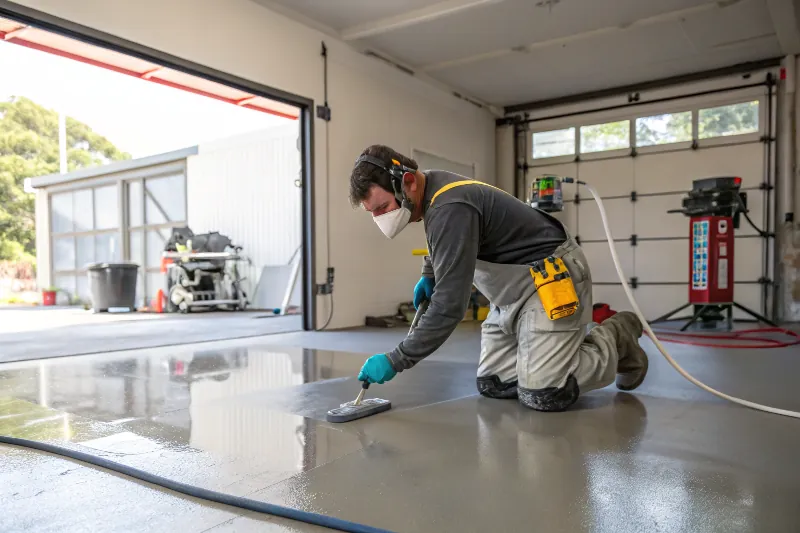
Temperature also affects how quickly the floor cures. Cure slows down in cooler conditions. For one product, the floor is ready for foot traffic in about 12 hours at 20°C, but about 24 hours at 10°C. Full cure takes longer again, and times vary between products.
This means your return-to-use time can depend on the season and the conditions on the day. We can give you a clearer timeframe once the product and conditions for your job are known.
Slip Resistance Options and NCC Requirements for Stairs and Ramps
A smooth, glossy floor can raise questions about slipping when it's wet. There are options for improving slip resistance on a marble epoxy floor.
The first is your choice of finish. The second is adding an anti-slip additive to the coating. Both can be discussed when planning your floor, alongside the look you want.
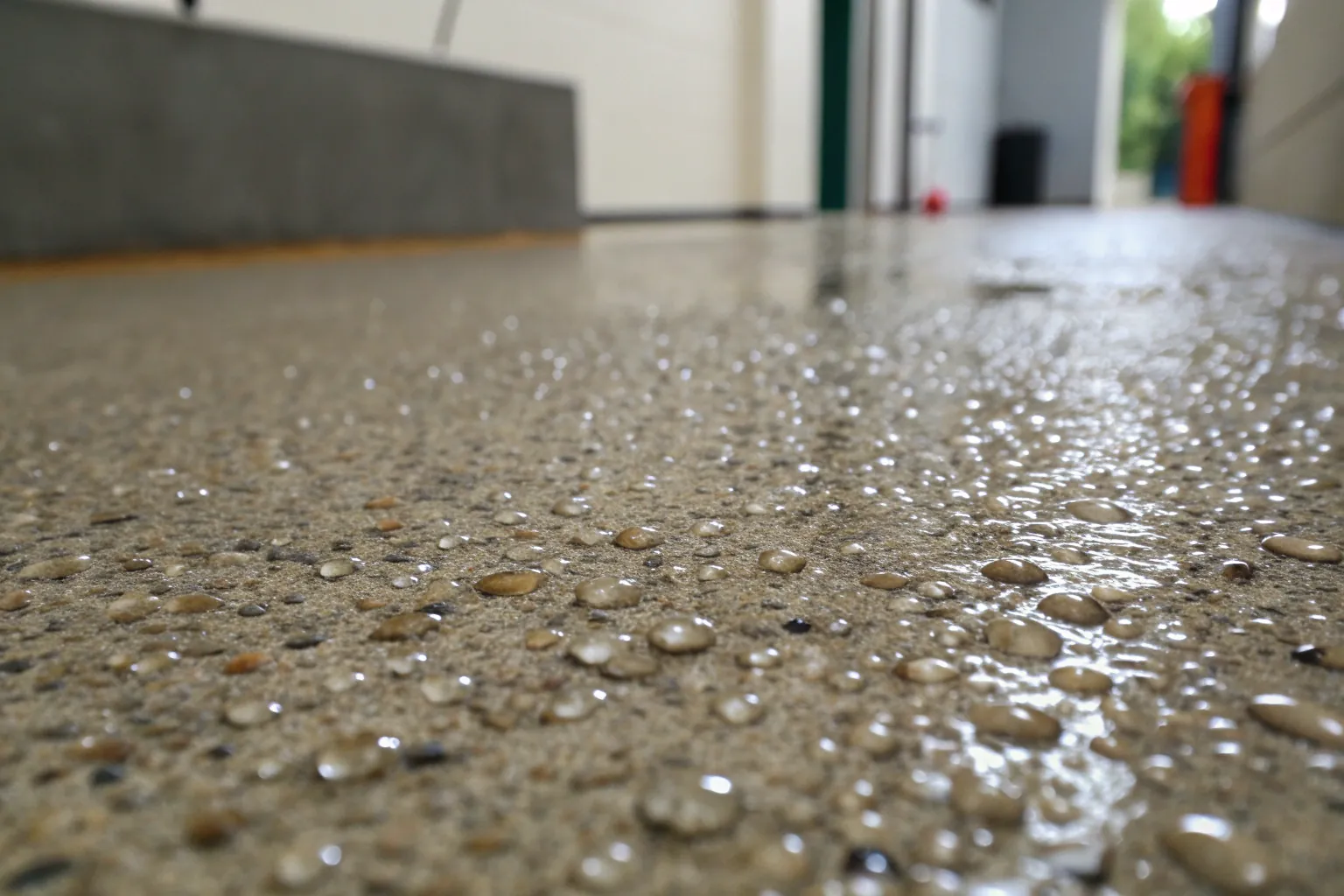
Stairs and ramps have specific rules. The NCC 2022 Housing Provisions set slip-resistance classifications, tested to AS 4586, for stair treads or nosing strips. They also set classifications for ramps that are not steeper than 1:8.
The Australian Building Codes Board states that this requirement applies to all finishes and surface types. That means epoxy is not exempt. If you're planning a marble epoxy finish on stairs or a ramp, these requirements need to be part of the plan.
Drawbacks to Weigh: UV Exposure, Topcoat Choice and Long-Term Appearance
Marble effect epoxy has a striking look, but it also has drawbacks. Knowing them up front helps you decide if it's right for your space.
UV exposure. Sunlight can cause chalking in standard epoxy. Over time, this can change the colour and gloss of the surface. For this reason, exterior and sun-exposed areas are generally outside core scope for this type of floor.
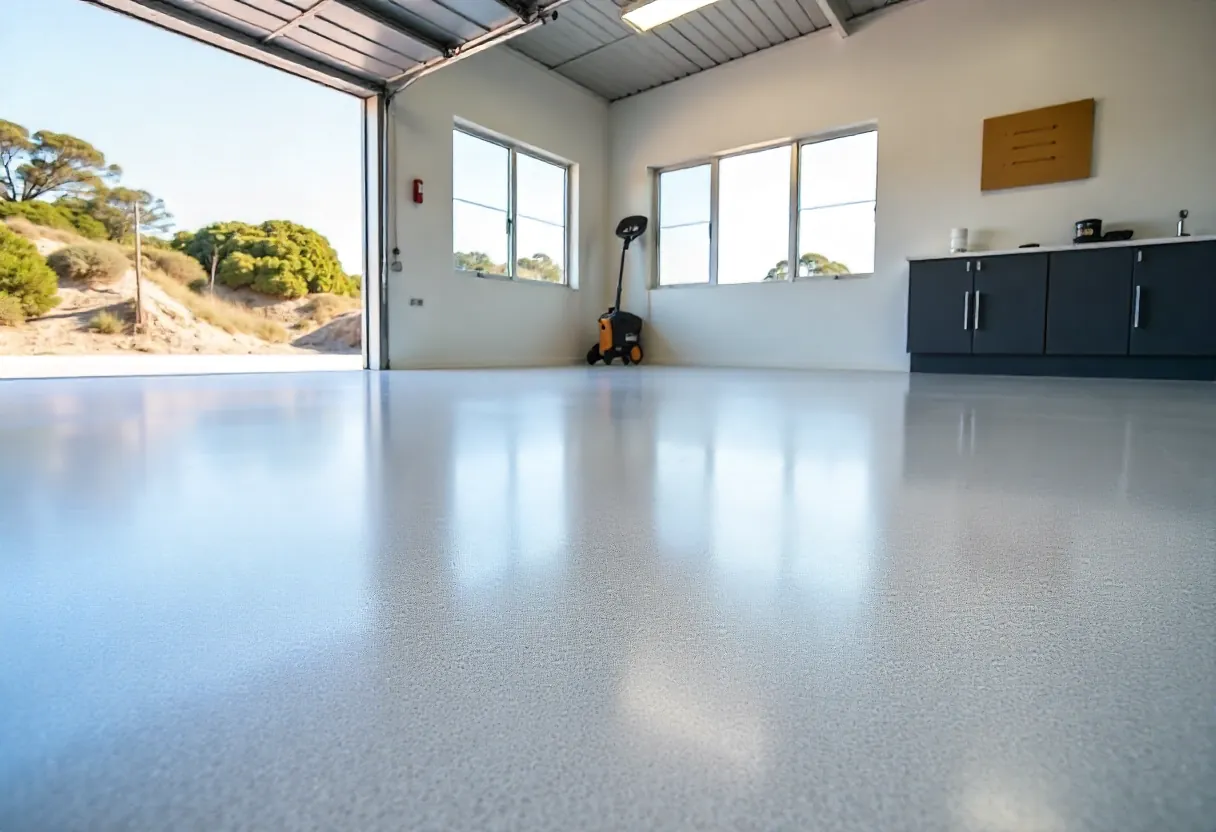
Topcoat choice. Where colour retention matters, epoxies are typically topcoated with a more weatherable coating, such as an aliphatic polyurethane. Many systems use polyaspartic topcoats for scratch resistance and gloss retention. Some manufacturers claim a clear polyaspartic topcoat also protects the epoxy underneath from UV. That claim is disputed, so it's best not to rely on it.
Matching later. Because each floor is unique, the pattern can't be exactly replicated. This is worth thinking about if you may want to extend the floor or match a repaired area in the future.
Weighing these points against the look you want will help you decide if marble effect epoxy is worth it for your project.
Frequently Asked Questions
Is marble effect epoxy cheaper than tiles?
It depends on your project. The cost of a marble epoxy floor is shaped by several factors, including:
- the floor area
- the condition of the slab and any repairs needed
- removal of existing coatings
- grinding or shot blasting
- a moisture-barrier primer, if needed
- the complexity of the design and the number of colours
- the type of topcoat
- an anti-slip additive
- stairs and edge detailing
- access to the space
The best way to compare is to get a quote based on your space. Contact us to talk through your project.
Can marble effect epoxy be used outdoors or in sunny areas?
It is generally suited to interior use. Standard epoxy can chalk and change colour under UV exposure. One marble metallic system is specified for indoor use only.
How long before I can walk on a new marble epoxy floor?
Timing varies by product and temperature. As an example, one product is ready for foot traffic in about 12 hours at 20°C, and about 24 hours at 10°C. Full cure takes longer. These figures are for one product only, so your timeframe may be different.
Is a cured marble epoxy floor safe for my household?
During installation, the components of two-part epoxy can cause irritant or allergic dermatitis. Once the epoxy is fully cured, it should be non-irritating and non-sensitising.
Can I know exactly how my marble floor will look before it's installed?
You can choose your colours, base coat and finish in advance. The base coat colour may affect the metallic colour, so it's part of the overall look. The exact veining can't be replicated, though. One manufacturer notes that no two floors look exactly alike, even with the same pigments.