
Residential & Commercial Epoxy Specialists
Educational Institution Epoxy Flooring in Wollongong for Classrooms, Labs and Learning Spaces
- Illawarra-Wide Coverage
- Fast, Free Quotes
Get a Free Quote
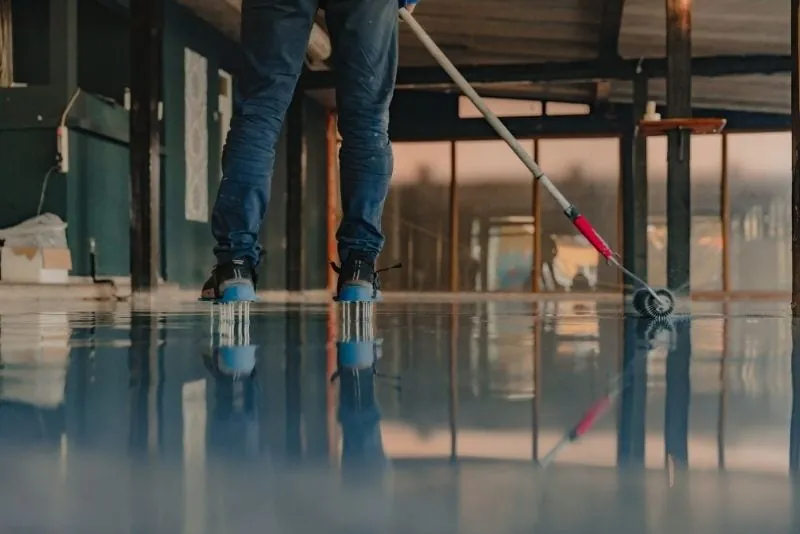
We provide educational institution epoxy flooring in Wollongong for schools, TAFE campuses and tertiary education buildings.
Many older education buildings have floor coverings that are worn out or have failed. They often need replacing, but classes still need to run. Planning the work so it doesn’t disrupt learning is a big part of any school flooring project.
This page covers the main things to work through before new floors go down. It explains which rooms suit epoxy and how to choose a system for each space. It also explains where slip resistance rules apply. You’ll also find information on asbestos checks in older buildings, preparing existing floors, and planning works around the school holidays.
When you’re ready, get in touch to talk about your site and the timing you have in mind.
Where Epoxy Flooring Suits Education Facilities
Epoxy flooring is used across many types of spaces in education buildings. Manufacturers offer systems for a wide range of room types, including:
- Learning spaces: science labs, classrooms and technical learning spaces.
- Practical areas: workshops, maintenance zones and food tech rooms.
- Wet areas: amenities and other rooms that get wet.
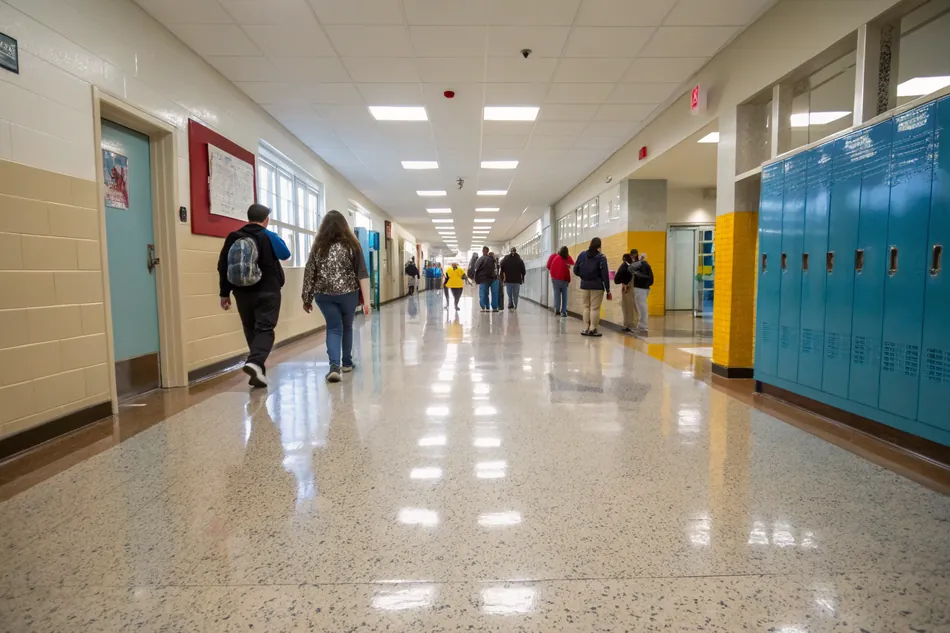
- Shared spaces: corridors, hallways, student areas and admin blocks.
- Support areas: storerooms and back-of-house spaces.
For school buildings, it helps to look past the day the floor goes down. The Educational Facilities Standards and Guidelines (EFSG) point towards durable surfaces that need limited maintenance over their life. Epoxy is one option that can fit that approach. How well a floor lasts still depends on the system chosen, how the room is used and how the floor is cared for.
Choosing an Epoxy System to Match Each Room’s Use
There is no single epoxy system that suits every room in a school. The right choice depends on how each space is used.
- Smooth coat systems are used in classrooms, labs and storerooms.
- Decorative flake systems are used in common areas and admin spaces.
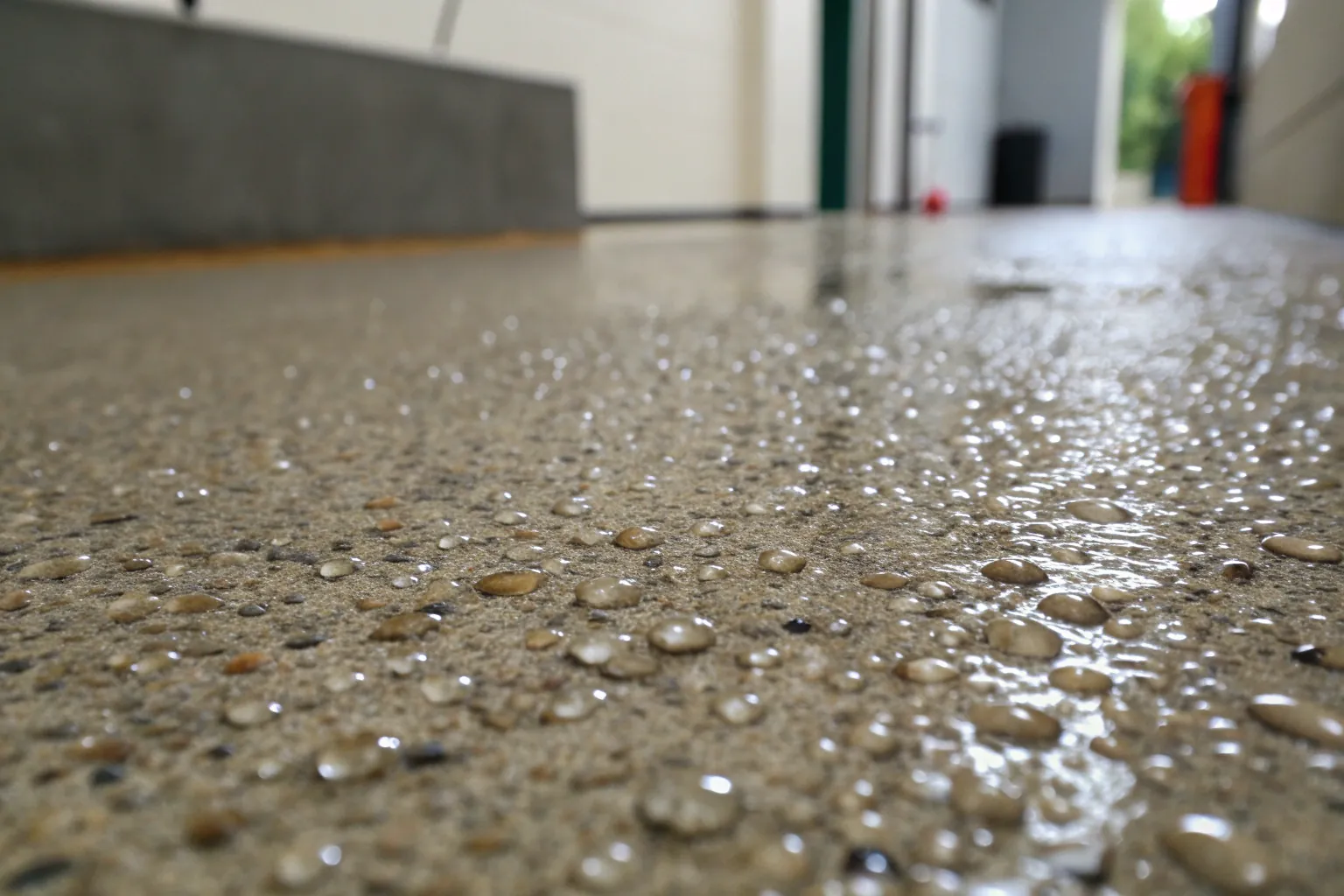
- Slip-resistant quartz broadcast systems are used in food tech rooms, wet areas and service zones.
- Heavier systems are used in workshops and maintenance zones.
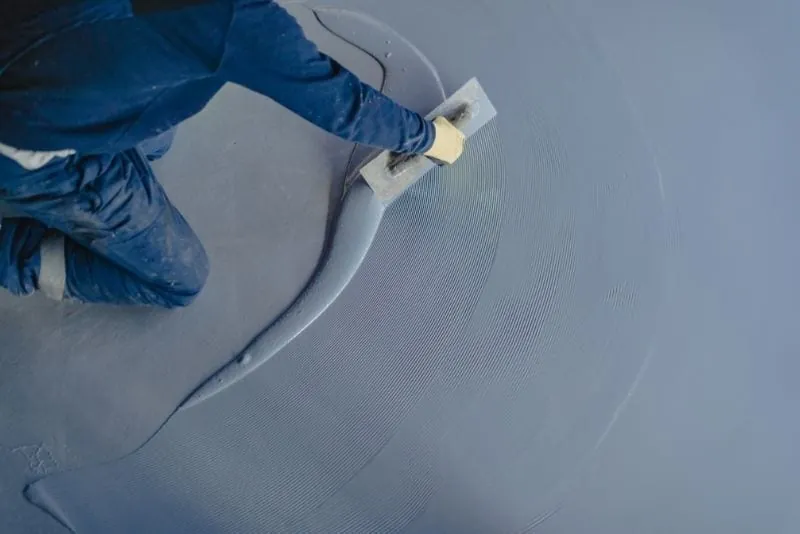
Epoxy systems can be applied in one layer or in multiple layers, depending on what the floor needs to do. A multi-layer system may include a primer, a body coat and a topcoat.
The finish at the wall is another detail to plan. EFSG guidance prefers coved skirting in kitchens, where the floor coating curves up the base of the wall.
Matching the system to each room’s use helps the floor suit the work that happens there.
Slip Resistance Requirements for School Floors: Where the NCC Applies
Slip resistance is a common question on school flooring projects. It helps to know where the National Construction Code (NCC) sets requirements and where it doesn’t.
Under the NCC, school labs and workshops fall under Class 9b.
The NCC sets slip-resistance classifications for ramps, stairways and landings. These classifications are based on testing to AS 4586. The requirements for ramps and landings apply under NCC Volume One only. You can read more about where these rules apply in the Australian Building Codes Board’s advisory note on slip resistance.
For other floors, the NCC does not set a blanket slip-resistance rule. Instead, slip resistance becomes a design choice based on how each room is used. A wet area or food tech room may call for a different finish than a classroom or admin office.
EFSG guidance also advises that kitchen floors should be slip-resistant when wet or dry.
Checking the Asbestos Register Before Floor Works in Older Wollongong School Buildings
Asbestos was commonly used in building materials from the 1940s to the late 1980s. Some vinyl floor tiles from that time may contain it. This makes asbestos an early check before any floor works in an older school building.
The first step is to check the school’s asbestos register. The register lists any asbestos-containing material (ACM) that has been identified or is assumed to be present.
Where removal is needed, it is a separate step from epoxy coating. A licensed asbestos removal contractor carries out the removal. An independent hygienist then issues a clearance before other works continue.
This has come up in Wollongong before. In 2022, School Infrastructure NSW replaced vinyl flooring at Wollongong High School of the Performing Arts. The works involved ACM, and the removal was carried out outside school hours.
Preparing Existing School Slabs and Floor Coverings for Epoxy
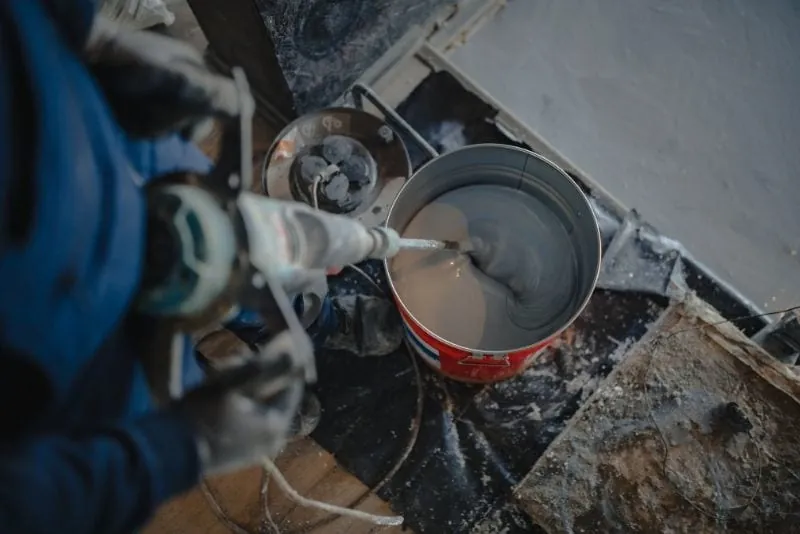
Good preparation is where every epoxy floor starts. Before any coating goes down, the existing floor coverings and the condition of the slab are checked.
Manufacturer instructions require the surface to be clean, sound and dry. Preparation removes anything that could stop the coating from bonding, including:
- dust and laitance (the weak, powdery layer on top of concrete)
- grease
- curing compounds
- waxes
- other contaminants
Manufacturer data also sets the conditions for applying the coating. For example, one manufacturer states the slab should be at least +3 °C above the dew point. This reduces the risk of condensation or blooming on the finished surface.
The condition of your existing floor shapes how much preparation is needed. A floor in poor condition, or one with old coverings still in place, may need more work before coating can begin.
Scheduling Epoxy Floor Works Around the Wollongong School Holiday Calendar
Timing is often the biggest factor in a school flooring project. School Infrastructure NSW identifies school holidays as the ideal time for maintenance works, because they don’t disrupt learning.
Wollongong schools follow the NSW Eastern Division school holiday calendar. Planning floor works around these breaks means the rooms are empty while the work is done.
The holiday window needs to cover more than the coating itself. It also needs to allow time for the floor to cure before students and staff return.
How long before a classroom or lab can be used after epoxy is applied?
- There is no single fixed timeframe. Return to use depends on the specific system and on the air and slab temperature.
- As an example, one manufacturer’s system at +20 °C allows foot traffic after about 24 hours, light traffic after about 4 days, and full cure in about 7 days.
- Cooler conditions slow the cure. The same data shows about 72 hours before foot traffic and up to about 10 days for full cure at +10 °C.
- Timing should always be confirmed against the data for the product chosen.
Because cure times vary, the scope of works should be planned so the cure fits within the holiday window. The rooms involved, the system chosen and the conditions on site all play a part in setting a realistic schedule.
Frequently Asked Questions
Can epoxy be applied over old vinyl tiles in a school?
It depends on the floor. Some older vinyl tiles may contain asbestos, so the school’s asbestos register should be checked first. Manufacturer instructions also require a clean, sound surface before coating. For these reasons, existing floor coverings are looked at case by case before deciding how to proceed.
Do epoxy floors in NSW public schools need to follow the EFSG?
The EFSG is mandatory for School Infrastructure NSW projects. It does not replace the NCC, the BCA, Australian Standards or NATSPEC requirements. Those still apply alongside it.
Is epoxy suitable for upper-floor classrooms?
Epoxy is a hard floor finish. The EFSG lists hard floor surfaces on upper floors as a factor when looking at impact noise. This means acoustics may be something to plan for in the design of an upper-floor room. It is a design consideration, not a defect.
How are epoxy school floors cleaned and maintained?
The EFSG prefers floor surfaces that are easy to maintain and need limited maintenance. Epoxy floors are generally cared for with routine cleaning. Cleaning methods can vary between systems, so it’s best to follow the care guidance for the product installed.
What affects the cost of a school epoxy flooring project?
Every school project is different. The main things that affect cost include:
- the floor area and number of rooms
- the condition of the existing slab and floor coverings
- any separate licensed asbestos removal and clearance
- the type of epoxy system chosen
- slip-resistance requirements on ramps and stairs
- whether coved skirting is needed
- holiday-window timing and how the works are staged