
Residential & Commercial Epoxy Specialists
Clear Coat Flooring Restoration in Wollongong for Worn, Dull Floors With a Sound Existing Coating
- Illawarra-Wide Coverage
- Fast, Free Quotes
Get a Free Quote
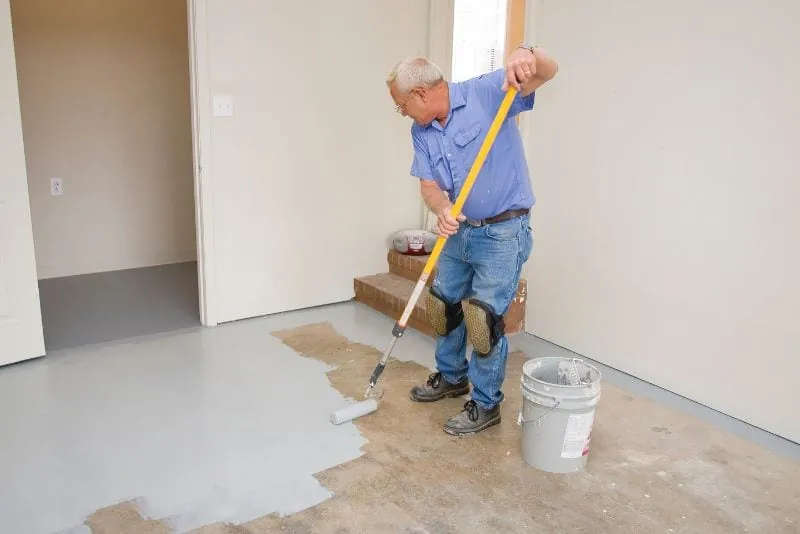
Is your coated or sealed floor looking scuffed, flat or dull in the traffic lanes, but not peeling? Our clear coat flooring restoration in Wollongong is for floors like this.
Restoration renews the clear top layer of your floor. With a fresh clear coat in place, the finish underneath can show through again. Clear coat flooring restoration is part of our floor refinishing services.
This page explains which floors suit this service and how the process works. It also covers your topcoat and sheen choices, and what you can realistically expect when the job is done.
The first step is an on-site assessment, where we check whether your floor qualifies for clear coat restoration.
Signs a Coated or Sealed Floor May Be Ready for Clear Coat Restoration
Coated and sealed floors wear over time, most often where people walk, drive or move equipment every day. You may notice:
- Dull patches: The floor looks flat instead of glossy, especially in traffic lanes.
- Scuffing: Marks from shoes, tyres or equipment that no longer clean off.
- Loss of gloss: The shine has faded across the whole floor or in busy areas.
- Surface scratches: Fine scratches that have marred the finish.
- Embedded dirt: Grime that has worked its way into the worn surface.
These are the kinds of wear clear coat restoration can address. As part of the process, sanding removes a small layer of the worn coating. This helps remove scratches and embedded dirt before the new clear coat goes on.
Some signs point to a different problem. If your coating is peeling, lifting or flaking, the floor needs a suitability check first. It may not be ready for a straight recoat.
Restoration Suits Floors Where the Existing Coating Is Still Well Bonded
Can a worn epoxy floor be recoated, or does it need full removal? A worn floor can typically be restored with a new clear coat if the existing coating is still well bonded. If the coating is failing, a new top coat cannot fix it. There is no blanket yes or no, so suitability is confirmed on site.
A new clear coat bonds to the coating that is already on your floor. That means the existing coating needs to be sound. A fresh top layer cannot restore adhesion beneath a failing layer.
Suitability is typically checked with an adhesion test. For example, one manufacturer uses an X-cut and tape pull. A small cross is cut into the coating, tape is pressed on and pulled off, and the result shows how well the coating is holding.
Where the coating is failing, the loose coating needs to be removed and the underlying issue corrected first. That work sits outside our clear coat restoration service. If the existing coating is still well bonded, restoration is the next step.
Floor Types That Can Typically Be Restored With a Compatible Clear Topcoat
Clear coat restoration can typically be used on:
- Coated epoxy floors
- Flake epoxy floors
- Metallic epoxy floors
- Sealed concrete floors, where the work involves resealing
The new topcoat must be matched to the system already on your floor. Not every clear product works with every coating. Some clears are not suitable over coloured systems, so compatibility is checked before any product is chosen.
Sealed concrete needs the same care. If your floor was sealed with a different product in the past, most manufacturers advise removing any traces of the old sealer first. This is because the two products may not be compatible.
It also helps to know what this service is not. Clear coat restoration is not timber floor polishing or mechanically polished concrete. It is also not a pigmented recoat, which adds new colour to a floor. Our focus is renewing the clear top layer over your existing finish.
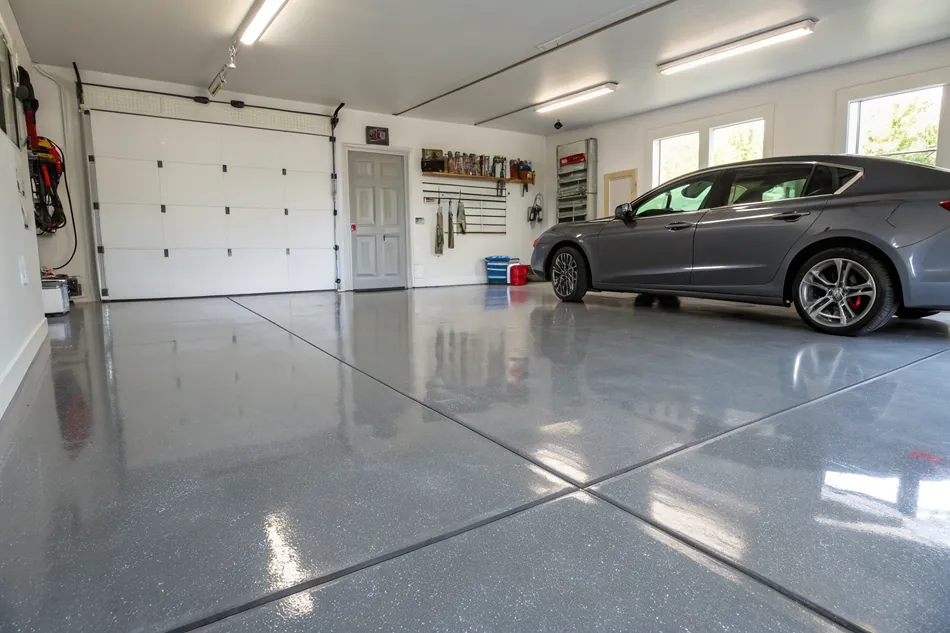
How Clear Coat Restoration Works, From Assessment to Final Coat
Each step in the process sets up the next one. Here is what happens.
- Assess the bond. We start by checking that the existing coating is still well bonded to the floor.
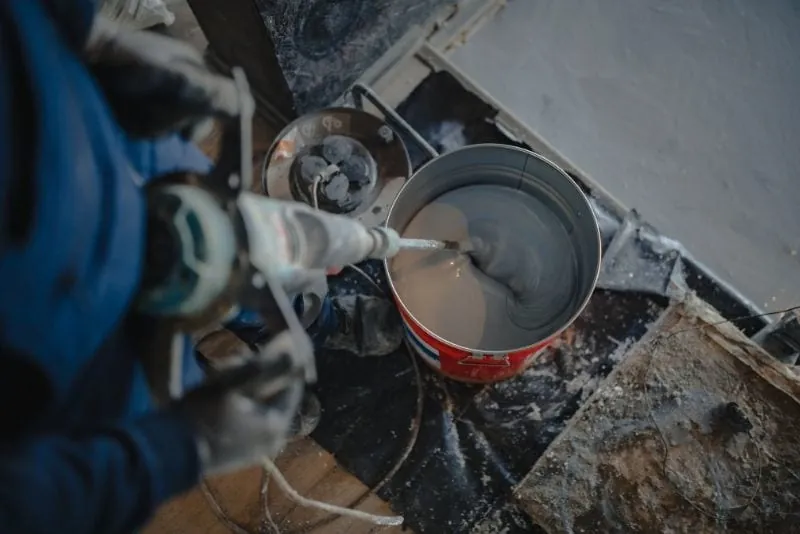
- Remove contaminants. Oil, silicone and similar residues are cleaned off before any sanding. This matters because sanding can spread these contaminants across the floor.
- Abrade the surface. The floor is mechanically abraded or deglossed. This gives the new coat something to grip, which is needed for good adhesion between layers.
- Remove the dust. All sanding dust is cleared away so it does not end up trapped under the new finish.
- Apply the clear topcoat. A compatible clear topcoat goes on at the sheen you have chosen.
Timing the application matters too. Humidity and dew point are checked on site before the topcoat goes on, because both can change from hour to hour. Ideally, the floor surface should be at least 3°C above the dew point.
The Bureau of Meteorology holds humidity records for Wollongong from a former weather station, covering 1970 to 2008. Records like these give useful background, but they cannot tell us what the air is doing on the day. That is why conditions are checked on site at the time of application.
Choosing a Topcoat and Sheen for Sun-Exposed Wollongong Floors
There are two main choices to make: the sheen and the type of topcoat.
Sheen
You can choose from three sheen levels:
- Matt
- Satin
- Full gloss
Topcoat type
Clear epoxy can discolour with UV exposure. It can also discolour under some types of artificial lighting.
Where colour and gloss retention matters, epoxy systems are typically topcoated with a more weatherable coating. One example is a UV-blocker aliphatic polyurethane. Polyaspartic is another topcoat chemistry we can discuss with you.
Topcoat choice affects how well a floor holds its colour. It cannot guarantee a floor won't yellow. A UV-resistant topcoat may not prevent discolouration of the coatings underneath it.
Why sun exposure is worth thinking about
SafeWork NSW reports that UV levels across NSW average between 6 and 10 all year round. Cancer Council NSW recommends sun protection for most of the year in areas south of Wollongong, with June and July the exception. This is NSW-level data rather than figures specific to Wollongong.
UV exposure is most relevant for floors that get direct sun, such as garage entries, patios and driveways. If your floor sits in one of these spots, it is worth factoring into your topcoat choice.
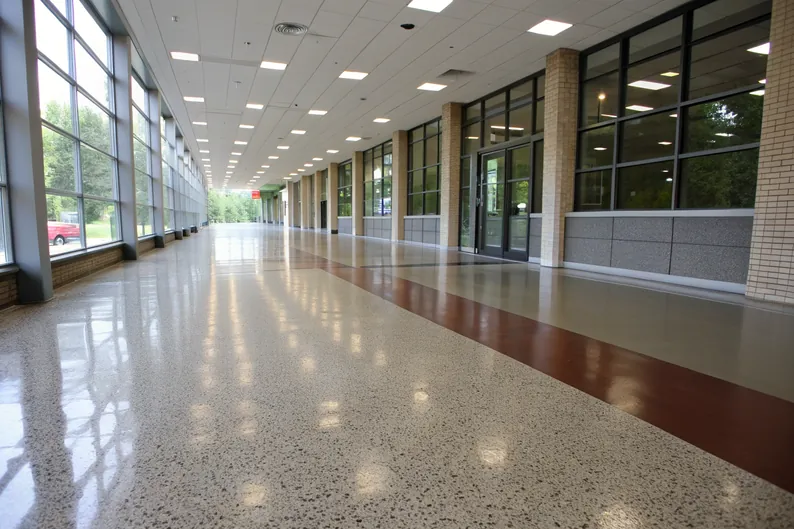
A Fresh Clear Finish Renews the Look but Can Also Reveal Existing Imperfections
A new clear coat renews the top layer of your floor. Because the finish is clear, it shows what sits underneath it.
That means a clear finish can reveal imperfections rather than hide them. Scratches, dust and other flaws in the existing surface may still be visible once the new coat is on. It helps to go in knowing this, so the result matches what you expect.
Deeper damage may need a separate repair. That work sits outside our clear coat restoration service.
Once the job is done, the cleaning products you use matter. Some concrete floor cleaners strip away a small layer of sealer. Choosing your cleaner with care helps you keep the finish you have just renewed.
Clear Coat Flooring Restoration FAQs
Can a new clear coat fix a floor that has already yellowed or faded?
A new clear coat is not a way to reverse yellowing or fading that has already happened. What it can do is help with the future. Choosing the right topcoat, such as a UV-blocker aliphatic polyurethane, can improve how well the floor holds its colour from here on. Even so, no topcoat can guarantee a floor won't yellow, and a UV-resistant topcoat may not prevent discolouration of the coatings underneath.
Why won't buffing bring the shine back?
Buffing only works on the surface. Clear coat restoration goes further. The floor is abraded to remove a small layer of the worn coating, and then a fresh clear layer is applied. Buffing does neither of these things, which is why it often can't bring back the shine.
How long until the floor can be used again?
There is no fixed time. Return to use depends on the product used and the conditions on the day. Cooler temperatures increase drying time, for example. We confirm the expected timing for your floor when we quote.
How often does a clear coat or sealer need renewing?
Sealers are sacrificial, which means they wear away over time and eventually need to be reapplied. Timing varies with sun exposure, conditions, location and foot or vehicle traffic. Because of this, there is no set interval that suits every floor.
Will a glossy clear finish be slippery?
Slip resistance is something to talk through before the work starts. Sheen level and anti-slip aggregate options can be discussed with you. Slip resistance needs to be addressed when the coat is applied, and again each time the floor is resealed.