
Residential & Commercial Epoxy Specialists
Adding Slip-Resistant Additives to Coated Floors in Wollongong
- Illawarra-Wide Coverage
- Fast, Free Quotes
Get a Free Quote
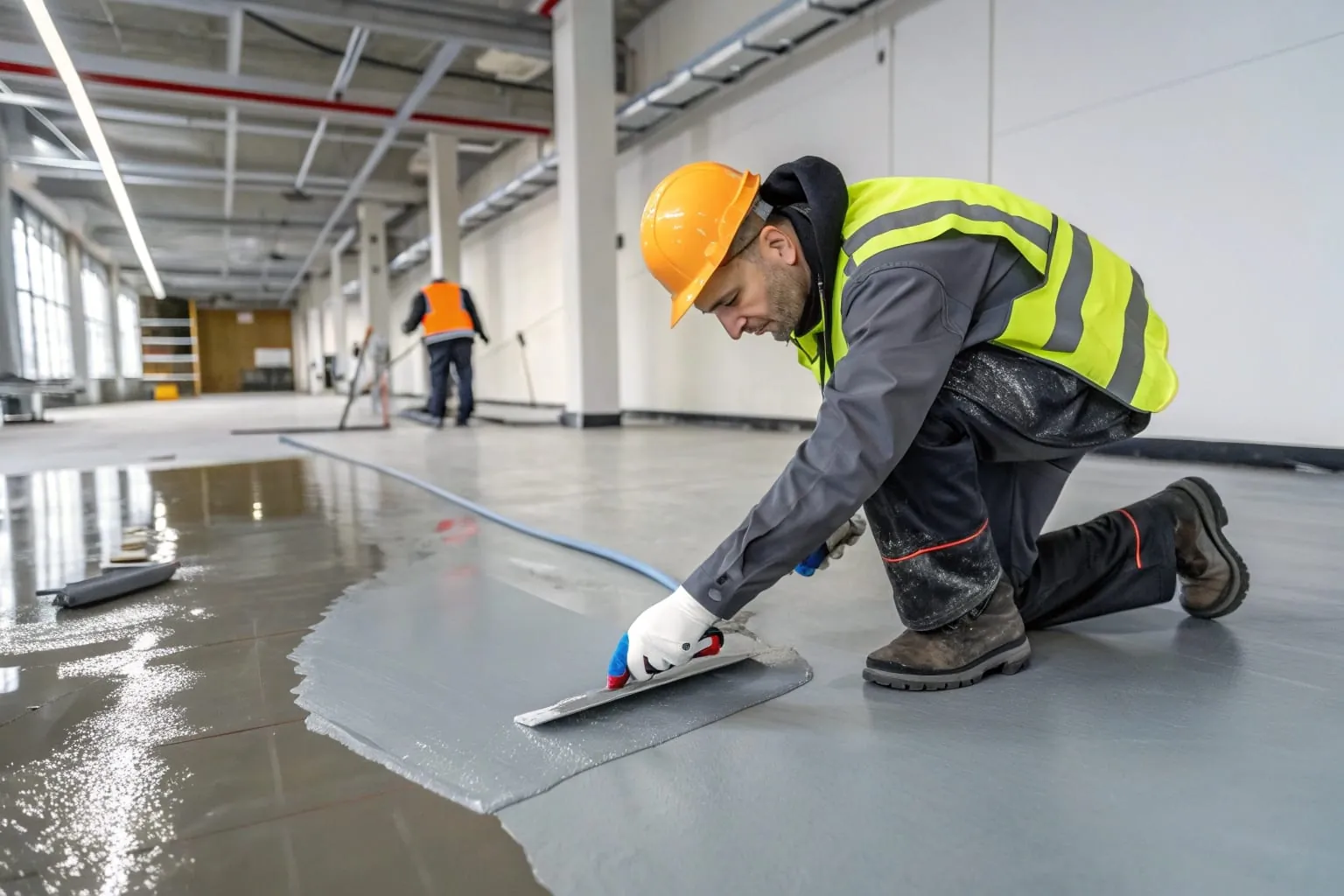
A coated floor can become slippery when it is wet, worn or contaminated. Many surfaces around Wollongong are exposed to rain, which can make the problem worse. Our work in adding slip-resistant additives in Wollongong focuses on coated floors that need more grip. Adding slip-resistant additives is one part of our floor refinishing service.
An additive can improve surface texture and traction in resinous coatings. On this page, we explain the main additive types and how they are applied. We also cover the trade-offs and the basics of slip ratings.
If your floor feels slippery, start by talking with us about how it is used and what it is exposed to. That helps shape the right approach before any additive is chosen.
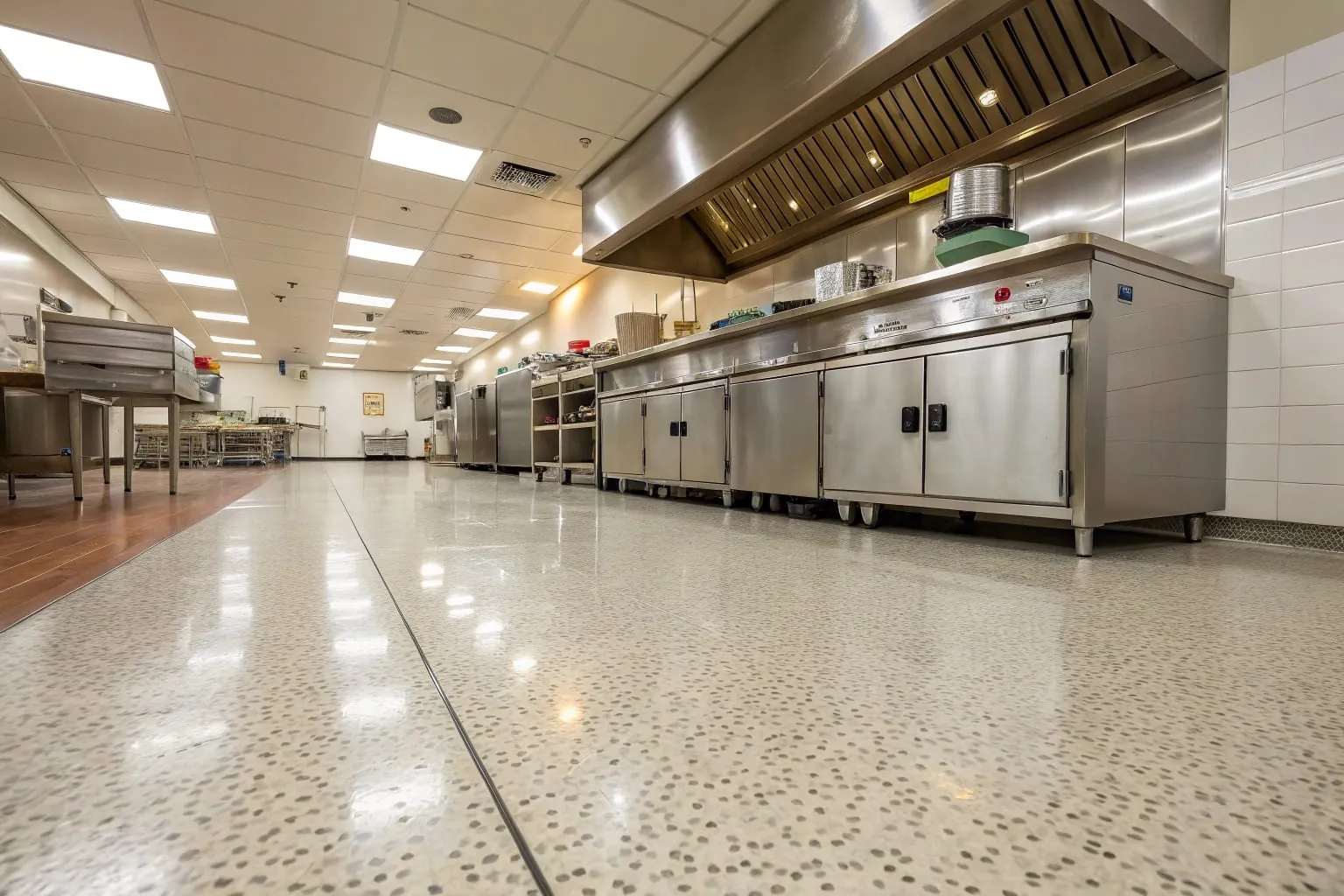
How Slip-Resistant Additives Improve Traction on Coated Floors
An anti-skid floor coating additive is an aggregate, such as aluminium oxide, silica sand or polymer beads, that is added to a resinous coating. It increases surface texture to improve slip resistance. It is either mixed into the topcoat or broadcast into a wet coat and sealed with a topcoat.
These additives are used in resinous coatings such as epoxy, polyurethane and polyaspartic. The aggregate creates a textured surface that can improve grip underfoot.
There are two main ways to apply an additive:
- Mixed into the final coat. The additive is stirred into the last coat before it is rolled onto the floor.
- Broadcast into a wet coat. The additive is spread over a coat while it is still wet. A topcoat is then applied to lock it in place.
The method matters as much as the additive. For example, one manufacturer notes that aluminium oxide works best when it is broadcast into a wet topcoat and backrolled. This lets the coating fully cover and hold the aggregate.
That is why we treat the choice of method as part of the job, not an afterthought. The right approach depends on the additive and the floor it is going on.
Where Wollongong Floors May Need Added Grip
A coated floor that once felt safe can lose grip over time. This can happen through wear, age or damage. It can also happen when the floor becomes contaminated, or when a space is used for something new.
Outdoor and transitional areas
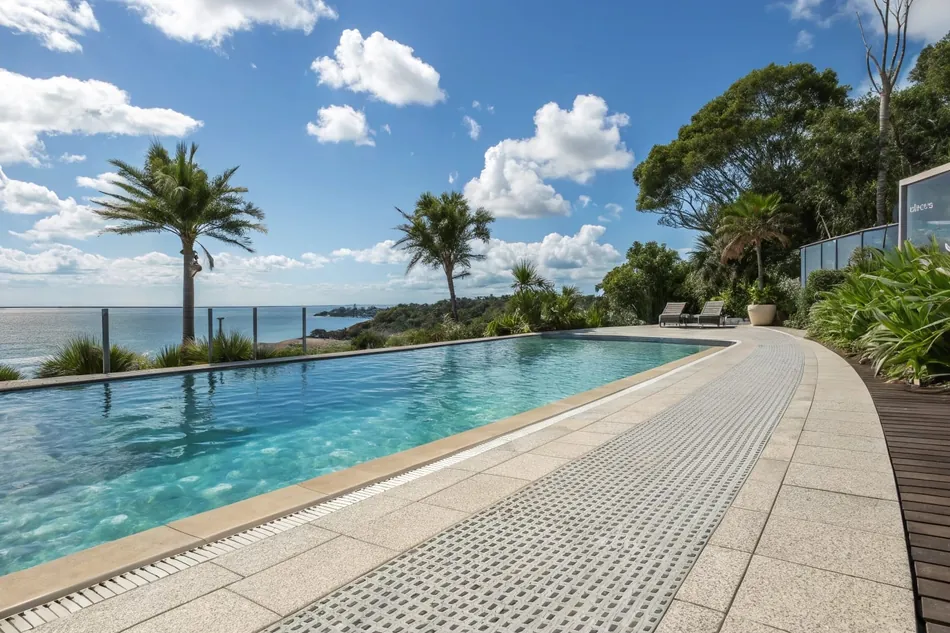
Coated surfaces that may become wet from rain are a common case. These include entries, external ramps, covered outdoor areas and garage aprons.
Rain is a regular part of life here. Historical Bureau of Meteorology records for the Wollongong Post Office station (068069, which recorded from 1870 to 2002 and is now closed) show a mean annual rainfall of about 1,130 mm. The same records show roughly 79 days a year with 1 mm or more of rain.
Workshop and industrial floors
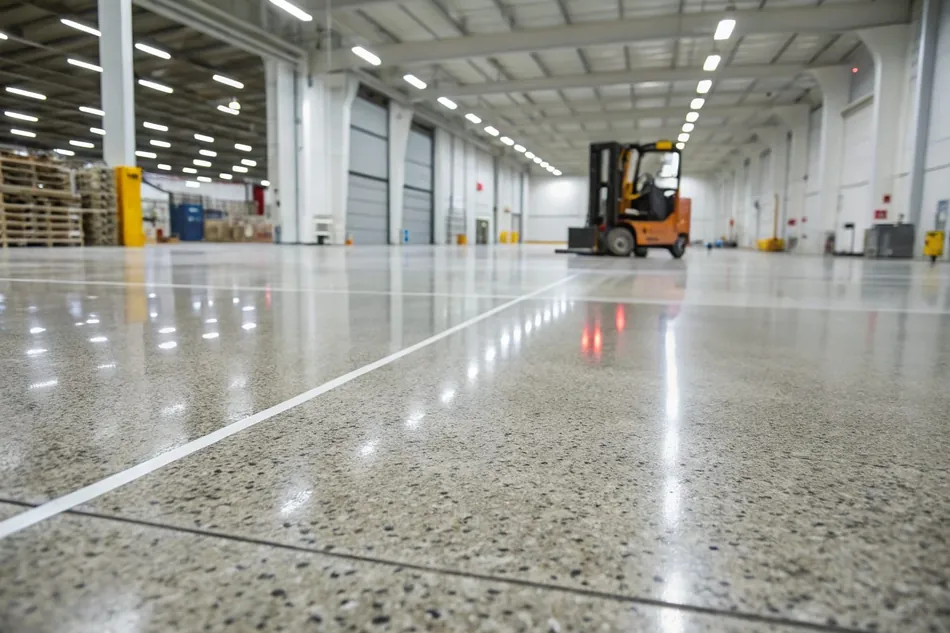
The Wollongong area includes industrial and advanced-manufacturing businesses. In workshops and industrial spaces, floors can be exposed to water or oil. SafeWork NSW notes that contamination like this raises the risk of slips.
Workplace safety guidance recommends anti-slip coatings where spills or wet conditions are likely. If your floor fits any of these situations, an additive may be worth considering.
Choosing an Additive Type to Suit How the Floor Is Used
The three main additive options are aluminium oxide, silica sand and polymer beads. Each one behaves differently once it is part of a coating.
Suppliers describe aluminium oxide as the most durable of these options. Silica sand costs less, but suppliers note it is prone to breaking down quickly under repeated use. Polymer beads are the third option and give a different kind of texture.
The right choice comes down to how the floor is used. A garage floor, a commercial space, an industrial floor and a wet area each place different demands on a coating. We look at the traffic the floor carries and what it is exposed to before recommending an additive.
If people walk barefoot on the surface, that also affects the choice. We cover this in the FAQ below.
Balancing Grip, Cleanability and Appearance
More texture is not always better. Sherwin-Williams notes that a highly slip-resistant surface can be much harder to clean. A rougher finish holds on to dirt, so there is a trade-off between grip and upkeep.
The opposite can also cause problems. A fine texture may not hold up to heavy traffic, which means the grip could wear down sooner in busy areas.
This is why manufacturers recommend trying the additive on a small test area first. A test area shows how much additive gives the result you want, before the whole floor is coated.
For most floors, the right level of texture is a balance. A trial helps confirm that balance for your space.
Understanding P and R Slip Ratings and NCC Requirements for Stairs and Ramps
Slip ratings can seem confusing at first. Here is a plain-English overview of the main terms. This is general information, not legal advice.
P ratings
P ratings come from the AS 4586 wet pendulum test. They run from P0 to P5. A higher rating means more grip when the surface is wet.
R ratings
R ratings come from a different test, where a person walks on an oil-covered ramp. These ratings are typically used for factories and workshops.
A, B and C ratings
A, B and C ratings apply to barefoot areas.
Each of these ratings is tied to its own test method. That means they are not interchangeable. A P rating cannot be swapped for an R rating, or the other way around.
NCC requirements for stairs and ramps
Under the National Construction Code (NCC) Housing Provisions, stair treads and ramp surfaces need a slip-resistance classification under AS 4586. You can read the requirement in the NCC 2025 Housing Provisions, Part 11.2 on the Australian Building Codes Board website.
The Australian Building Codes Board states that this requirement applies to all finishes. Coated floors are not exempt.
Choosing a classification for a ramp or stair involves working out whether the surface will be dry, wet or both. Wet includes surfaces exposed to weather. Outdoor ramps and entries that may become wet from rain fall into this category.
Why Added Texture Alone Does Not Guarantee a Slip Rating
It is easy to assume that a floor that feels rough must be safe. But texture alone does not guarantee a rating.
One manufacturer bulletin warns that a coarse finish does not guarantee a high slip-resistance rating. How a surface feels underfoot is not the same as how it performs in a formal test.
Any slip rating stated for a coating also assumes the product is applied as set out in its data sheet. The additive, the amount used and the application method all play a part.
This is why test areas and product documentation matter. Adding an additive does not, by itself, make a floor compliant.
If your floor needs to meet a specific rating, ask about the product documentation for the coating and additive being used. Treat verification of the finished surface as a separate step.
Frequently Asked Questions
Do anti-slip additives actually work?
Yes, they can improve texture and slip resistance in resinous coatings. The result depends on the additive chosen, the application method and correct application. Keep in mind that added texture alone does not guarantee a rating.
How can I stop my garage floor from being slippery?
Adding an anti-slip additive to the coating can improve grip on a coated garage floor. The additive and the application method should match how the floor is used and what it is exposed to.
Can anti-slip be added to an existing coated floor?
It may be possible, depending on the existing coating. Its condition and compatibility both matter. The existing coating needs to be assessed before we can confirm the right approach.
Is anti-slip texture suitable for barefoot areas?
Barefoot areas have their own A, B and C slip classifications. The choice of additive matters here. For example, one supplier advises against using aluminium oxide where people walk barefoot.
How long does anti-slip texture last?
It varies with the additive and the traffic the floor carries. Suppliers describe aluminium oxide as the most durable option. They note that silica sand is prone to breaking down under repeated use. A fine texture may not hold up to heavy traffic.
Can the slip resistance of an existing floor be tested?
Yes. AS 4663 sets out methods for measuring the friction of existing surfaces in wet and dry conditions. This testing is a separate specialist service that we do not provide.