
Residential & Commercial Epoxy Specialists
Automotive Shop Epoxy Flooring in Wollongong — Oil-Resistant, Slip-Resistant Workshop Floor Coatings
Bare or ageing concrete in a Wollongong workshop soaks up oil and other fluids, cracks under daily load, and quickly starts to look unprofessional. Automotive shop epoxy flooring seals the surface and resists the chemicals a service bay deals with every day.
This page covers what makes the coating suitable for a workshop, how it holds up to safety expectations, what the installation process involves, and what affects the scope of a project.
This is one of the epoxy flooring services we offer in Wollongong.
- Illawarra-Wide Coverage
- Fast, Free Quotes
Get a Free Quote
Why Bare or Ageing Concrete Creates Problems in an Automotive Workshop
Bare concrete is porous. Oil, brake fluid and other workshop fluids soak into the surface and leave stains that don't come out.
Daily impact from dropped tools, rolling jacks and heavy vehicles takes its toll too. Cracks and pitting develop over time, especially in older floors that were never sealed.
A stained, cracked floor doesn't just look worn. It takes longer to clean and makes the workshop harder to present well to customers.
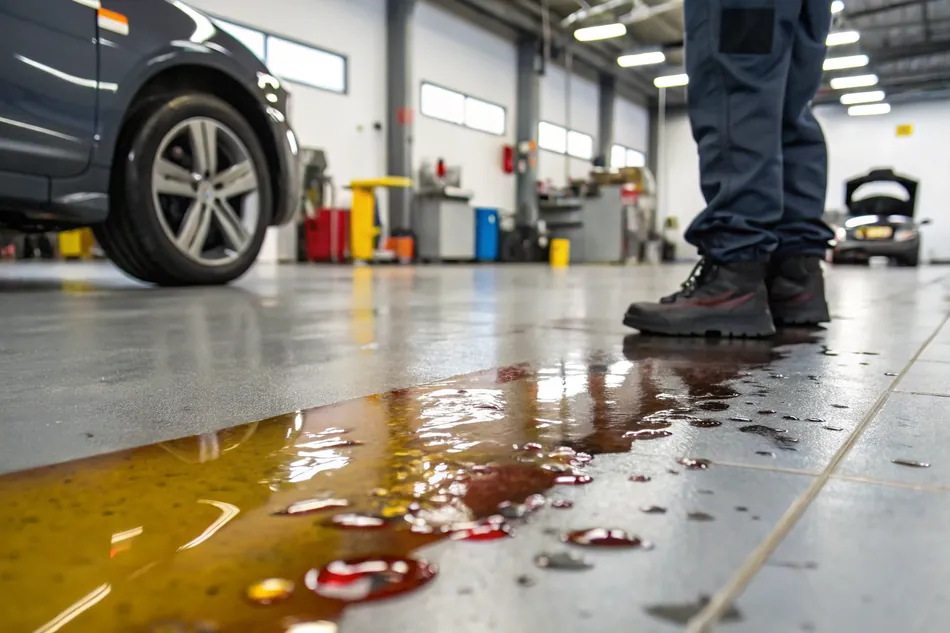
Chemical and Oil Resistance for Everyday Workshop Fluids
An epoxy coating system creates a seamless, non-porous surface that resists oil, brake fluid, transmission fluid and hydraulic fluid. Instead of soaking in, these fluids sit on top of the floor where they can be cleaned away.
A polyurethane or urethane topcoat is commonly applied over the epoxy base. This adds further chemical resistance and helps protect the surface from everyday wear.
Untreated concrete doesn't offer this protection. Fluids soak in permanently, and a wet, fluid-soaked patch of bare concrete can become a slip hazard.
Slip Resistance and Safety Expectations in a Working Service Bay
Fluid spills are part of daily life in a service bay, and they increase the risk of a slip. An anti-slip aggregate or broadcast layer can be added to the coating system in areas where fluid exposure is common.
SafeWork NSW and Safe Work Australia guidance sets out expectations around floor surfaces being appropriate for the work being done and slip-resistant where needed. This isn't a requirement to use epoxy specifically. It's a broader expectation that the flooring in a workspace should suit the conditions, and an anti-slip coating is one way workshops commonly address it.
Correct Surface Preparation and Moisture Testing for Wollongong's Climate
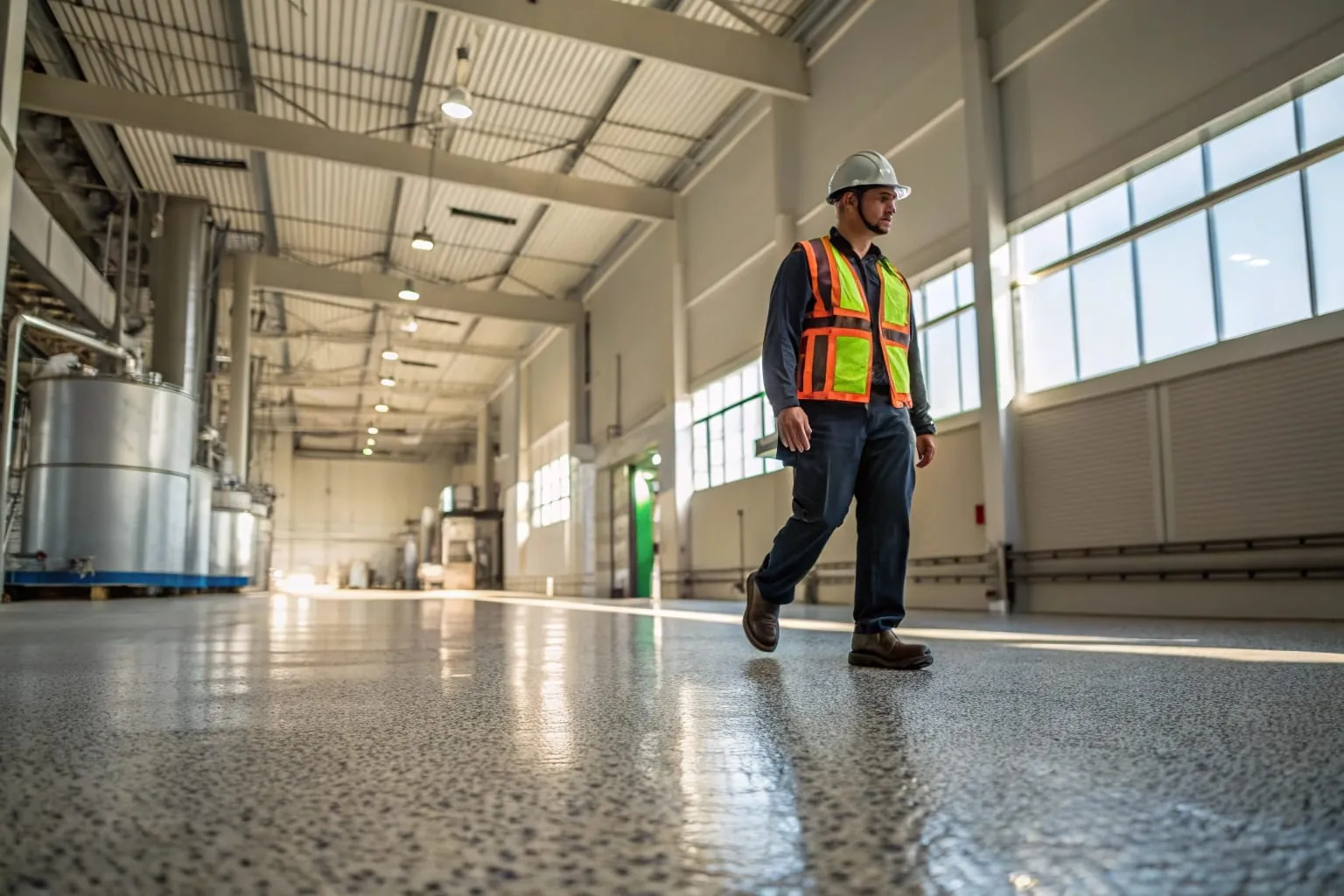
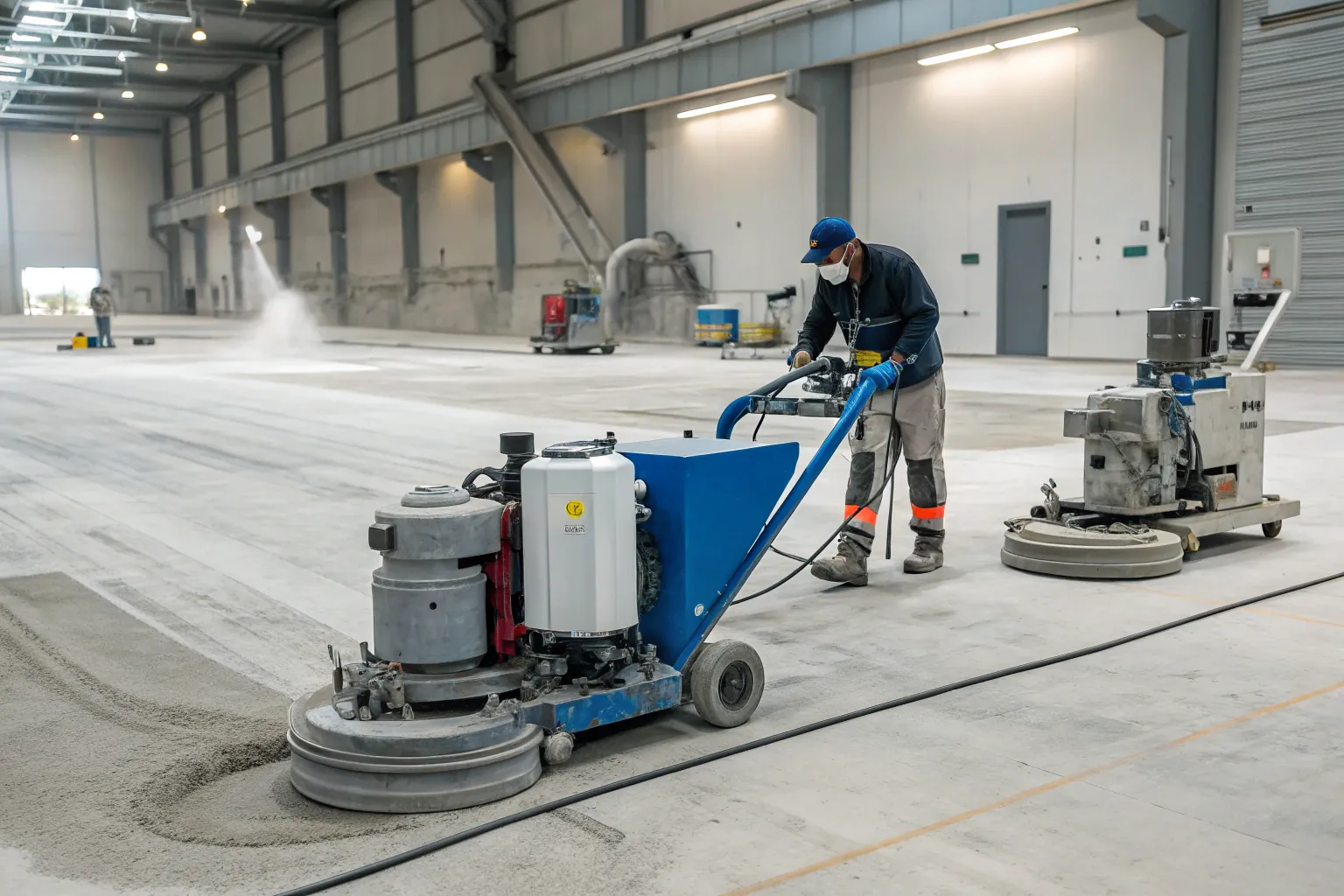
The right preparation matters as much as the coating itself. Diamond grinding or shot-blasting is typically used to create a surface profile the epoxy can properly bond to. Acid etching isn't the preferred method for this kind of preparation.
Cracks and other damage are usually assessed and repaired before any coating goes down.
Wollongong sits in a coastal, high-rainfall area, with average annual rainfall of around 1,301mm. This makes moisture testing a genuinely relevant step in preparation. Where testing indicates moisture is present in the slab, vapour mitigation measures can help avoid adhesion failure or blistering down the line.
Durability Under Heavy Vehicles, Tools and Rolling Loads
A workshop floor deals with more than everyday foot traffic. Dropped tools, rolling jacks, hot tyres and heavy vehicles moving across the surface all put real load on the flooring.
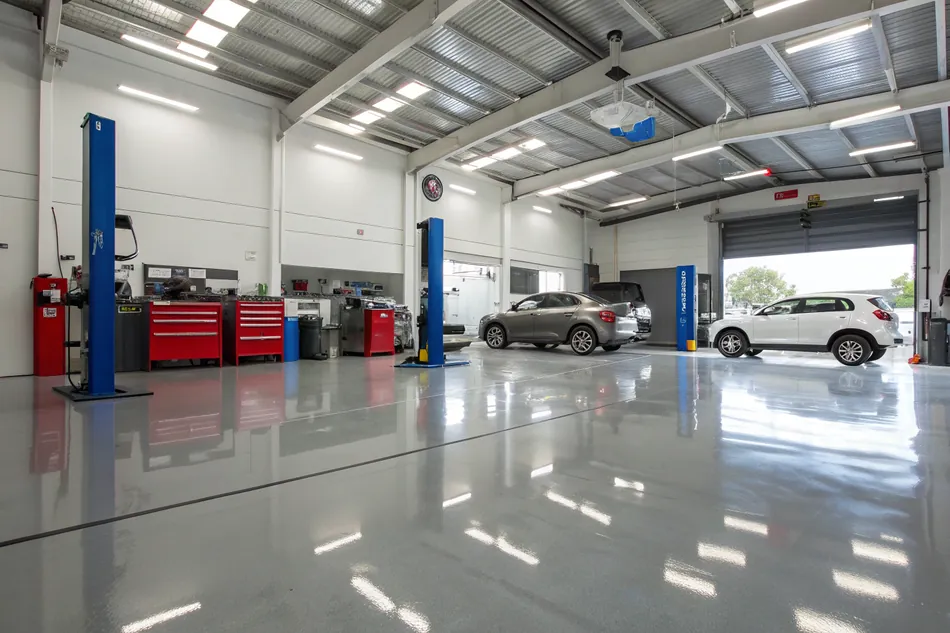
Epoxy creates a sealed, non-porous surface that holds up to these conditions better than raw concrete. It's also easier to clean and maintain, since spills and grime sit on top of the surface rather than soaking in.
Proper preparation and ongoing care both play a part in how well the floor performs under this kind of daily use.
Installation Process and What Affects Workshop Downtime and Cost
Installation generally follows the same stages: assessment, surface preparation, primer, base coat, an optional anti-slip broadcast layer, and a topcoat.
Because the bay needs to be closed while this happens, it's worth planning ahead so the work fits around your operations with minimal disruption.
A few things affect the overall scope of a project:
- Floor area
- Existing condition of the concrete
- Number of coating layers
- Whether an anti-slip layer is included
- Access and site conditions
- Whether moisture mitigation is needed
Every workshop is different, so these factors are usually worked through during an assessment.
FAQs
How long does an auto shop need to be closed during epoxy floor installation?
Installation involves several stages, including preparation, coating and curing, each of which needs the area to be closed off. The exact time needed depends on the scope of the project and is best discussed during an assessment.
Will an epoxy floor be slip-resistant in a workshop with fluid spills?
An anti-slip aggregate or broadcast layer can be added to the coating system in areas prone to fluid exposure. SafeWork NSW and Safe Work Australia guidance sets expectations around floor surfaces being appropriate for the work and slip-resistant where needed, though this isn't a requirement to use epoxy specifically.
Can epoxy be installed over an old, cracked concrete workshop floor?
Cracks and other damage are typically assessed and repaired as part of the preparation process before coating is applied.
Does Wollongong's climate affect how an epoxy floor is installed?
Wollongong's coastal, high-rainfall conditions make moisture testing a relevant step in preparation. Where testing indicates moisture in the slab, vapour mitigation measures can help protect the coating.
What's the difference between an epoxy coating and a polyurethane topcoat?
The epoxy forms the structural base of the flooring system. A polyurethane or urethane topcoat is commonly applied over it to add further chemical and UV resistance.
How long does epoxy flooring in an automotive workshop typically last?
Lifespan depends on factors like the level of use, how well the floor was prepared, and ongoing maintenance. Heavy daily use in a workshop setting means proper prep and care both play a part in how the floor performs over time.