
Residential & Commercial Epoxy Specialists
Aircraft Hangar Epoxy Flooring in Wollongong: Floor Systems Selected for Aviation Fluids, Heavy Loads and Hangar Operations
- Illawarra-Wide Coverage
- Fast, Free Quotes
Get a Free Quote
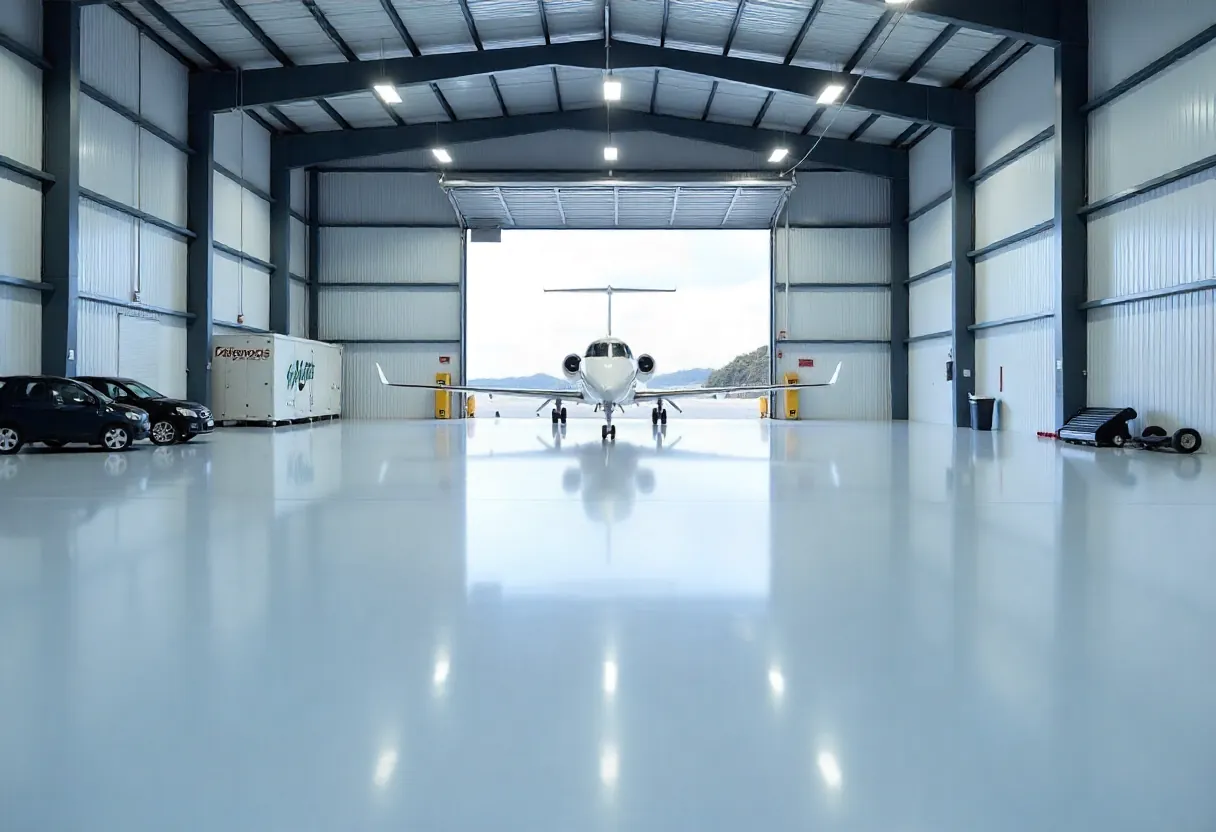
We provide aircraft hangar epoxy flooring for hangar operators around Wollongong and the Illawarra. Aircraft hangar epoxy flooring is part of our flooring contractor services.
Most projects start in one of two ways. The existing floor is worn, stained or failing. Or a new or leased hangar has a bare concrete slab that needs a finish.
Bare concrete can be damaged by the chemicals and equipment used in a working hangar. The right coating system gives the slab a surface chosen for those conditions.
This page explains how a hangar floor system is selected and how it resists aviation fluids. It also covers what installation involves, how the work can be planned around your operations, and the safety features that can be built into the floor.
When you're ready, get in touch to discuss your hangar floor and the operating constraints we need to plan around.
Hangar Floors Need a Purpose-Selected Coating System, Not a Garage Epoxy
A hangar floor is a large concrete slab that works hard every day. It faces chemicals, heavy equipment and regular cleaning. Bare concrete may not stand up to those demands over time.
It can be tempting to think of a hangar floor as a bigger version of a garage floor. They are not the same. Residential garage coatings, including decorative flake systems, are a different category of product.
A hangar system is selected for the conditions on your site. That means looking at the specific fluids used in your maintenance work, the loads the floor carries and the way the hangar operates. The same approach applies to helicopter hangars.
This work matters for local aviation. The Illawarra's regional airport at Albion Park Rail is operated under CASA and owned by Shellharbour City Council. It sits about 18 km south-west of Wollongong and supports a light aeronautics maintenance sector.
Selecting a System for Resistance to Phosphate Ester Hydraulic Fluids, Fuels and Solvents
Can epoxy flooring withstand Skydrol or other aircraft hydraulic fluids? It depends on the system. Industry guidance indicates standard epoxy may not withstand Skydrol. Specially formulated chemical-resistant systems are designed for it.
Skydrol and HyJet are phosphate ester hydraulic fluids used in aircraft. Coating compatibility with these fluids is a known issue. A floor that looks fine on day one can be let down by the wrong product once these fluids reach it.
A hangar floor system is typically built in multiple coats. The topcoat is selected for chemical resistance, as it is the layer that meets spills first.
Hydraulic fluid is only part of the picture. We also look at the jet fuel, oils and solvents used in your hangar. Compatibility is specific to each product and system, so no single coating suits every hangar. The right choice depends on the fluids and conditions on your site.
Built for Aircraft Loads, Tugs, Jacks and Dropped Tools
A hangar floor takes a lot of weight and wear. Aircraft, tugs and jacks all put load on the slab. Tools get dropped, and equipment gets dragged across the surface.
To cope with this, a hangar coating needs strong bond and tensile strength. It also needs some flexibility, so the right balance matters.
Impact and abrasion resistance matter too, especially in work areas where tools and equipment are dropped or moved often.
The loads your floor carries help decide how the system is built and specified. We look at the aircraft, equipment and daily traffic in your hangar before settling on a system.
Some hangar operators also look for a floor that is easy to clean and reflects more light across the work area. These can be useful extras to discuss when planning your floor.
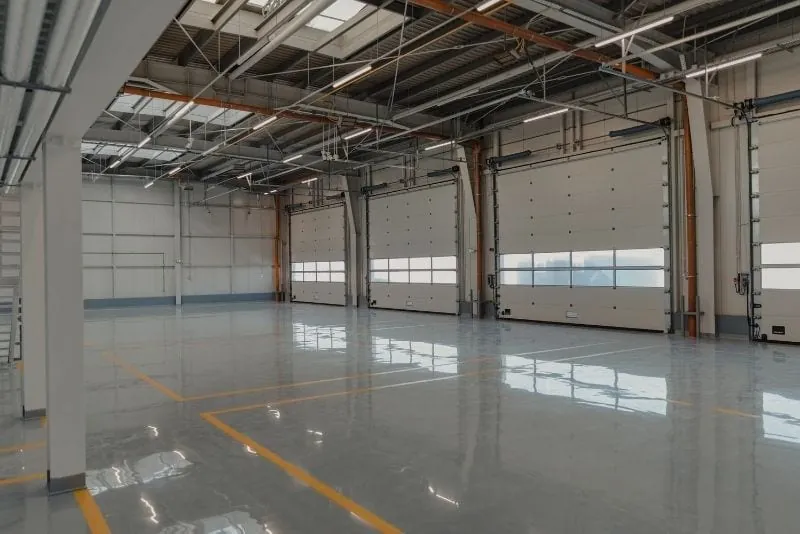
How a Hangar Epoxy Floor Is Installed, from Concrete Preparation to UV-Stable Topcoat
Installation starts with the concrete. We check the slab's strength and moisture level and compare them against the limits of the chosen product. This tells us whether the slab is ready to coat.
Next comes mechanical preparation, such as diamond grinding. This opens up the surface so the coating can bond. Where needed, old coatings are removed first.
The coating is then applied in layers. A hangar system typically includes a primer, a basecoat and a topcoat. This layer structure is common industry practice rather than a set standard, and the exact build depends on the system selected.
Sunlight can affect some coatings over time. Near hangar doors, or anywhere else UV exposure occurs, a UV-stable topcoat can be used.
Anti-slip texture and line marking can also be added as part of the system if your hangar needs them.
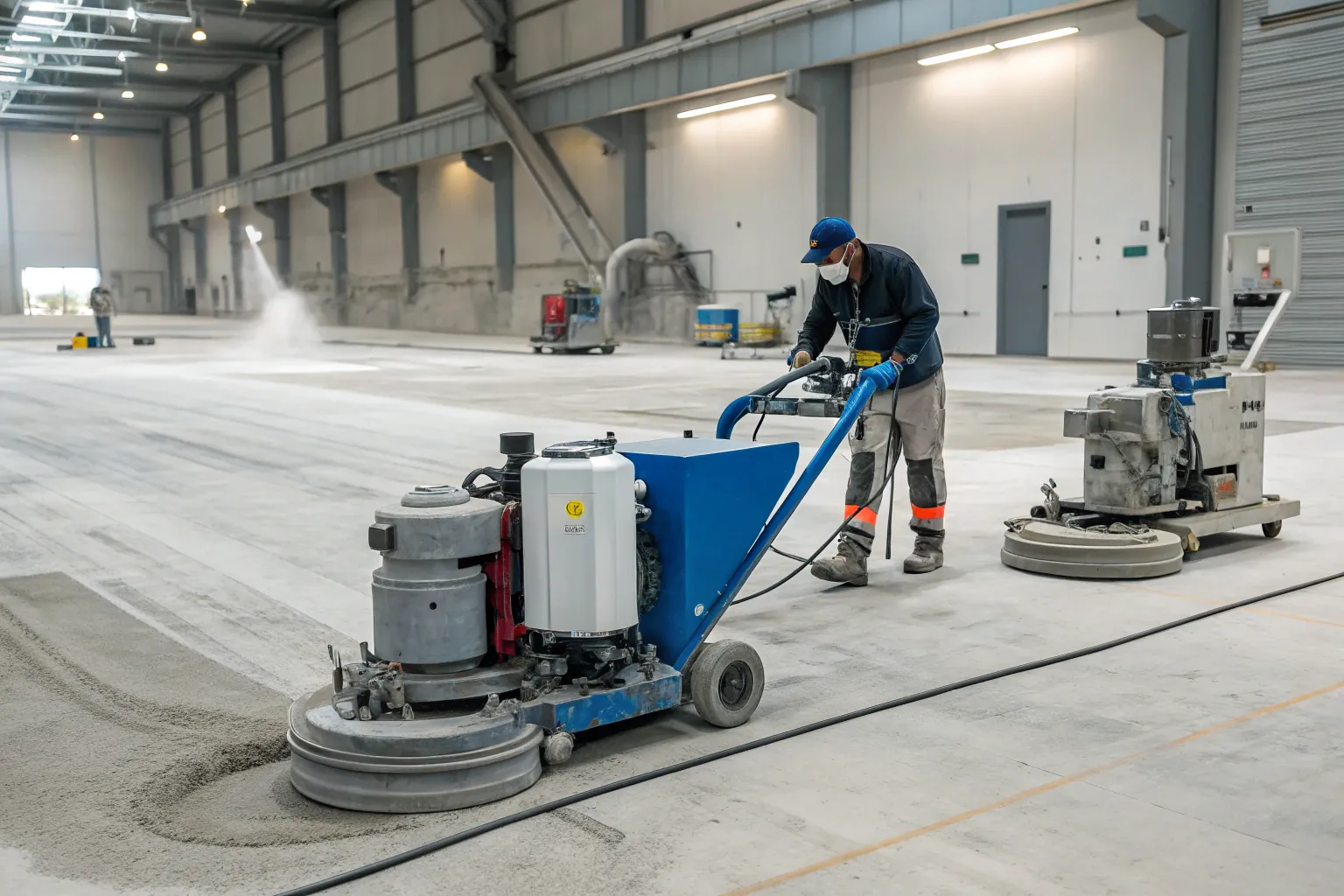
Planning Installation Around Hangar Operations and Illawarra Weather Conditions
Grounding aircraft for a long stretch is rarely an option. That's why installation is planned around how your hangar works.
A staged or phased installation can let operations continue. The floor is coated one section at a time while the rest of the hangar stays in use. Hangar floors elsewhere in Australia have been coated this way, including one NSW helicopter hangar done in halves and another hangar completed in stages.
Fast-recoat products are also available. Where suitable, they can shorten the time between coats. Whether they fit your project depends on the product and your site.
Weather plays a part as well. Coatings have limits for humidity, dew point and temperature during application. The Illawarra has humid periods, so we check these conditions before and during the work and schedule the install around them.
Slip Resistance and Line Marking for Safer Movement Around Aircraft
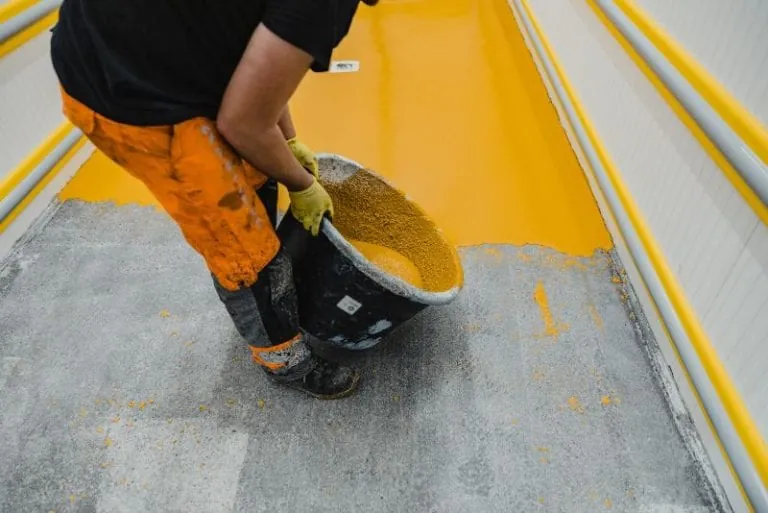
Workers on foot move around aircraft all day, often near spilled fluids. An anti-slip texture can be built into the floor system to help with grip.
Slip resistance in Australia is often discussed with reference to AS 4586-2013. This standard classifies pedestrian surfaces by how they perform in friction tests under wet or dry conditions.
The classification does not account for wear once the floor is in service. So when planning slip resistance, we also look at how much wear and traffic the floor will get, how it will be cleaned and the conditions in your hangar.
Safety line marking and demarcation can also form part of the floor system. Clear lines help mark out walkways, work zones and equipment areas, making movement around aircraft easier to see and follow.
Frequently Asked Questions
How long before aircraft and equipment can go back on the floor?
It depends on the product and the temperature. Cure times vary between systems, and full cure takes longer in cooler conditions. For example, one system takes roughly 10 days to fully cure at 10°C, compared with about 5 days at 30°C. We'll talk through the expected timing for your project once the system and conditions are known.
Can an old painted or worn hangar floor be recoated?
It depends on the condition of the existing surface. We look at the floor first. Preparation may involve removing the old coating and diamond grinding the concrete before the new system goes down.
Is it safe to use the hangar while the floor is being installed?
Access is restricted during installation and cure. Uncured epoxy components are classed as hazardous and can be skin sensitisers. Once the system is fully cured, it is essentially inert.
What affects the cost of coating a hangar floor?
Several things shape the cost of a hangar floor, including:
- floor area and whether the work is staged
- the condition of the existing surface
- the system specification
- line marking
- site conditions
- downtime constraints
Get in touch to discuss your hangar and what your project involves.
How should a coated hangar floor be cleaned and maintained?
Clean up fluid spills promptly, and follow the care guidance for the system installed in your hangar.
Does a helicopter hangar need a different floor system?
It's the same service. The system is selected for the conditions on site, such as UV exposure near the doors, the fluids used and whether the work needs to be staged.