
Residential & Commercial Epoxy Specialists
Concrete Crack Repair and Filling in Wollongong
- Illawarra-Wide Coverage
- Fast, Free Quotes
Get a Free Quote
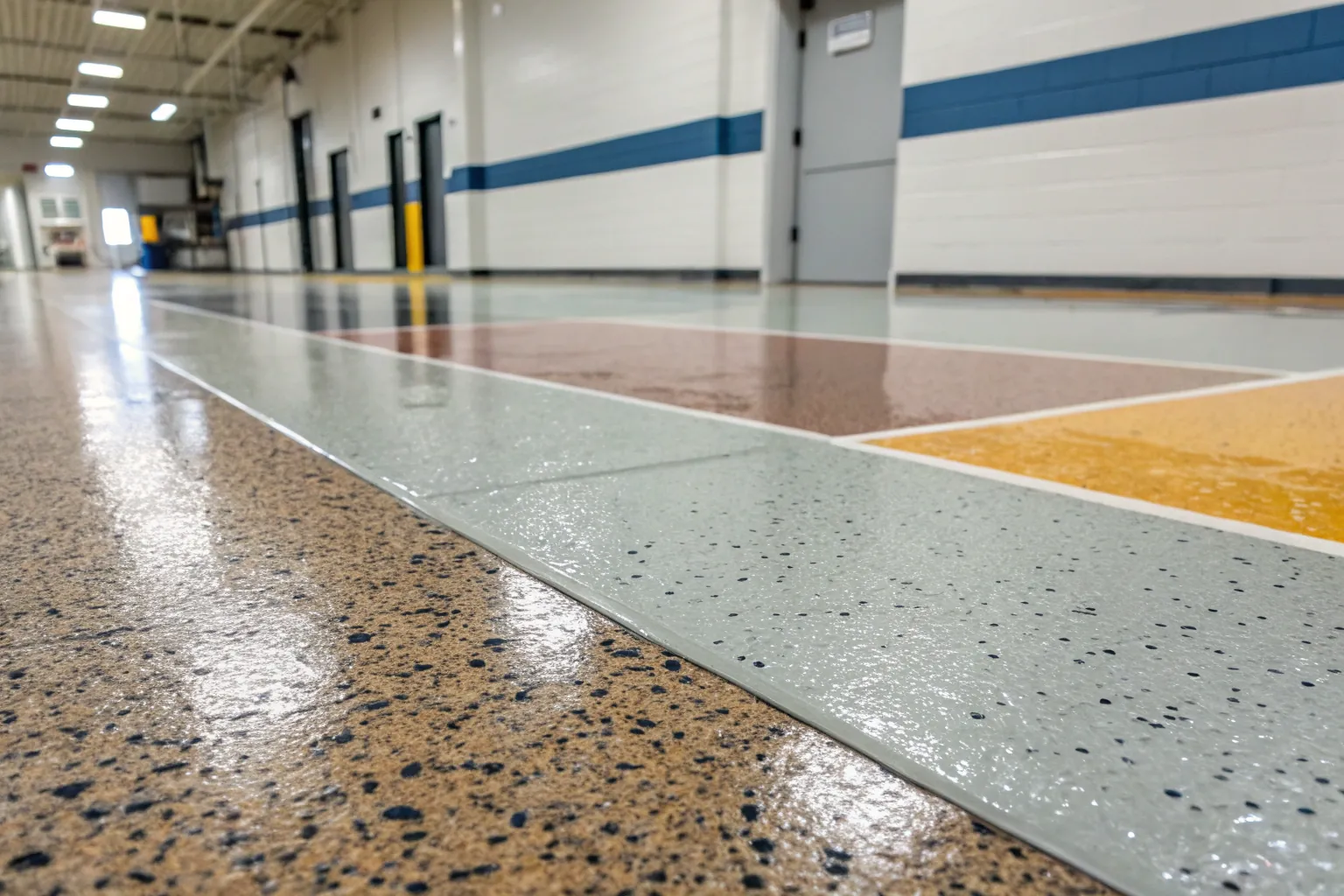
Cracks in driveways, paths, garages, patios and slabs are common in Wollongong. A crack is not always a sign of poor workmanship.
If you have noticed a crack, you probably want to know three things. Is it serious? Can it be repaired? Which repair method suits it?
This page explains how we assess cracks, the main methods used for concrete crack repair, when filling may not be needed, and what you can expect from a repair.
Concrete crack repair and filling is part of our floor refinishing service.
If you have a crack you are unsure about, get in touch to arrange an assessment.
Assessing a Crack's Cause and Movement Comes Before Filling
The right repair depends on two things: why the crack formed, and whether it is still moving.
An active crack is one that is still moving. It may open, close or grow over time. A dormant crack has stopped moving. This difference shapes which repair method will work. For example, a rigid repair such as epoxy may not be applicable if the crack is still subject to movement.
The cause matters just as much. Unless the cause is corrected, a crack will probably recur near the original one. If settlement is the cause, repair will be of no use until the settlement is corrected. Fixing the cause, such as footings, drainage or foundations, is outside our crack repair service.
It also helps to check whether a line in your concrete is a crack at all. Many slabs have planned control or contraction joints. These are placed on purpose to guide where the concrete cracks as it shrinks, so they are not the same as a random crack.
Parts of the Wollongong area fall within mapped Mine Subsidence Districts. Coverage is partial and depends on the property. If you suspect subsidence has damaged your concrete, you can check your property's status and the claims process with Service NSW before any repair. Claims must be lodged within 12 months of becoming aware that the damage was caused by subsidence. Keep in mind that cracking can have other causes too, such as reactive soils, tree roots or poor building practice.
Repair Methods Are Matched to the Type of Crack
There is no single best material for filling concrete cracks. The right choice depends on whether the crack is moving or dormant, how wide it is, and which way it runs.
Here is how the main methods are usually matched:
- Stable cracks: Pressure epoxy injection may restore tensile strength if further cracking is not anticipated.
- Moving cracks: Routing and sealing with a flexible sealant. This seal is not a structural bond.
- Horizontal dormant cracks: Gravity-fed resin can suit these cracks.
- Wider stable defects: Cementitious repair mortar can suit these.
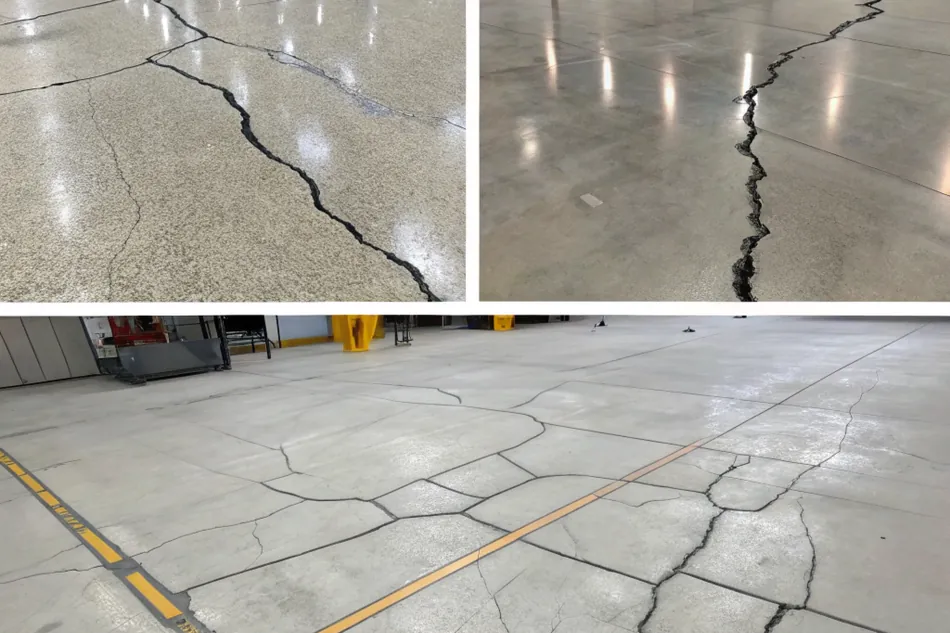
Epoxy injection bonds the crack faces together. It suits cracks that have stopped moving. If movement continues, an epoxy repair may fail.
Routing and sealing works differently. The crack is cut into a groove, and the groove is cleaned. A backer rod is placed, then a flexible sealant such as polyurethane or silicone is applied. This treats the crack as a joint, so it can keep moving without breaking the seal.
Whatever the method, preparation matters. The crack faces need to be sound and free of contaminants so the repair material can bond properly.
Crazing and Hairline Surface Cracks May Not Always Need Filling
Crazing is a network of very fine cracks on the surface of concrete. It often looks like a web or a map pattern. Repair may not be necessary for crazing, as crazing will not weaken the concrete.
If the look of crazing bothers you, a surface sealer or overlay may hide it. This is a cosmetic choice, not a crack repair.
Other fine cracks are worth a closer look. Even a thin crack can be a sign of something else going on, so it still helps to check the cause. For slab cracks in Categories 1 and 2, the NSW Guide to Standards and Tolerances suggests monitoring them for 12 months to see whether they change.
This gives you three broad options for fine cracking:
- Monitor it if the crack is fine and you want to see whether it changes over time.
- Treat it cosmetically if the concern is appearance only, such as crazing.
- Repair it if an assessment shows the crack needs filling.
NSW Crack Width Categories Offer an Advisory Reference, Not a Repair Rule
A common question is how big a crack can be before it counts as a problem. In NSW, the Guide to Standards and Tolerances 2017 gives a useful reference. It is advisory only and is not a regulated standard.
For slabs, the Guide draws its crack categories from AS 2870 Table C2. They range from:
- Hairline cracks: under 0.3 mm wide
- Category 1: under 1.0 mm wide
- Categories 2 and 3: step up in width between these
- Category 4: 4–10 mm wide
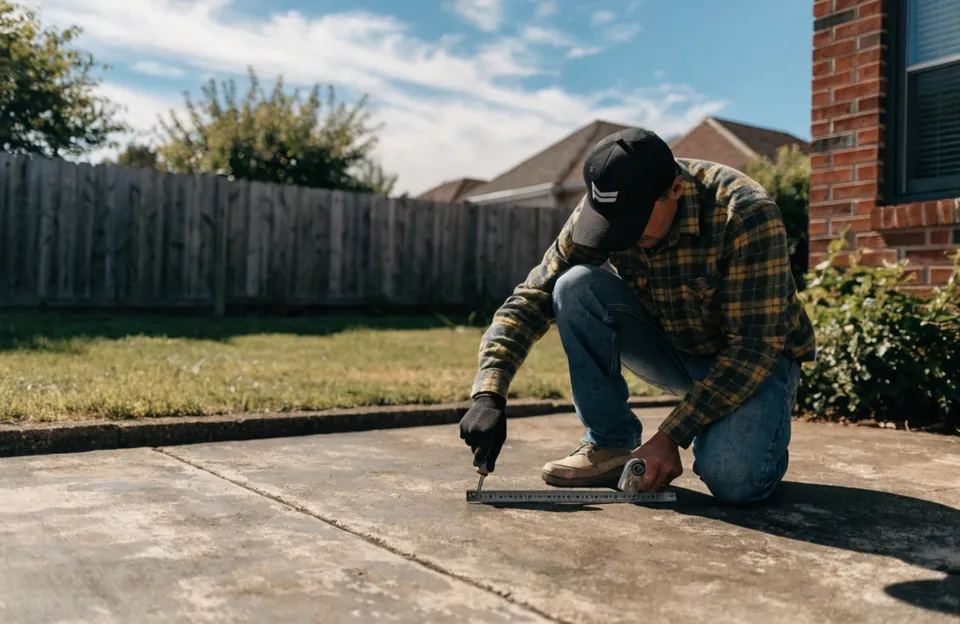
Under the Guide, slab cracks in Categories 3 and 4 are treated as defective. Cracks in Categories 1 and 2 are to be monitored for 12 months.
Driveways, verandahs and similar paving are treated differently. For these, the Guide's defect limit is a crack width of 1.5 mm or less, and this applies within the first 12 months after construction.
These categories are a defect reference, not a rule for whether a crack needs repair. A crack's cause and movement still matter more when deciding what to do next.
Crack Repair Can Be an Alternative to Replacement in Suitable Cases
Many cracks can be repaired without replacing the concrete. Whether this works for your crack depends on its cause, whether it is still moving, and the condition of the surrounding concrete.
Some repairs go further than filling. Where the concrete has failed because of cracking or movement, the repair may involve removing the affected area.
Other situations need different input. Structural concerns, settlement or the need for strengthening may call for an engineering assessment. This sits outside our crack repair service.
A few problems also need a different kind of repair:
- Concrete cancer: Spalling caused by corroding reinforcement is a separate repair, not crack filling.
- Full slab replacement: Removing and replacing a whole slab is outside the scope of crack repair.
Whether a repair suits your concrete is decided once the crack has been assessed.
Sealing Cracks Can Help Limit Moisture and Salt Entry in Coastal Settings
Leaving a crack open can let water and salt into the concrete. That is one reason not to ignore it.
Crack repair has several recognised goals. These include making the concrete watertight, improving durability, and preventing a corrosive environment around the steel reinforcement.
Salt is part of the picture near the coast. Chlorides, usually from seaside splash or windblown locations, can move into porous concrete over time. Testing has found that chloride levels can be much higher at cracked sections than at intact concrete.
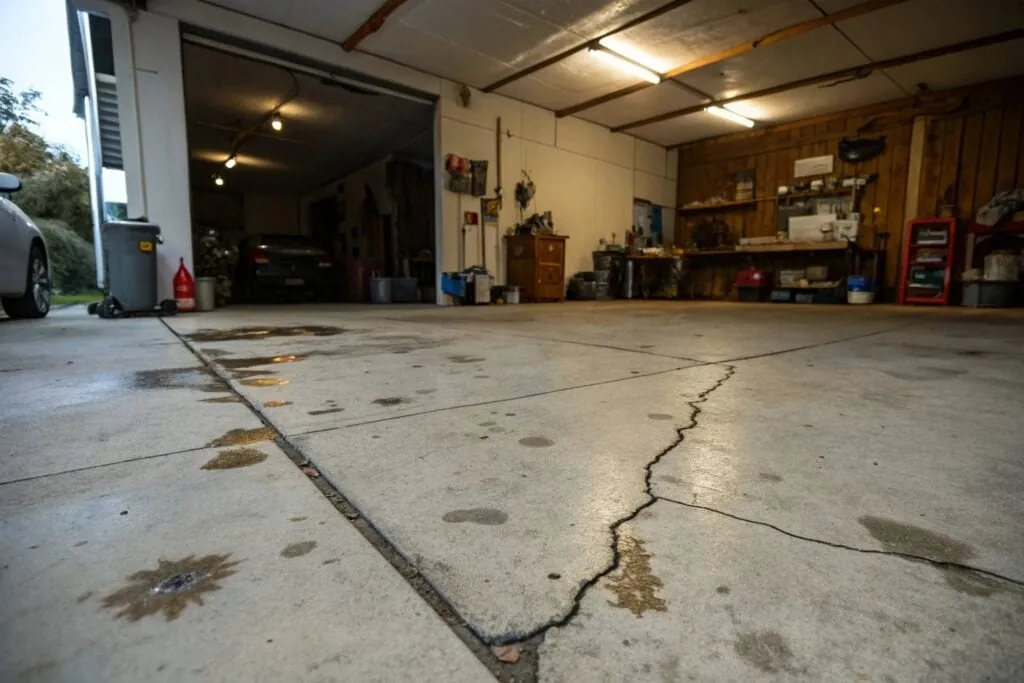
Wollongong has around 60 km of coastline, according to Wollongong City Council. Not every property is affected in the same way, but coastal exposure is one reason timely crack sealing can be worth considering.
If the reinforcement is already corroding, or the concrete is spalling, that needs a different repair from crack sealing.
Frequently Asked Questions
Do concrete crack fillers really work?
They can, when the repair method matches how the crack behaves and the cause has been addressed. If a rigid filler is used in a crack that is still moving, the repair may crack again.
Will a repaired crack come back?
It can. Unless the cause is corrected, a crack will probably recur near the original one. Fixing that cause, such as footings, drainage or foundations, sits outside crack repair.
Will the repair match my existing concrete?
Repairs aim to match your existing concrete as closely as practicable. After epoxy injection, the injection ports are removed, and the area may be ground or sanded if necessary. An exact match is not guaranteed.
What are common mistakes when repairing concrete cracks?
Common mistakes include:
- using a rigid filler in a crack that is still moving
- trying to bond a repair to crack faces that are dirty, contaminated or unsound
- filling the crack without first checking what caused it
What affects the cost of concrete crack repair?
Several things can affect the cost, including:
- the width, length and number of cracks
- the repair method required
- whether the cause needs investigating, or an engineering assessment is needed
- moisture or leaks in the crack
- access, such as whether the crack is horizontal, vertical or overhead
- how closely the repair needs to match the look of the existing concrete
- whether spalling means broader repair is needed